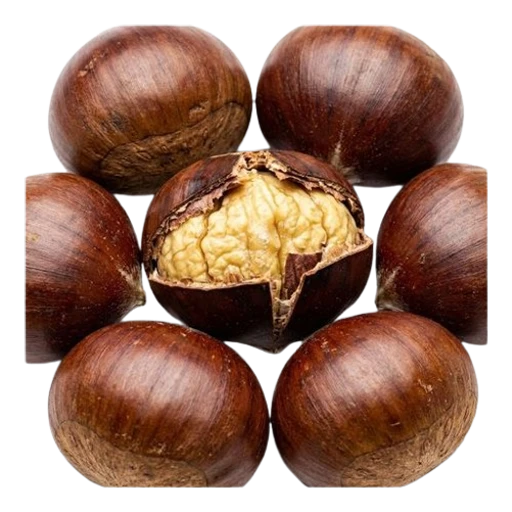
Chestnut
Chestnuts can be introduced around 6 months as your baby starts solids. These starchy, slightly sweet nuts offer a wonderful boost of energy and a unique flavor profile for developing palates.
How to serve
Finely ground into flour and mixed into porridges or purees. Can also be served as a smooth, unsweetened paste.
Very finely chopped and thoroughly cooked until soft, then mixed into soft foods like yogurt, oatmeal, or mashed vegetables.
Small, soft, finely chopped pieces of well-cooked chestnuts, suitable for adding to stews, baked goods, or served alongside other soft foods.
Nutrition
Rich in complex carbohydrates, chestnuts provide sustained energy crucial for your baby's rapid growth and development. They also contain fiber, which supports healthy digestion, and small amounts of essential B vitamins for metabolic processes.
Good to know
Never offer whole or chopped nuts before age 5 — they are one of the most common choking hazards. Serve finely ground, or as a smooth nut butter thinned with water, breast milk or formula.
As a tree nut, chestnuts are a common allergen. Introduce them in very small amounts, one new allergen at a time, and closely monitor for any signs of allergic reaction. Never serve whole or large pieces of chestnut due to severe choking risk. Whole and chopped nuts stay a choking hazard until age 5, so keep serving them finely ground or as a smooth, thinned butter.
Tip
Roasting chestnuts not only enhances their sweet flavor but also makes them softer and easier to prepare for your baby. Peel them while warm.