Transitioning to a Cup
Moving from bottles to straw cups or open cups — step by step
The shift from bottle to cup is one of those transitions that sounds daunting but tends to go more smoothly than parents expect — especially when you start early and keep it low-pressure. Both the NHS and the AAP recommend beginning the move toward cups around 6 months and aiming to phase out bottles by 12–18 months. The 10–12 month window is a great time to build the habit.
Why cups matter at this age
Bottles used beyond 12–18 months are linked to tooth decay, because milk pools around developing teeth during prolonged sucking. They can also lead to babies drinking more milk than they need, which can displace the solid food that should be becoming their main source of nutrition. There's another reason too: the sucking motion required for bottles is different from the sipping and swallowing patterns used for cups, and cups better support the oral development that also underpins speech.
Types of cups explained
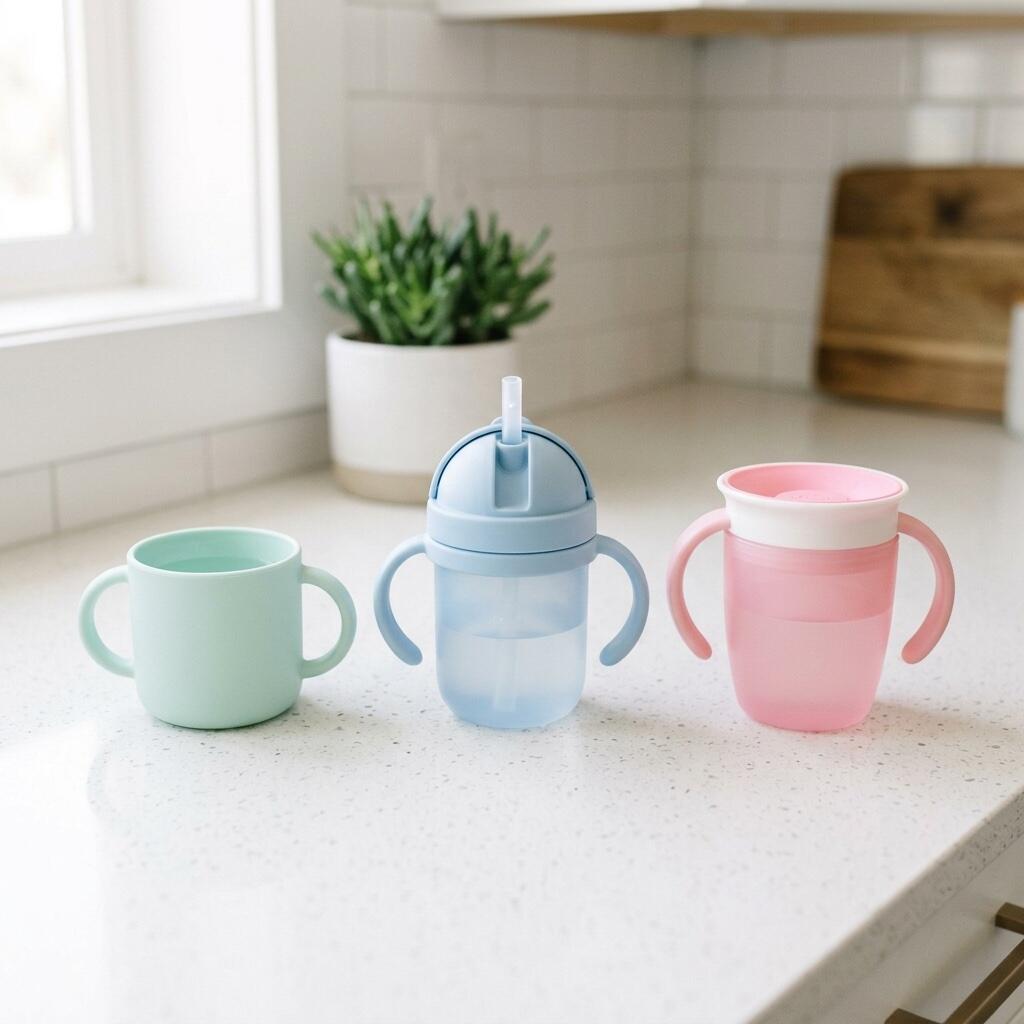
Open cups are the gold standard for development — they teach real sipping and swallowing — but they're also the messiest starting point. Straw cups are an excellent middle ground: they're easier for babies to manage, spill less, and still encourage the right oral movement. In the UK, the NHS recommends free-flow sippy cups (where liquid comes out when tilted, without a valve) as a step up from bottles. What to avoid: valved sippy cups, which require the same sucking action as a bottle and don't build toward independent drinking.
How to make the switch
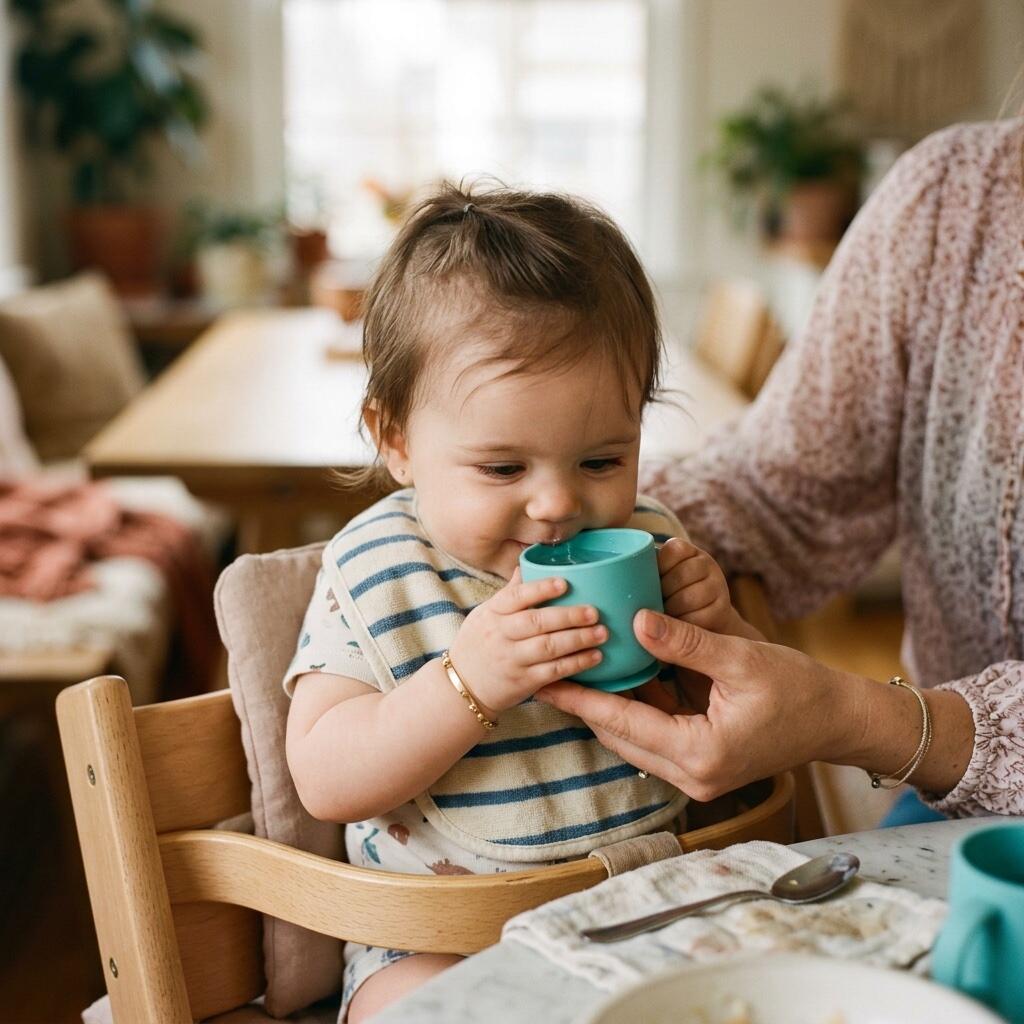
Introduce a cup at mealtimes for water first — this keeps it low stakes, since water is less precious than milk if it gets spilled. Once your baby is comfortable with that, move one milk feed to a cup, starting with the midday feed (babies are usually less attached to that one than the morning or bedtime bottle). At 12 months, when whole cow's milk becomes an option, it's a natural moment to serve it in a cup from the start, establishing the habit before it can become entrenched.
What to do when they refuse
Some babies resist the cup for a while, and that's normal. Try different cup types — some babies prefer straw cups, others take to open cups more readily. Make it playful: dip your finger in the water and let them lick it, or demonstrate drinking from the cup yourself. Offering a cup of water with every meal creates familiarity without pressure. Don't remove the bottle overnight — a gradual, consistent approach works far better than a cold-turkey switch.
It takes time, and that's okay
The goal at 10–12 months is introduction and familiarity, not perfection. Most babies don't fully master cup drinking until 12–15 months, and that's completely within the normal range. Keep offering, keep it relaxed, and remember that by making cups a normal part of every mealtime now, you're setting yourself up for an easier transition at the 12-month mark.
Key takeaways
Scientific sources
The guidance in this guide is based on these references.