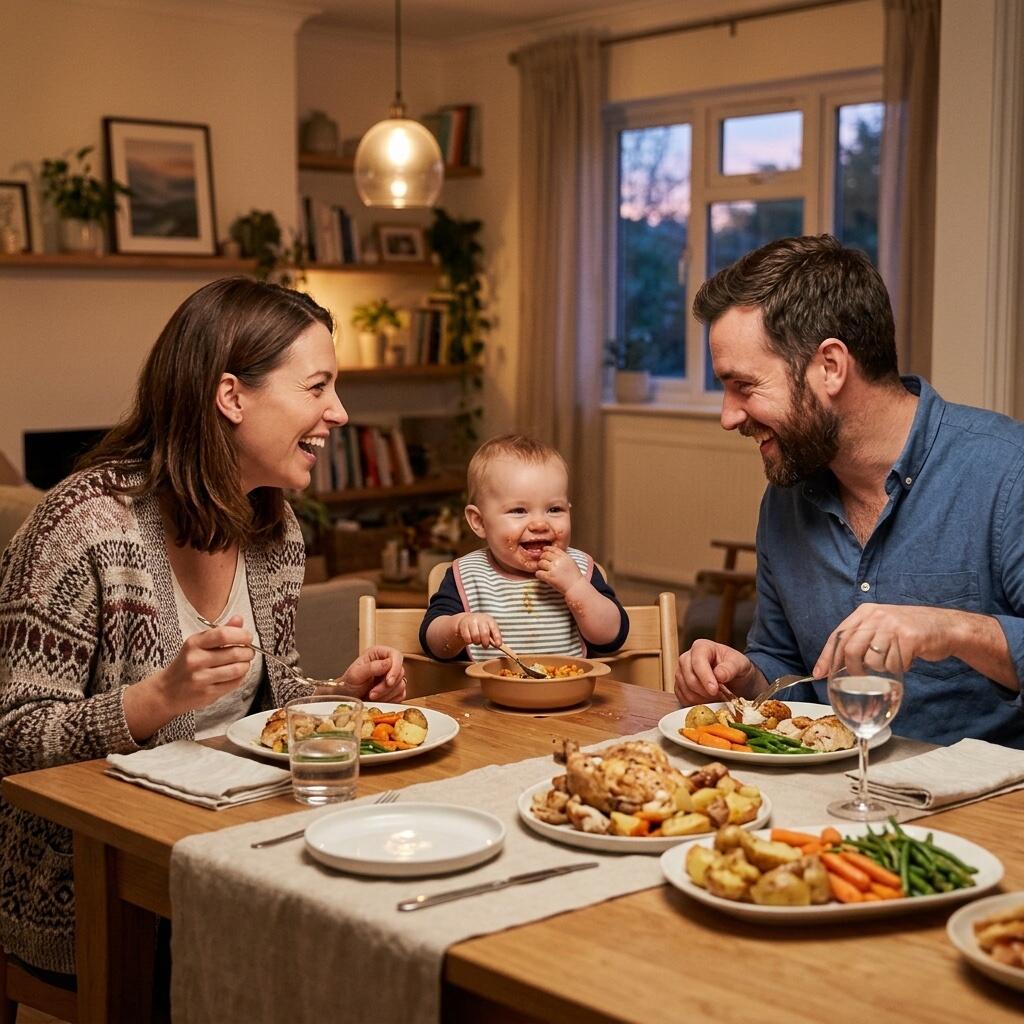
Eating with the Family
How to adapt your dinner for a 10–12 month old — without cooking two meals
One of the best things you can do for your baby's relationship with food is incredibly simple: eat together. Shared mealtimes teach babies that food is social, enjoyable, and worth exploring. And the good news is you don't need to become a short-order cook — a few small tweaks to your normal dinner is all it takes.
Why eating together is powerful
Babies learn an enormous amount by watching the people they love. When they see you eating the same food with obvious enjoyment, they become far more willing to try it themselves. Research consistently shows that family mealtimes are linked to healthier eating patterns, reduced food refusal, and more positive food relationships throughout childhood. Even if your baby mostly plays with food at this stage, the exposure still counts.
How to make your dinner baby-friendly
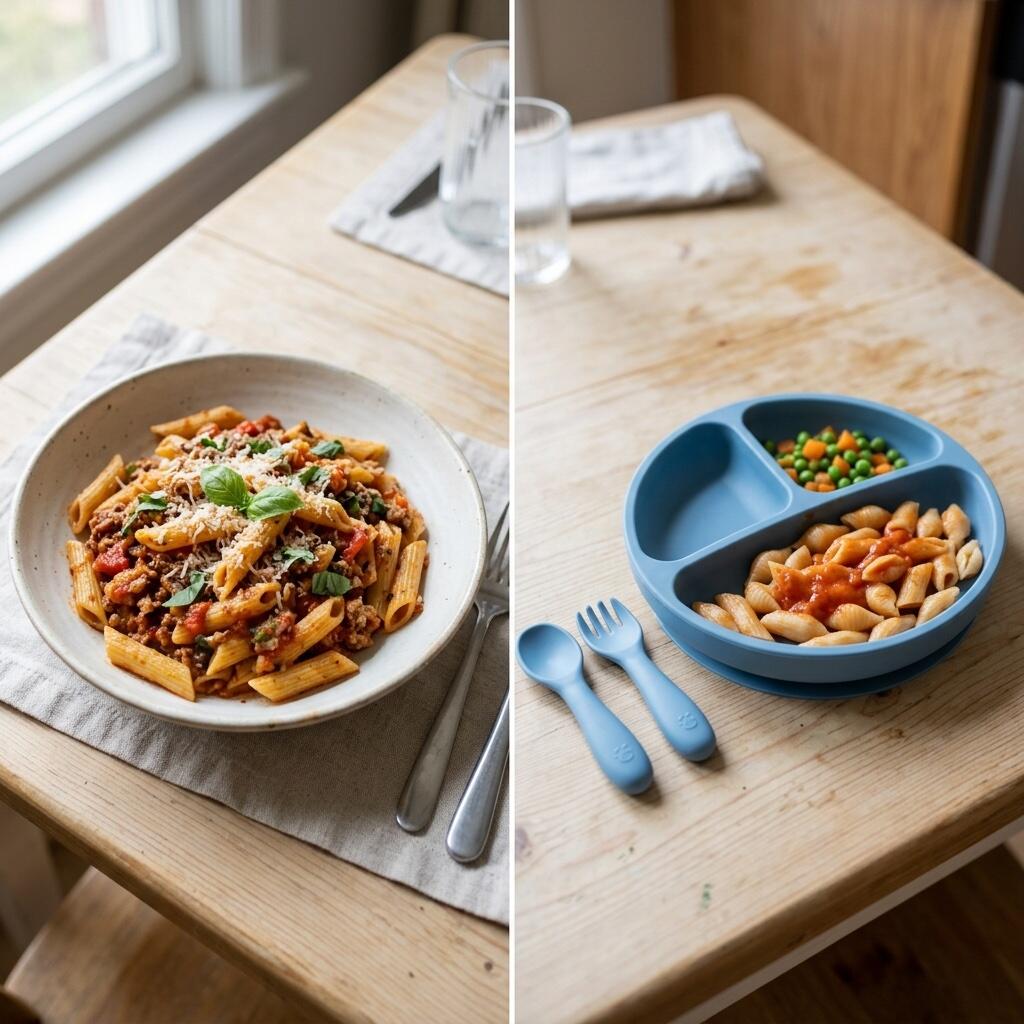
The key rule is simple: cook without salt, then season adult portions at the table after you've set aside baby's serving. Babies under 12 months should have less than 1g of salt per day, and their kidneys can't cope with adult amounts. Beyond salt, the main adaptations are texture-based — soft-cook shared vegetables until they squash easily between your fingers, and cut or shred meat into small manageable pieces. That's genuinely all you need to do most of the time.
Three family meals that work for everyone
Pasta Bolognese is a brilliant family meal — cook the mince with onions, tinned tomatoes, and a little garlic, hold the salt until serving, and baby gets a portion of the soft mince and pasta cut small. Roasted salmon with soft-roasted vegetables (courgette, sweet potato, broccoli) needs almost no adaptation — just flake the salmon and check for bones. Lentil soup is another winner: blend baby's portion slightly if needed, hold the stock cube (high in salt), and season the adults' bowls at the table.
Sitting together: why the habit matters
You don't need a formal family dinner every night — even just sitting at the table with your baby while they eat, and eating something yourself, makes a real difference. Babies who regularly eat alongside caregivers show greater diet variety and less anxiety around new foods over time. Try to make it a screen-free few minutes if you can — it helps everyone slow down and actually taste the food.
Making it a daily habit
Start with one shared meal a day — breakfast or dinner, whichever fits your routine best. It doesn't have to be elaborate. Toast, eggs, fruit, and a cup of tea for you alongside baby's similar breakfast is a family meal. As the habit builds, you'll find yourself naturally adjusting your cooking to be a little more baby-friendly without even thinking about it.
Key takeaways
Scientific sources
The guidance in this guide is based on these references.