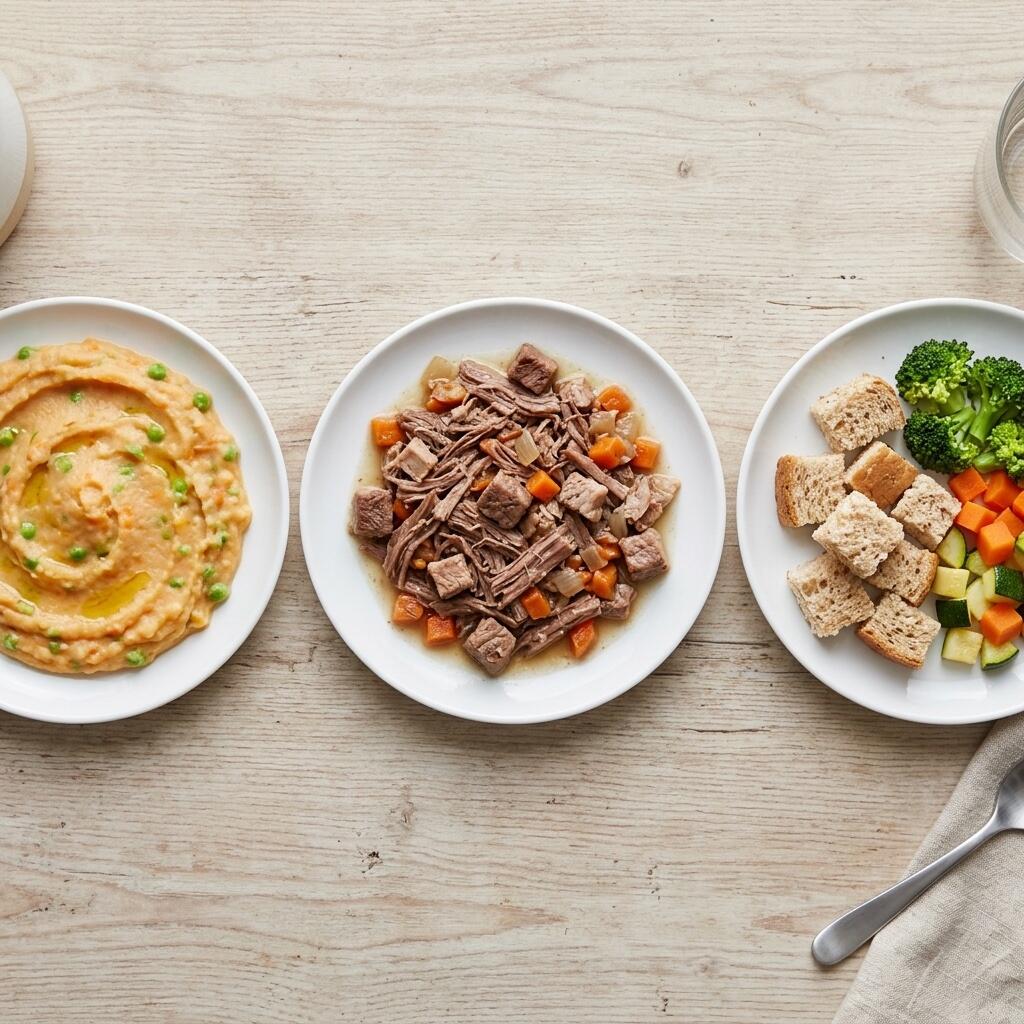
Texture Progression
Introducing soft meats, chewier grains, and foods with more bite
By 10–12 months, your baby's eating skills have come a long way — and their diet should reflect that. This is the stage to start moving toward soft family-table foods: real textures, real flavours, and the same kinds of things the rest of the household eats, just adapted slightly. Getting texture right now lays the groundwork for a much easier transition to family meals at 12 months and beyond.
Where should texture be at 10 months?
At 10 months, babies should be well past smooth purees and comfortably managing soft lumps and small finger foods. The target texture for this age is soft, easily mashed food — think the consistency of a ripe banana or well-cooked pasta. If your baby is still primarily on smooth purees at this stage, it's worth introducing more texture now, because the window for easy acceptance tends to narrow after 12 months and some babies develop texture aversions if purees are prolonged too long.
Soft meats to try
Meat is an important source of iron and zinc at this age, so it's well worth working into the routine. Shredded chicken (cooked until very tender in a broth or sauce) is one of the easiest to manage. Flaked salmon or other soft fish works brilliantly and provides omega-3s. Soft meatballs made from minced beef or turkey in a tomato sauce are a family-friendly option that babies often love. Minced beef stirred through a pasta sauce or shepherd's pie mash is another easy introduction.
Chewier grains and bread
Soft-cooked pasta (slightly past al dente) is excellent at this age — it squashes easily but has real texture for baby to work with. Wholemeal bread cut into strips, lightly toasted or plain, gives a satisfying chew and provides fibre. Pearl barley cooked in soups or stews becomes wonderfully soft and is a gentle introduction to a chewier grain. Avoid very dry or crumbly bread and crackers, which can be harder to manage safely.
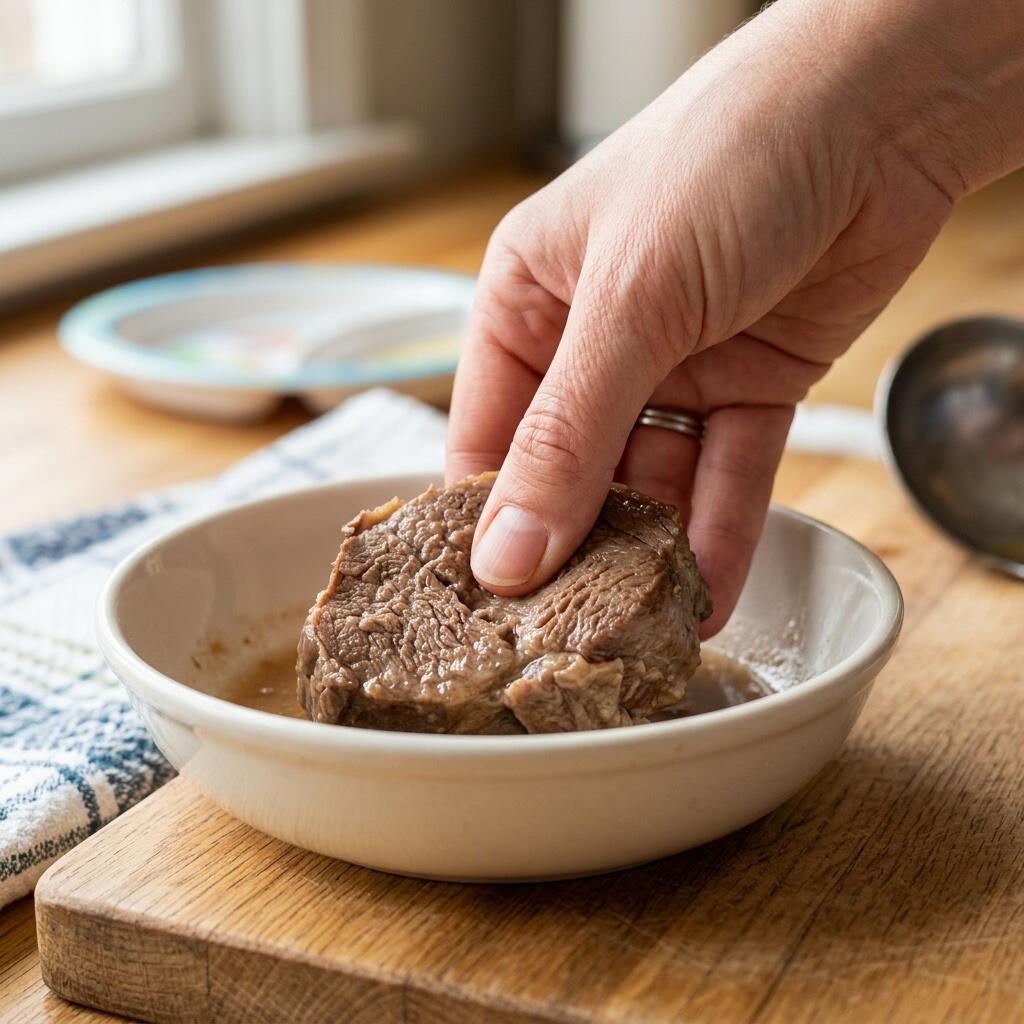
The thumb test: how to check if food is safe
The simplest safety check for texture is the thumb-and-forefinger test: place a piece of the food between your thumb and finger and press gently. If it squashes easily with light pressure, it's the right consistency for a 10–12 month old. If it resists, compresses but bounces back, or is hard, it needs more cooking or shouldn't be offered yet. This test takes two seconds and gives you real confidence when introducing new foods.
The risk of staying on purees too long
It's tempting to stick with smooth purees because they're familiar, quick, and you know baby will eat them. But research suggests that babies introduced to lumpy foods after 9–10 months are significantly more likely to show food fussiness at 7 years old. The good news is you don't need to rush — just make small, consistent steps toward more texture each week, and trust that your baby's oral skills are more capable than they might seem.
Key takeaways
Scientific sources
The guidance in this guide is based on these references.