Three Meals, Two Snacks
Building a full day of eating at 10–12 months
By 10–12 months, your baby's eating day has real structure: three meals, two snacks, and milk feeds that are gradually becoming the supporting act rather than the main event. It can feel like a lot to coordinate — but once you have a rhythm, it genuinely becomes second nature. Here's what a full day of eating looks like, and how to make it work without overwhelming yourself.
What a full day of eating looks like
A typical day at 10–12 months includes three solid meals, two snacks (mid-morning and mid-afternoon), and around 2–3 milk feeds depending on whether you're breastfeeding or formula feeding. Solids should now be accounting for a growing proportion of overall calories, with milk feeds typically totalling around 500–600ml of formula if bottle feeding, or on-demand breastfeeds. The goal isn't rigid precision — it's a consistent, relaxed structure that gives baby's appetite a rhythm.
Breakfast, lunch, and dinner — with examples
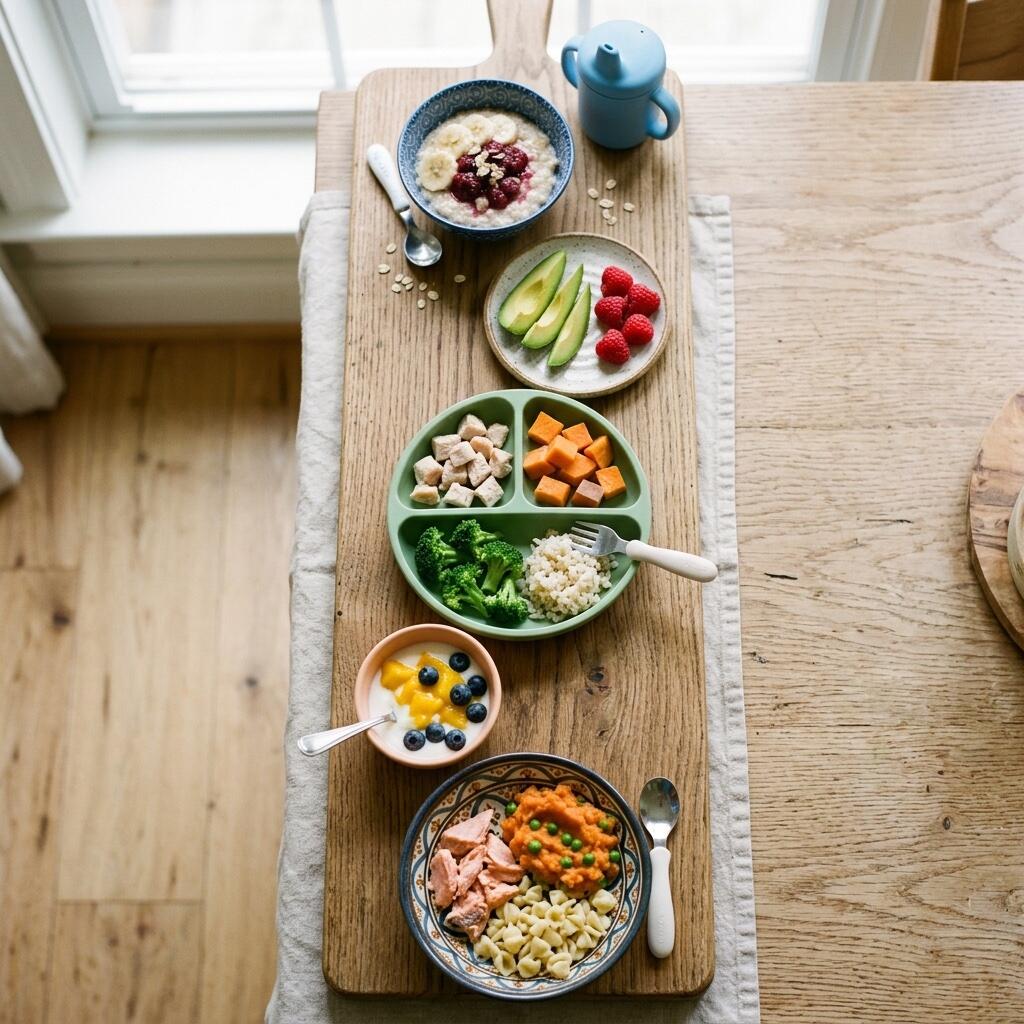
A sample day might look like this: Breakfast — scrambled egg with toast strips and a few blueberries, water in a cup. Lunch — soft pasta with a mild tomato and lentil sauce, cucumber strips, a few cheese cubes. Dinner — shredded chicken with soft-roasted sweet potato and broccoli, followed by a small pot of full-fat yogurt. You don't need to include every food group at every single meal — what matters is balance across the full day, not meal by meal. Some meals will be bigger, some smaller, and that's completely fine.
Snacks that earn their place
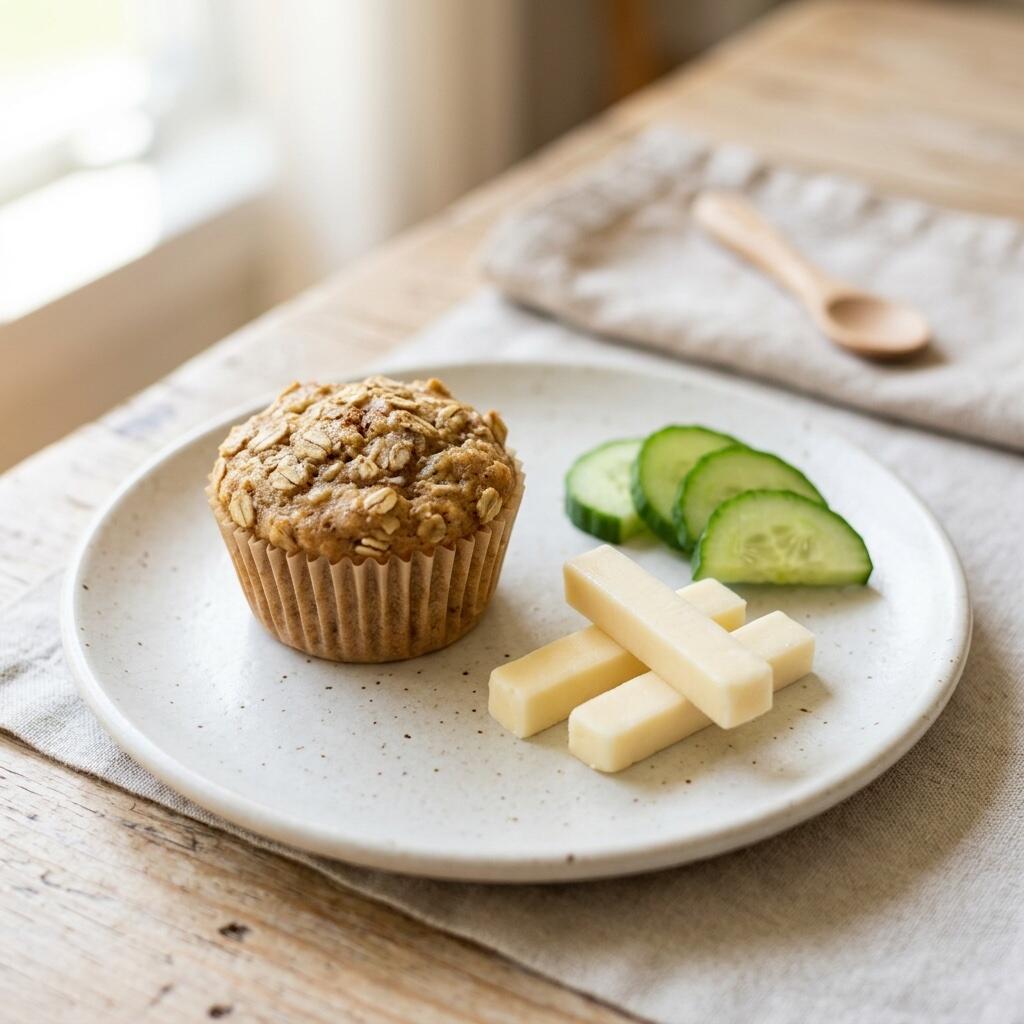
At this age, snacks aren't treats — they're a structural part of the eating day. Good snacks contribute real nutrition: a banana and some yogurt mid-morning, or rice cakes with cream cheese and halved grapes mid-afternoon. Aim for snacks that combine at least two food groups — something with energy (carbohydrate or fat) and something with nutrients (protein, calcium, vitamins). Avoid snacks that are just refined carbohydrates — sweet puffs and crackers without any accompanying nutrition don't serve baby well.
Milk, water, and timing it all together
Offer milk feeds at different times from solid meals when possible — a milk feed immediately before a meal can reduce appetite. Water should be available at every meal and snack. One common myth worth addressing: there's no good evidence that giving more solid food makes babies sleep through the night earlier. The AAP and CDC both note that sleep development is driven by neurological maturity, not stomach fullness — so don't feel pressure to load up evening meals in the hope of a longer night.
Tips for making meal prep manageable
You don't need to cook three separate meals from scratch every day. Cook larger batches of versatile bases — a Bolognese sauce, a lentil soup, a tray of roasted vegetables — and use them across two or three meals. Freeze in portions for the week ahead. Breakfasts are fastest when you have a rotation of five or six reliable options that need minimal prep. Giving yourself permission for imperfect days — a banana and some toast is a valid dinner — makes the whole system sustainable.
Key takeaways
Scientific sources
The guidance in this guide is based on these references.