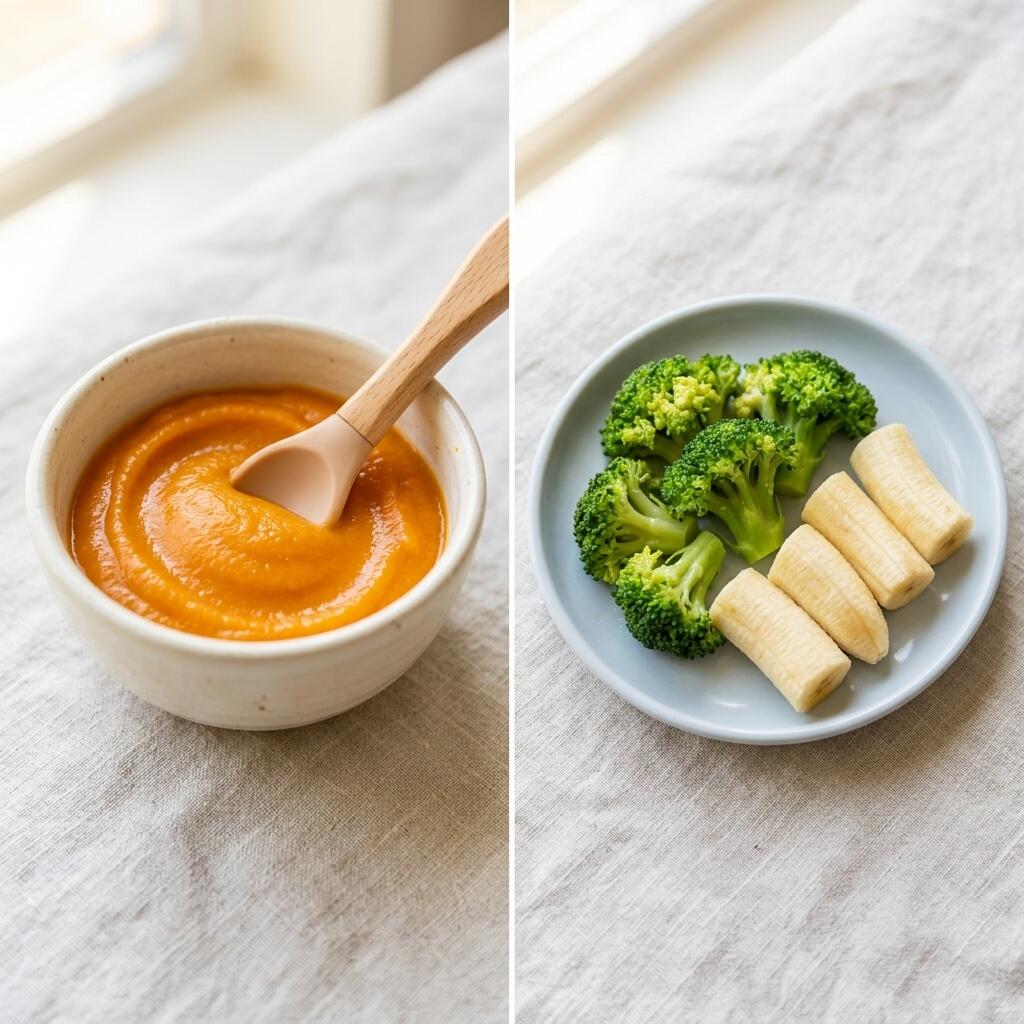
Purees vs. Baby-Led Weaning
Choosing the right feeding method for your family
At some point in your weaning research, you've probably stumbled into the purees-vs-BLW debate. It can feel heated online, but in practice, it doesn't need to be. Both approaches have real merits, there's solid research to support each, and many families end up doing a bit of both. Here's an honest look at what each method actually involves.
What is puree-led weaning?
Puree-led weaning means you prepare smooth, blended foods and offer them to your baby on a spoon. You control the pace — loading the spoon, bringing it to their mouth — while your baby controls whether to accept it. It's the most traditional approach to starting solids and is particularly well-suited to babies who are starting closer to 4–5 months, when fine motor skills are still developing. Purees also make it easy to control texture precisely, which can feel reassuring for parents who are anxious about choking.
What is baby-led weaning?
Baby-led weaning (BLW) skips purees entirely. Instead, you offer your baby appropriately sized, soft finger foods and let them feed themselves from the very beginning. The idea, developed by UK health visitor Gill Rapley, is that babies who self-feed develop better hand-eye coordination, are more in tune with their hunger cues, and may be more willing to eat a variety of textures later. BLW is typically better suited to babies who are closer to 6 months, can sit well independently, and already have good hand-to-mouth coordination.
What does the research say?
Studies comparing puree-led and baby-led weaning haven't found meaningful differences in nutritional outcomes, growth, or long-term eating behaviours when both are done well. The BLISS (Baby-Led Introduction to Solids) studies suggest BLW can be done safely without increased choking risk if foods are selected carefully. However, BLW does carry a slightly higher risk of inadequate iron intake if iron-rich foods aren't prioritised — something to be mindful of whichever method you choose. Neither approach is universally superior.
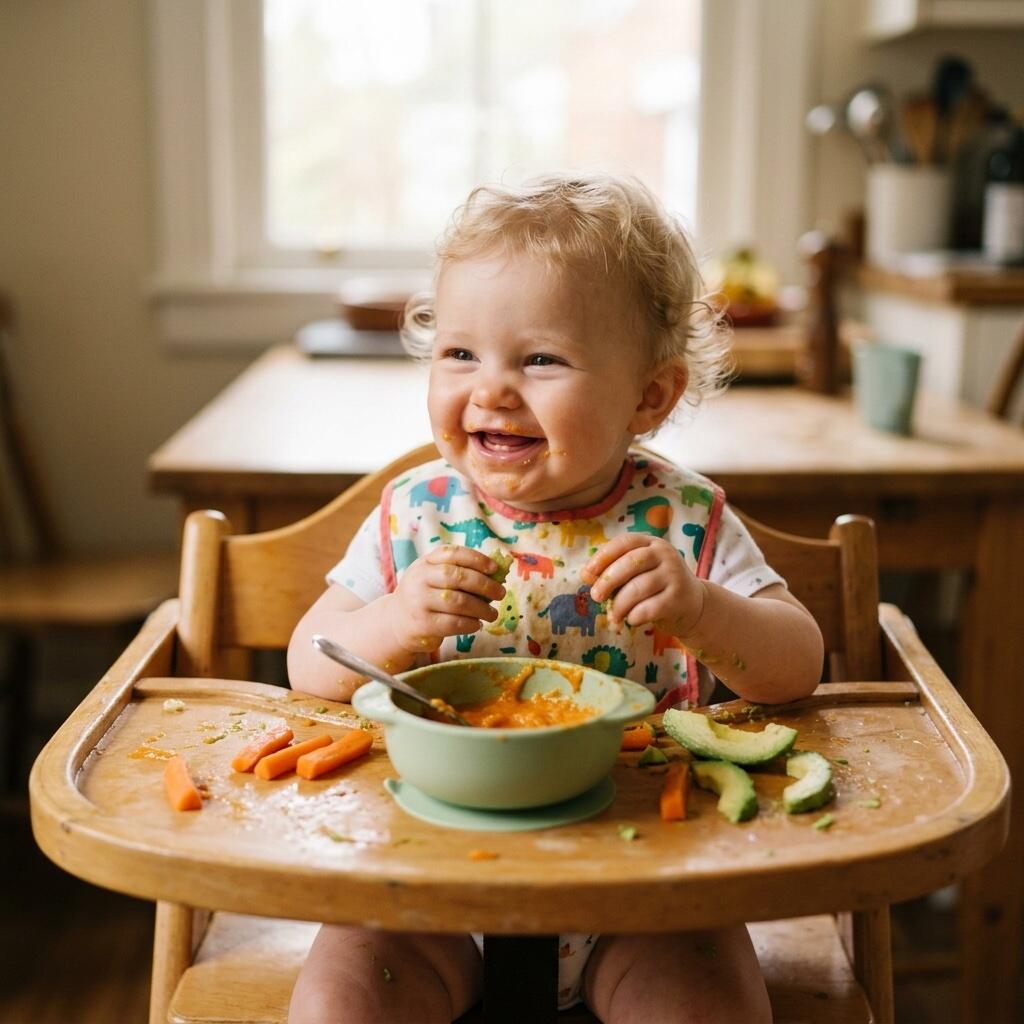
How to choose — or combine both
Many families settle on a combination approach, sometimes called responsive or combination weaning: offering smooth purees on a spoon alongside soft finger foods from around 6 months. This gives your baby the experience of self-feeding and exploring textures while also allowing you to offer foods that are easier to manage at first. The most important thing both methods share is that your baby is always in charge of how much they eat — your job is to offer, not to push.
The one rule that applies to both
Whether you use purees, BLW, or a mix, your baby must always be in an upright position when eating and must never be left unattended during a meal. Both approaches require you to learn the difference between gagging — a normal, protective reflex — and choking, which is a medical emergency. Learning basic infant first aid, including how to respond to choking, is strongly recommended before you begin weaning.
Key takeaways
Scientific sources
The guidance in this guide is based on these references.