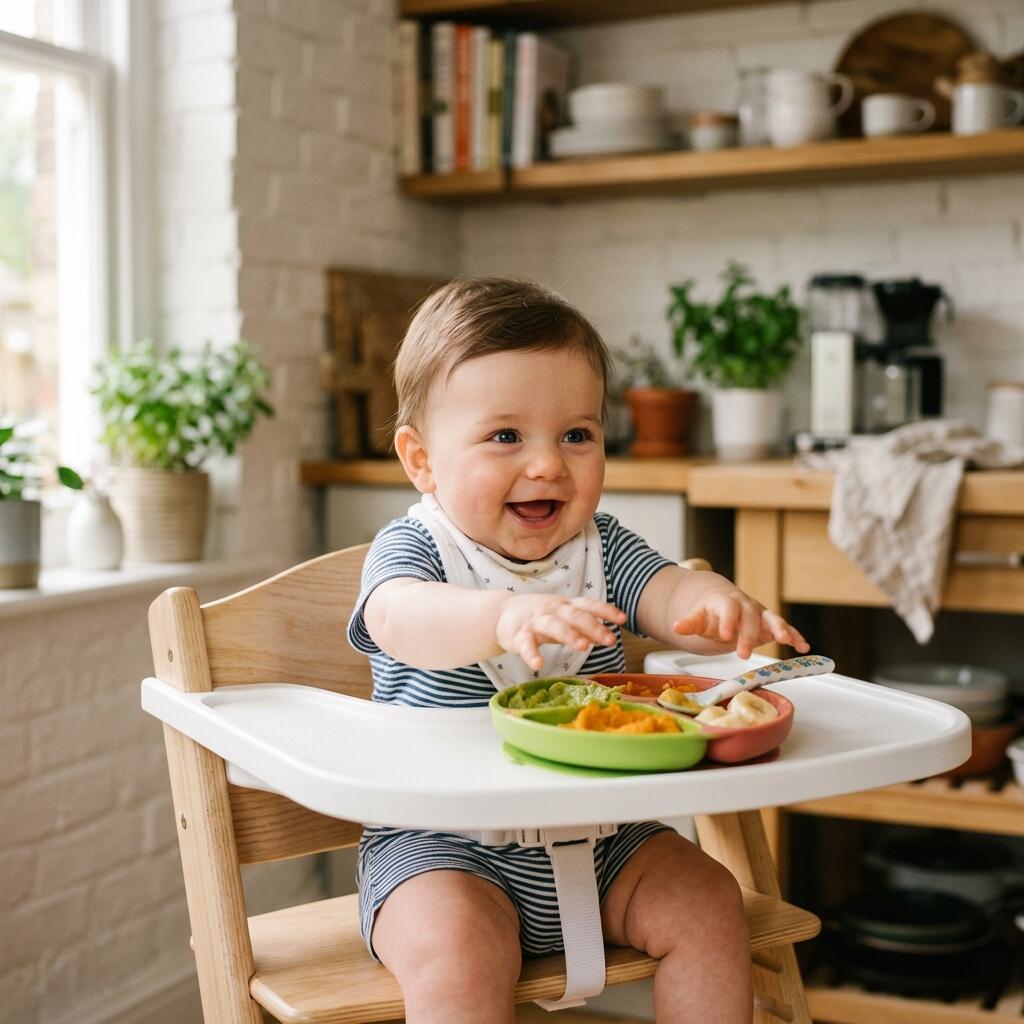
Signs of Readiness
How to know your baby is actually ready for food
Watching your baby eyeing your dinner and wondering if they're ready for food is one of the most exciting moments of early parenthood. But figuring out the right time can feel confusing — especially when everyone seems to have a different opinion. Here's how to look past the guesswork and read your baby's actual cues.
What the four readiness signs look like
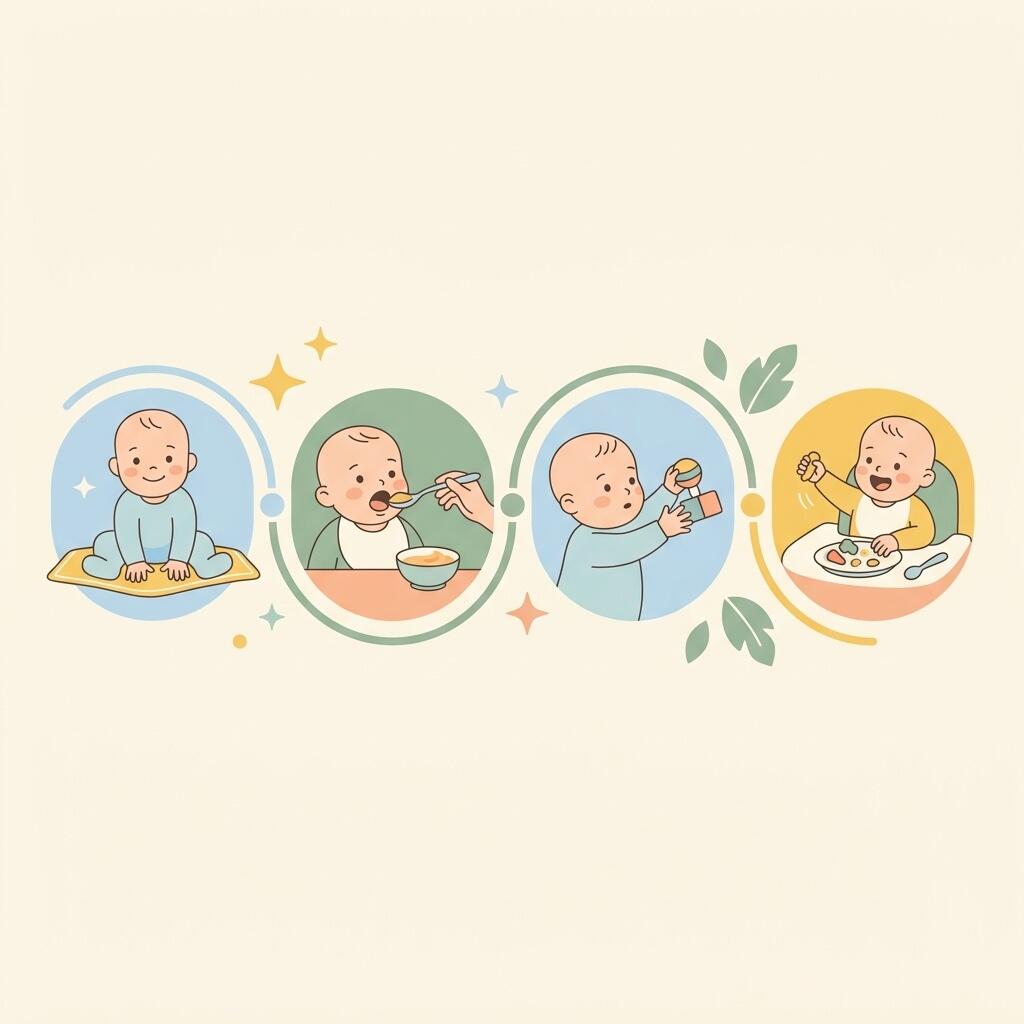
Health authorities agree on four key signs that a baby is ready to start solids. First, they can sit upright with minimal support and hold their head steady — this matters for safe swallowing. Second, they've lost the tongue-thrust reflex, which is the automatic impulse to push anything out of their mouth with their tongue. Third, they show genuine interest in food: watching you eat, reaching toward your plate, or opening their mouth when food comes near. All four signs together are a much more reliable signal than age alone.
Why 4 months is too soon
Starting solids before 17 weeks (around 4 months) is not recommended, even if your baby seems keen. Their digestive system and kidneys are still developing and aren't ready to handle solid food. Early introduction is also linked to a higher risk of allergies, choking, and digestive discomfort. Most babies show readiness signs somewhere between 5 and 6 months, though some are ready closer to 6 months — and that's completely normal.
Age alone isn't the answer
Turning 6 months doesn't automatically mean your baby is ready, and being 5 months doesn't mean they're not. The four readiness signs matter more than the date on the calendar. A baby who can sit well, hold their head up, and shows curiosity about food at 5.5 months is likely more ready than a 6-month-old who still has a strong tongue-thrust reflex.
A note on premature babies
If your baby was born prematurely, readiness signs should be assessed using their corrected age — the age they would be if they had been born at 40 weeks — rather than their actual birth date. This means a baby born 8 weeks early might not show readiness signs until 6.5 or 7 months actual age. Always discuss the right timing with your healthcare team, as their guidance will be tailored to your baby's individual development.
When to ask your doctor
If your baby is approaching 7 months and still doesn't seem to show readiness signs, it's worth a conversation with your GP or paediatrician — not because something is definitely wrong, but because they can check for any underlying developmental factors and offer personalised guidance. Equally, if you're unsure whether what you're seeing counts as readiness, your health visitor is a great first port of call and will have seen hundreds of babies at this stage.
Key takeaways
Scientific sources
The guidance in this guide is based on these references.