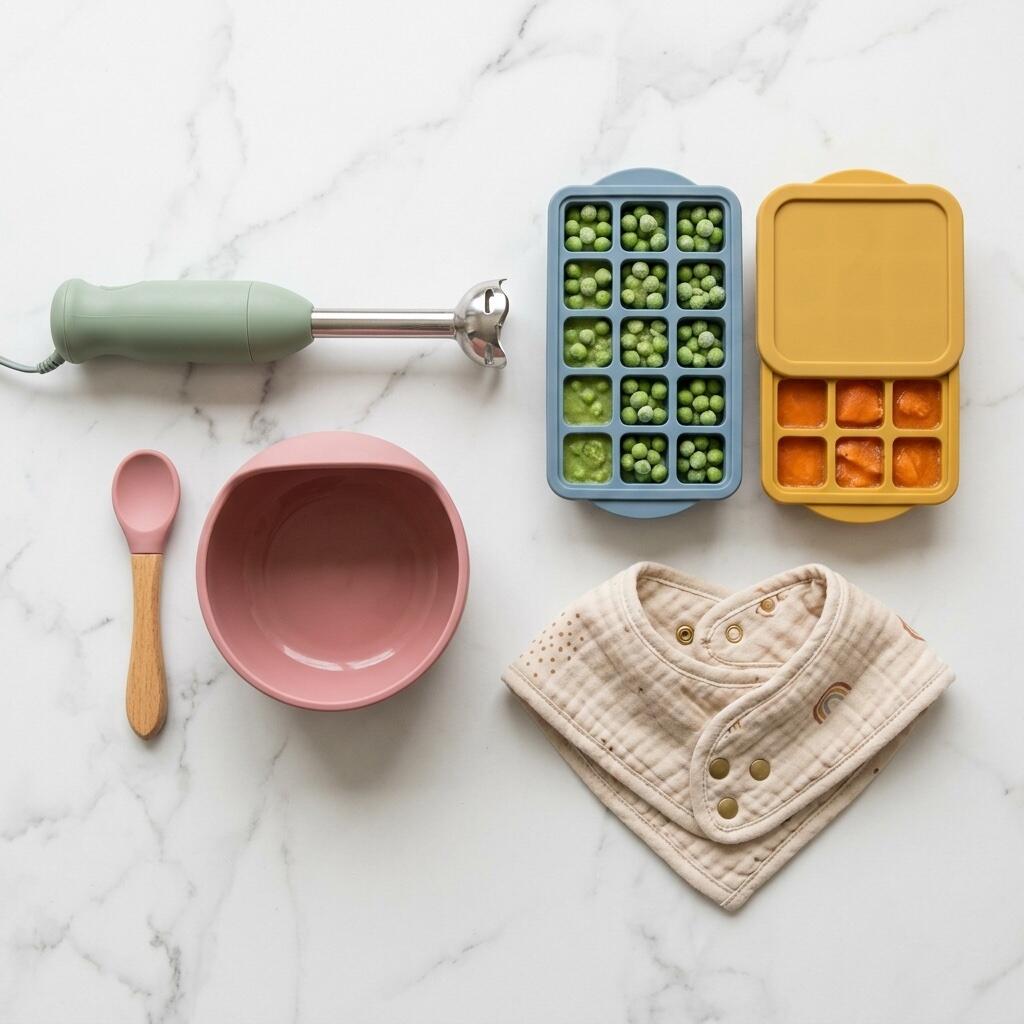
Your Puree Starter Kit
5 tools worth buying (and a few you can skip)
Walk into any baby shop and you'll find an overwhelming wall of weaning gadgets, most of which you don't need. The good news is that you can set up a genuinely solid weaning kitchen with just five items — and you probably already own at least two of them. Here's what's actually worth your shelf space.
The 5 tools you actually need
A supportive highchair is essential — your baby needs to sit upright at 90 degrees for safe swallowing, and a proper highchair makes this easy. A soft-tipped silicone spoon protects tender gums and makes the transition to food feel gentle. A suction bowl keeps the bowl on the tray rather than on the floor, which saves your sanity early on. A hand blender (or dedicated baby food blender like a Babycook or NutriBullet) turns cooked vegetables and fruit into smooth purees in seconds. Finally, a silicone ice cube tray lets you freeze purees in single-serving portions so you can batch cook and pull out exactly what you need each day.
Tools you can skip
A dedicated baby food maker that both steams and blends is convenient but absolutely not necessary — a regular steamer basket and a hand blender do the same job for a fraction of the price. Pouches and pouch-filling kits are fine occasionally but shouldn't be a staple, as they can make it harder for babies to learn to eat from a spoon. Elaborate warming gadgets are also unnecessary: a bowl of warm water works perfectly well to take the chill off refrigerated purees. Save your money for a good highchair instead.
Making and storing purees safely
You don't need to sterilise equipment for purees the way you do for bottles — washing thoroughly with hot soapy water and allowing to air dry is sufficient once your baby is healthy and over 6 months. That said, always start with clean hands and clean surfaces, and never leave cooked purees at room temperature for more than two hours. Refrigerated purees are good for up to 48 hours; frozen purees keep well for up to three months. Label your ice cube trays with the food name and date so you're never guessing what's in the freezer.
Batch cooking: how to make it work
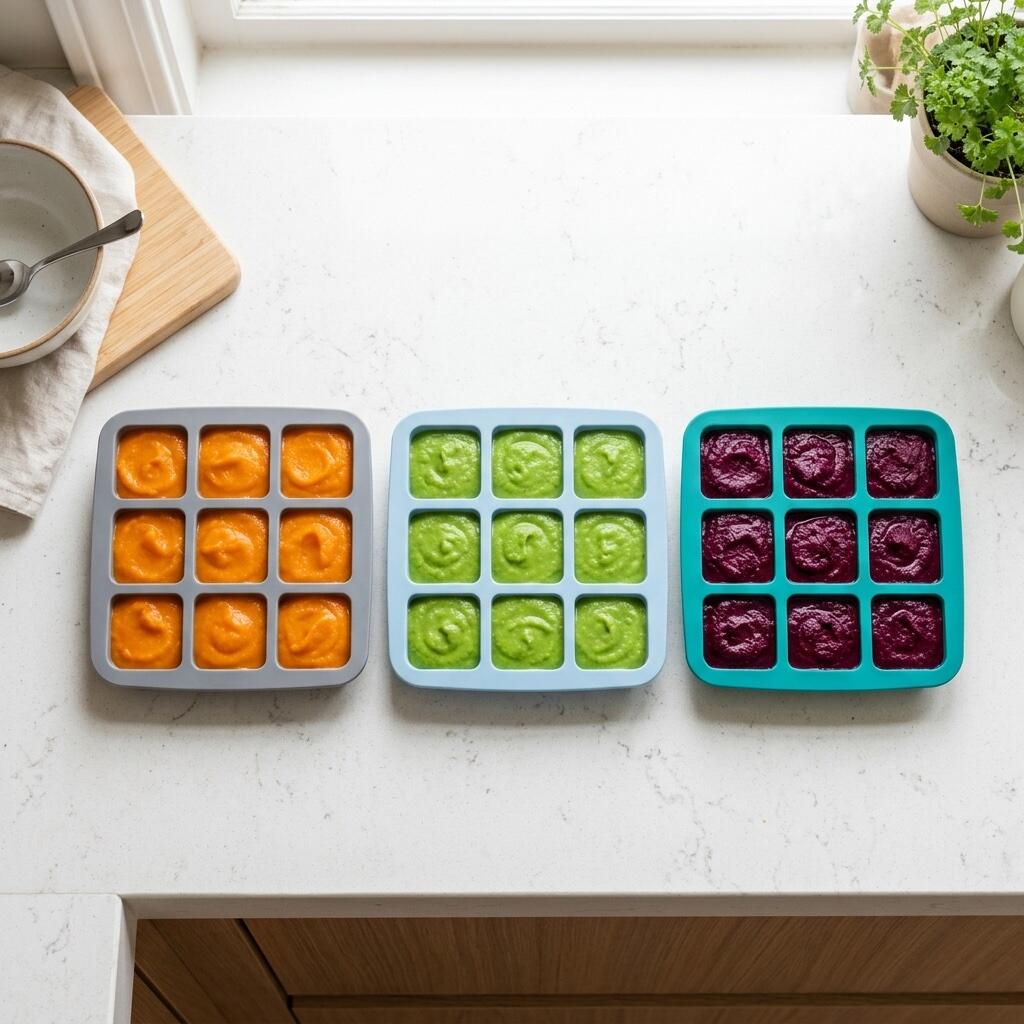
Batch cooking is the single biggest time-saver in early weaning. Once or twice a week, steam or boil a few different vegetables, blend them separately, pour into ice cube trays, freeze, then transfer the frozen cubes to labelled zip bags. Each cube is roughly one to two tablespoons — the perfect portion size for a 4–6 month old. Defrost overnight in the fridge or heat from frozen in a small pan with a splash of water, stirring regularly and checking the temperature before serving.
A word on temperature
Purees should be served lukewarm or at room temperature — not hot. A quick stir to eliminate any hot spots, and always test a small amount on your wrist before offering it to your baby. Babies at this age have no real preference for warm food, so serving at room temperature after defrosting is completely fine and saves you time.
Key takeaways
Scientific sources
The guidance in this guide is based on these references.