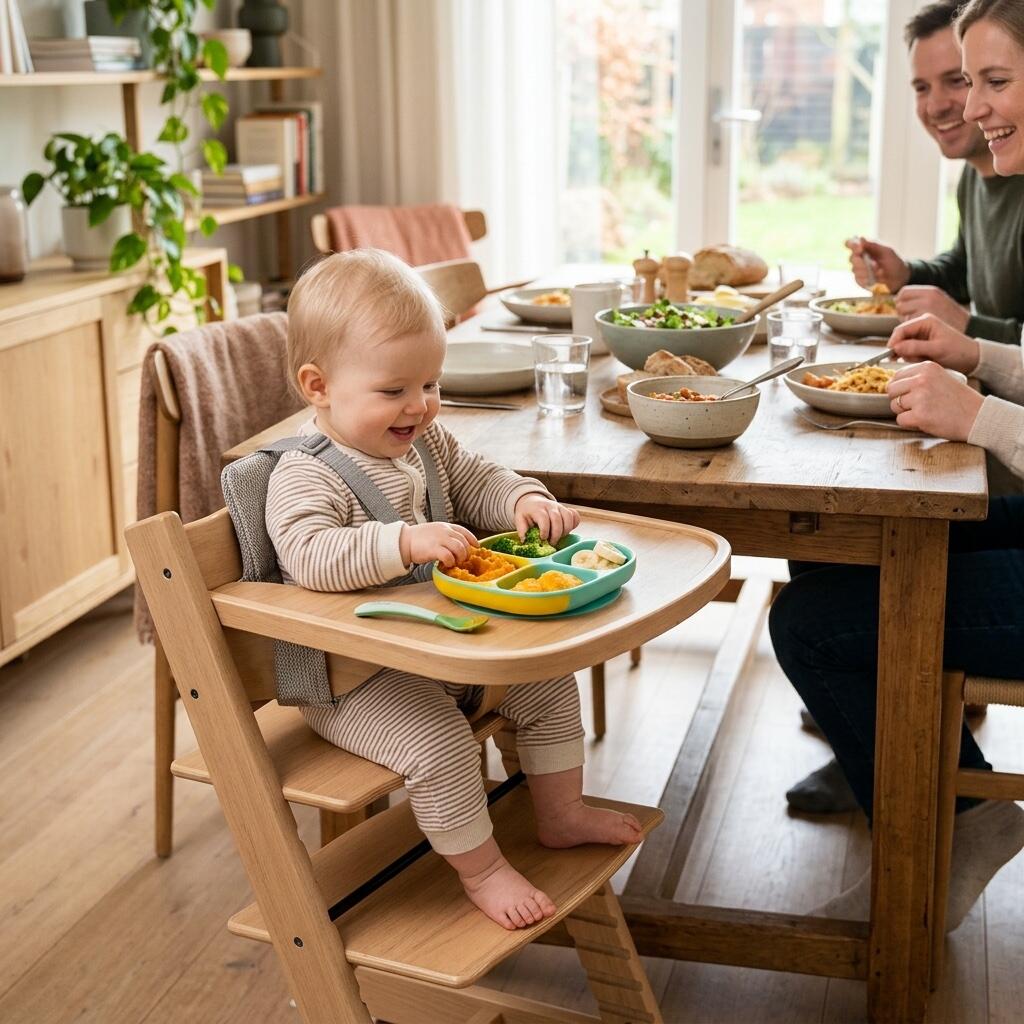
High Chair Safety
Proper positioning to prevent choking — and what else to check before every meal
Setting up a safe mealtime environment is one of the most practical things you can do before your baby's first bite. Most of it takes less than a minute once you've made it a habit — and the difference it makes to safe swallowing is significant. Here's what to check every time.
Why position matters
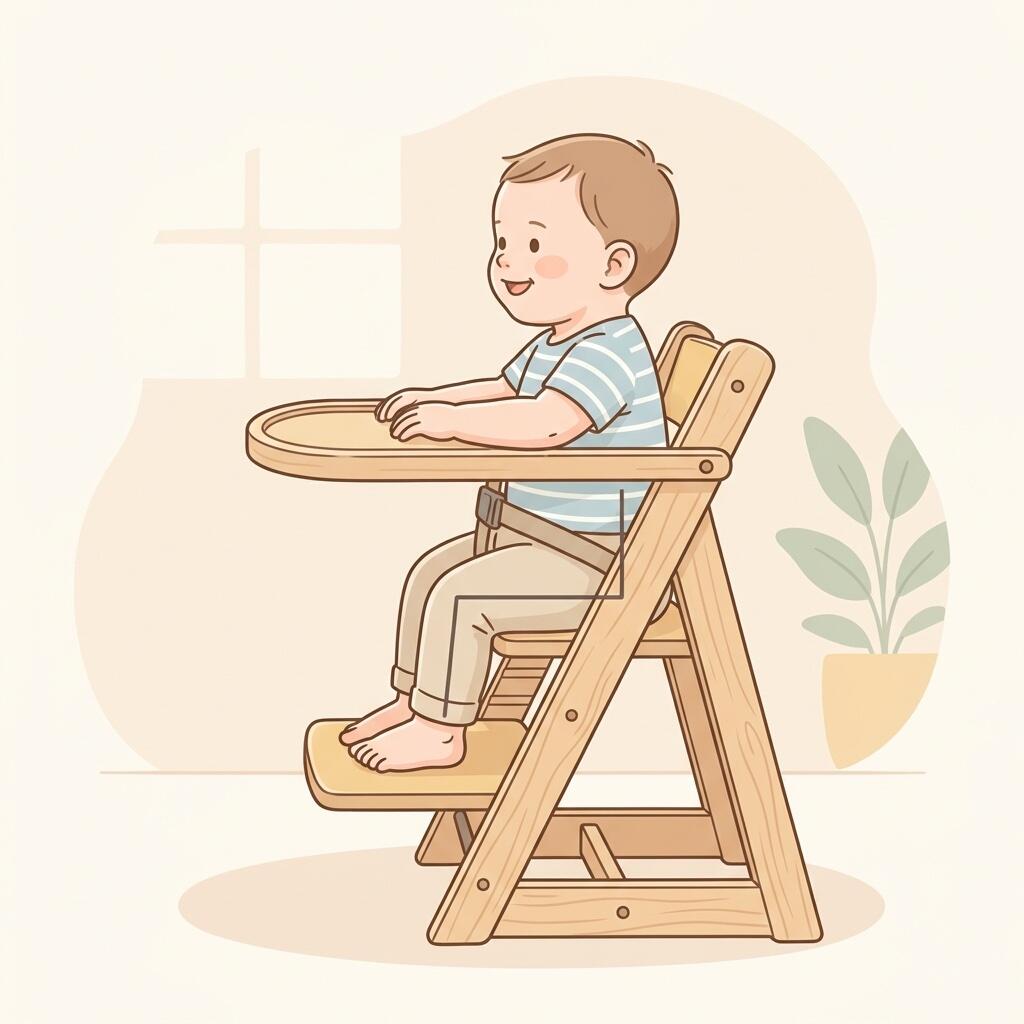
Swallowing is a complex reflex that works most safely when the body is upright. A baby who is reclined — even slightly — has a much harder time moving food safely from the front of the mouth to the throat and oesophagus, which increases the risk of food going the wrong way. The ideal position is sitting at roughly 90 degrees with the back supported, the feet flat on a footrest or surface, and the head in a neutral, slightly forward position — not tilted back.
High chair vs. bouncer: why it matters
Bouncers, car seats, and reclined baby chairs are not safe for feeding. They all place your baby at an angle that compromises their ability to swallow safely and increases choking risk. A proper highchair that positions your baby upright is essential from the moment you start solids — even if they're only having a teaspoon of puree. If your baby can't yet sit well enough in a highchair without slumping, they may not be ready to start solids yet.
Setting up a safe high chair
Check the harness is fastened every time — it should be snug but not tight, and the crotch strap should always be used to prevent your baby from sliding down. The tray should be positioned so your baby's arms can rest on it comfortably, not raised so high that they're straining. If your highchair has a footrest, adjust it so your baby's feet can rest flat — dangling feet make it harder to sit stably. Clean the tray before and after every meal.
The pre-meal checklist
Before each meal, run through five quick checks: baby is upright and secure in the harness; feet have support; tray is clean and at the right height; no distracting screens or noise that might cause your baby to turn suddenly; and you are sitting down and fully focused on your baby. That last one matters — distractions are one of the main causes of choking incidents, both in your baby and in you as the carer. A calm, focused mealtime is a safer one.
Never leave baby unattended
Your baby should never be left alone while eating — not even for the thirty seconds it takes to answer the door or grab your phone. If you need to step away, take your baby with you or take the food away first. Similarly, never offer food in a moving car, as the driver cannot monitor the baby and you cannot respond quickly if something goes wrong. These aren't guidelines for worst-case scenarios; they're habits worth building from day one.
Common mistakes to avoid
The most common setup mistakes are: using a bouncer or reclining seat for feeding; not using the harness crotch strap; positioning the tray too high or too low; trying to feed a baby who is too hungry or too tired (both increase the likelihood of rushing or grabbing at food); and handing your baby food while distracted. None of these are big failures — they're things most parents do before they learn better. The important thing is correcting them early and making safe positioning a reflex.
Key takeaways
Scientific sources
The guidance in this guide is based on these references.