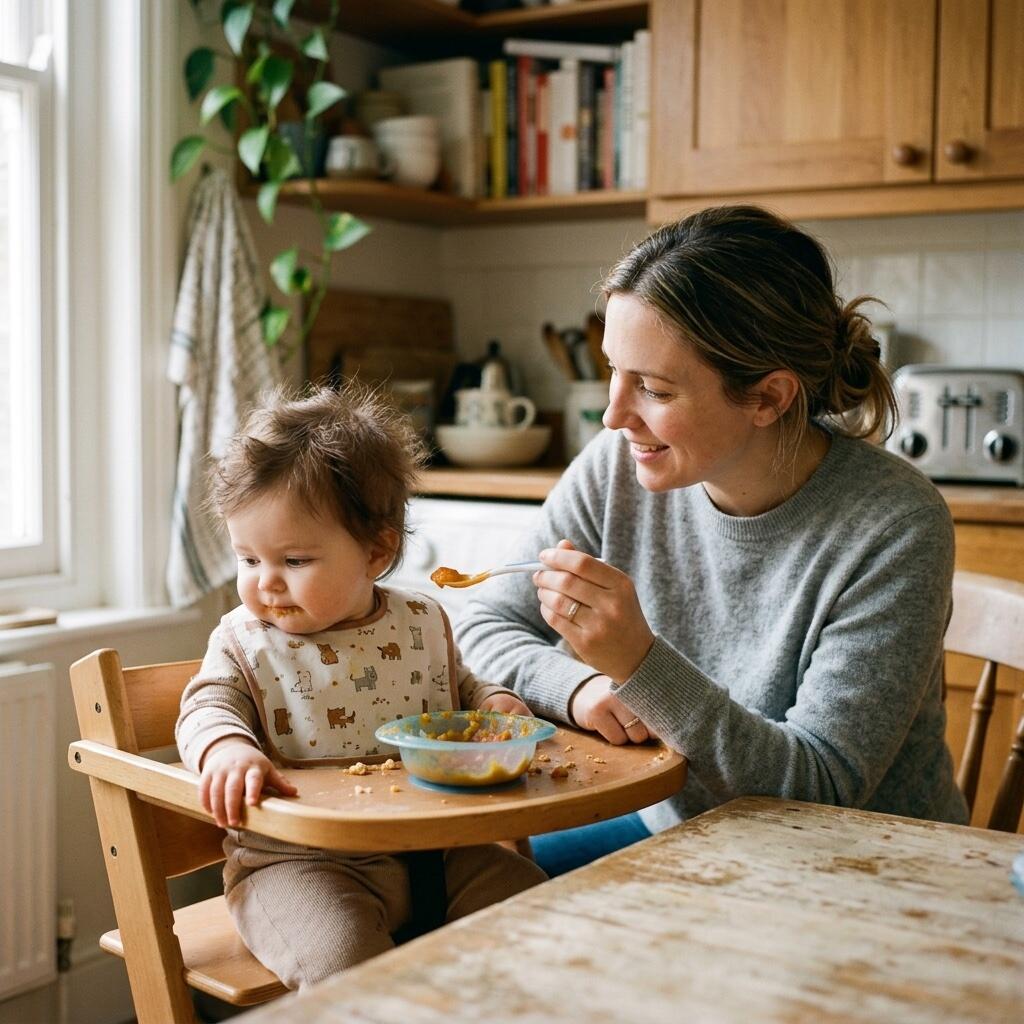
Dealing with Food Refusal
What to do when your baby suddenly says no to everything
You've spent weeks building up a lovely repertoire of foods — and then one week your baby starts rejecting everything. This is one of the most common and most stressful moments in early feeding, and it catches almost every parent off guard. The good news: it's almost always normal, it's temporary, and there are calm, practical ways to get through it.
Why food refusal happens
Around 10–12 months, many babies begin showing early signs of food neophobia — a wariness of new or unfamiliar foods. This is actually an evolutionary protective mechanism, believed to have emerged when toddlers started exploring the world independently and needed to be cautious about what they put in their mouths. It typically peaks between 1 and 3 years, but it often begins in this 10–12 month window. Understanding that it's biology, not defiance, can make it much less frustrating.
The Division of Responsibility
Dietitian Ellyn Satter's Division of Responsibility is one of the most well-supported frameworks in childhood feeding. The principle is simple: parents decide what food is offered, when it's offered, and where meals happen. The child decides whether they eat and how much. When parents take over the child's side — pressuring them to eat, bribing with dessert, or making separate meals — it tends to backfire and can entrench food refusal over time. Sticking to your role and trusting baby to do theirs is genuinely hard, but it works.
Practical tips to get through it
Keep offering refused foods — research suggests it can take 10 to 15 exposures to a new food before a baby accepts it, and each exposure counts even if they don't eat it. Serve refused foods alongside accepted ones so baby doesn't face an entirely unwelcoming plate. Eat together when you can so they see you enjoying the same food. Keep mealtimes calm, brief (15–20 minutes is fine), and never a battleground. Praise for trying, not for finishing.
What not to do
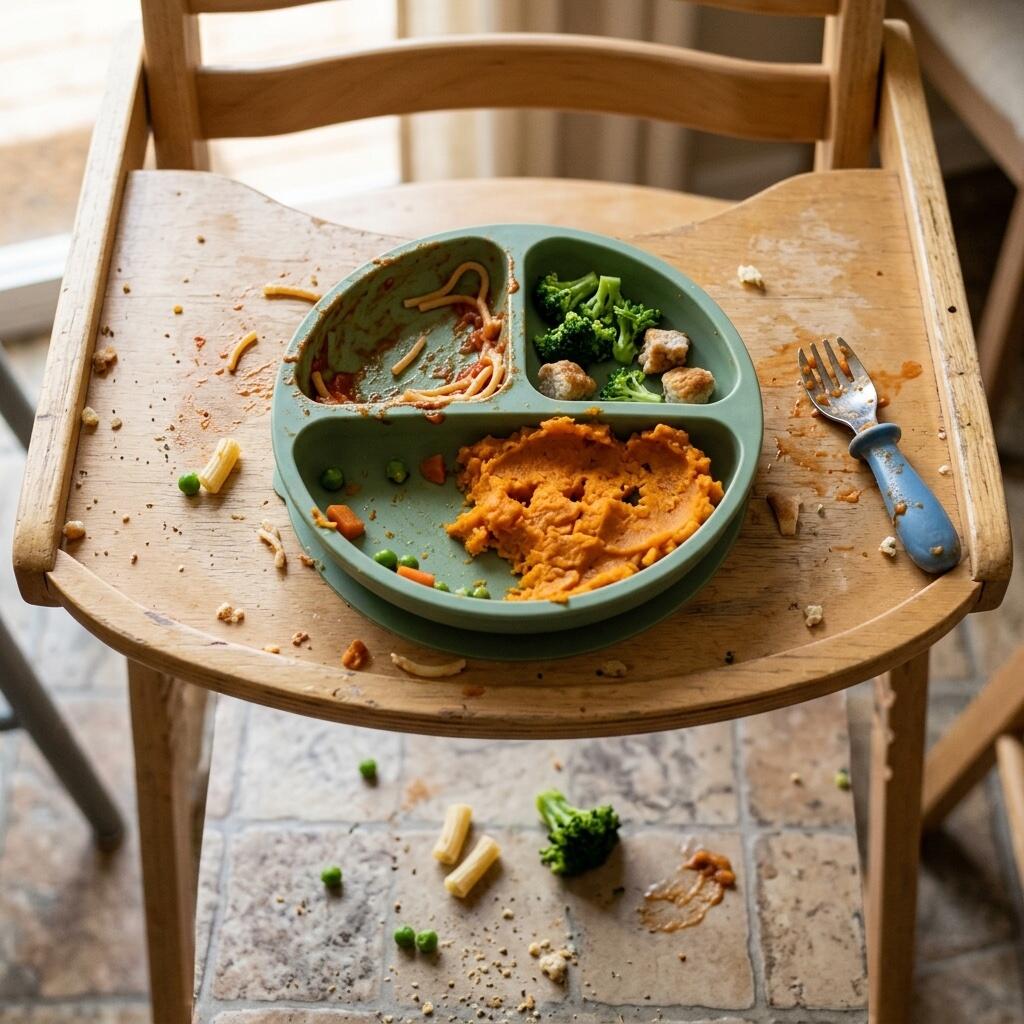
Avoid pressuring, bargaining, or using food as a reward or punishment. 'One more bite' and 'you can't have pudding unless you eat your peas' both undermine a child's ability to trust their own hunger and fullness signals. Making an entirely separate meal when baby refuses their dinner teaches them that refusal leads to preferred food — the opposite of what you want. It's hard to hold the line, but consistency pays off.
When to seek help
Most food refusal at this age is completely typical and resolves with time and the strategies above. But there are some signs that warrant a conversation with your GP or health visitor: significant weight loss or failure to gain weight, gagging on most food textures rather than just new ones, a diet that has narrowed to fewer than five or six foods, or visible distress around mealtimes rather than simple disinterest. Trust your instincts — if something feels off beyond normal fussiness, it's always worth getting checked.
Key takeaways
Scientific sources
The guidance in this guide is based on these references.