How do I track allergens and reactions when starting solids?
Introduce allergens early, one at a time, and keep them coming. Avo keeps the list, the dates and the reactions, so the record is there if a doctor ever asks.
Allergens are the part of weaning parents lose sleep over
Which allergens are done, and which are not?
Peanut, egg, milk, wheat, soy, fish, shellfish, tree nuts and sesame. Keeping nine running tallies in your head, with a baby on your hip, does not work.
Was that rash the egg or the heat?
Subtle reactions show up hours later and get lost in the day. Without the time, the food and the symptoms written down, a pattern is impossible to see.
Introducing is not enough
Current guidance is to keep offering an allergen regularly once it has been introduced. Most families introduce peanut once and forget it for a month.
Nine allergens, one list, every reaction dated
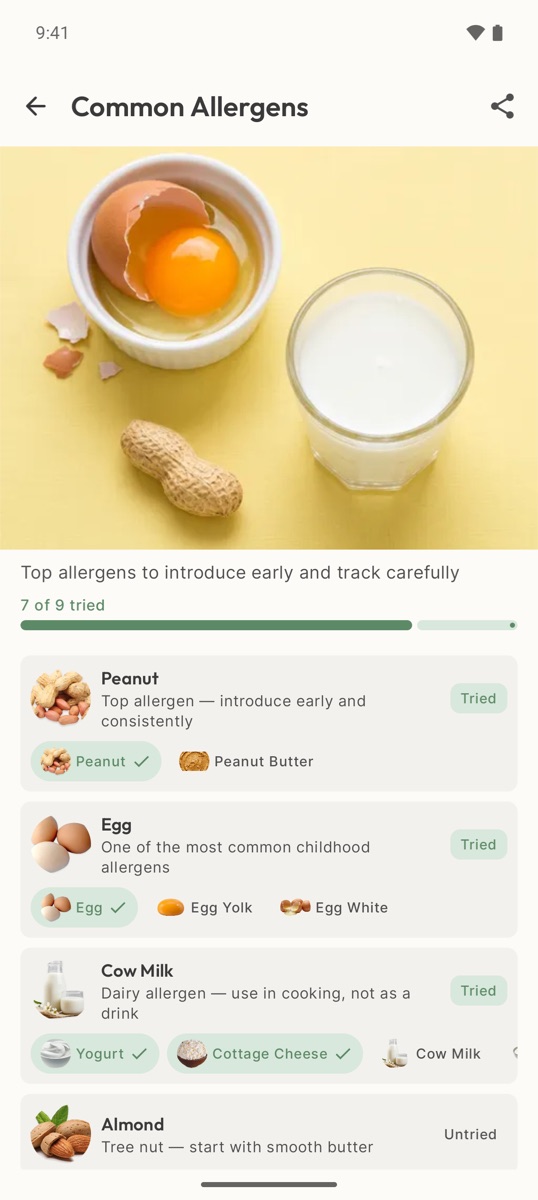
Tick off the nine common allergens
The Common Allergens screen shows each allergen, the foods that carry it and whether it has been tried. Log yogurt and the milk allergen is marked; log peanut butter and peanut is. Seven of nine tried is a number you can see at a glance.
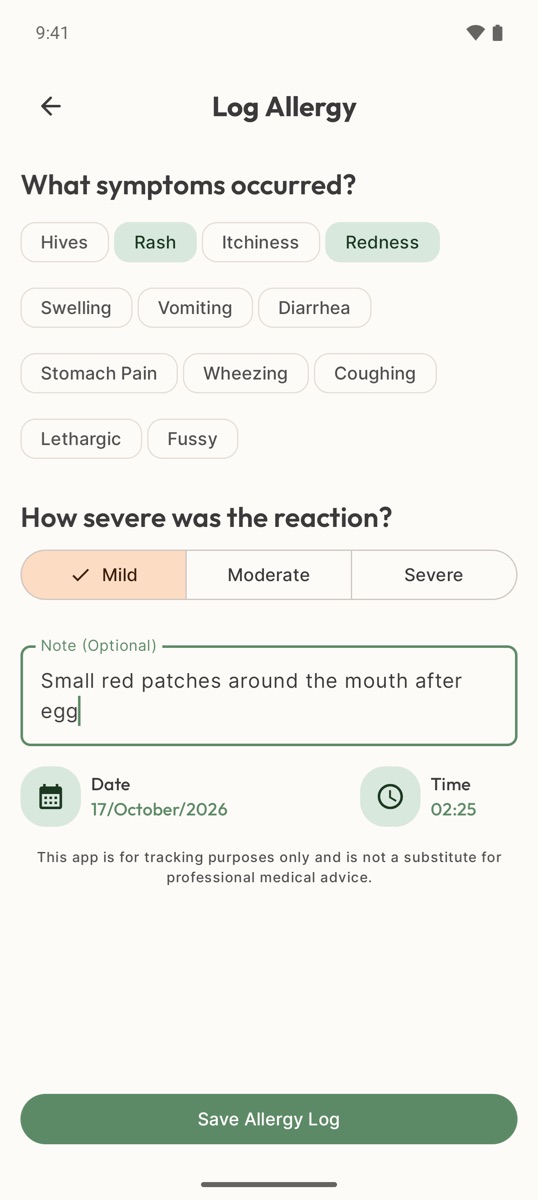
Log a reaction in seconds
Hives, rash, redness, swelling, vomiting, diarrhoea, wheezing, coughing, fussiness: pick the symptoms, rate it mild, moderate or severe, add a note, and it is saved against the food with the date and time.
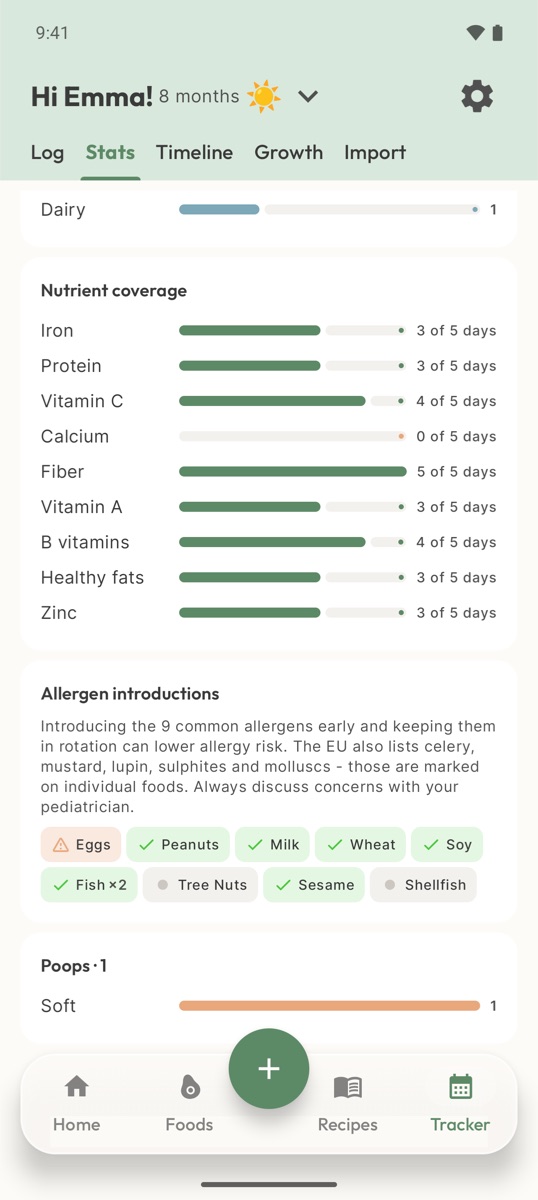
See introductions and gaps in the stats
The stats tab shows each allergen as introduced, repeated or still untried, next to iron, protein and calcium coverage for the week. Avo's tips point out when it is time to try the next one, or when an allergen has not been offered for a while.
Plan the introductions
Frequently asked questions
Which allergens does Avo track?
The nine common allergens: peanut, egg, cow's milk, wheat, soy, fish, shellfish, tree nuts and sesame. Foods that carry an EU-listed allergen such as celery, mustard or sesame are flagged on the food itself.
How does the app know an allergen has been introduced?
From the food log. Each food in the library is tagged with the allergens it contains, so logging scrambled egg marks egg as tried, and logging yogurt marks milk. You do not keep a second list.
What can I record about a reaction?
The symptoms (hives, rash, redness, swelling, vomiting, diarrhoea, stomach pain, wheezing, coughing, lethargy, fussiness), how severe it was, a note, and the date and time. It is saved against the food that was logged.
Does the app diagnose a food allergy?
No. It keeps the record. Only a doctor can diagnose an allergy, and if your baby has trouble breathing, swelling of the face or lips, or goes floppy after a food, call emergency services. The app says the same on every reaction screen.
When should I introduce allergens?
Current US, UK and European guidance is to introduce common allergens from around six months, once your baby has started solids, one at a time, and to keep offering them. If your baby has eczema or an existing food allergy, talk to your doctor first. Our Allergens 101 guide goes through it step by step.
Will the app remind me to offer an allergen again?
Avo's tips in the app flag allergens that are still untried and ones that have not been offered recently, with a suggested food to use.
Is the allergen tracker free?
Yes. Allergen tracking and reaction logging are part of the free tracker.