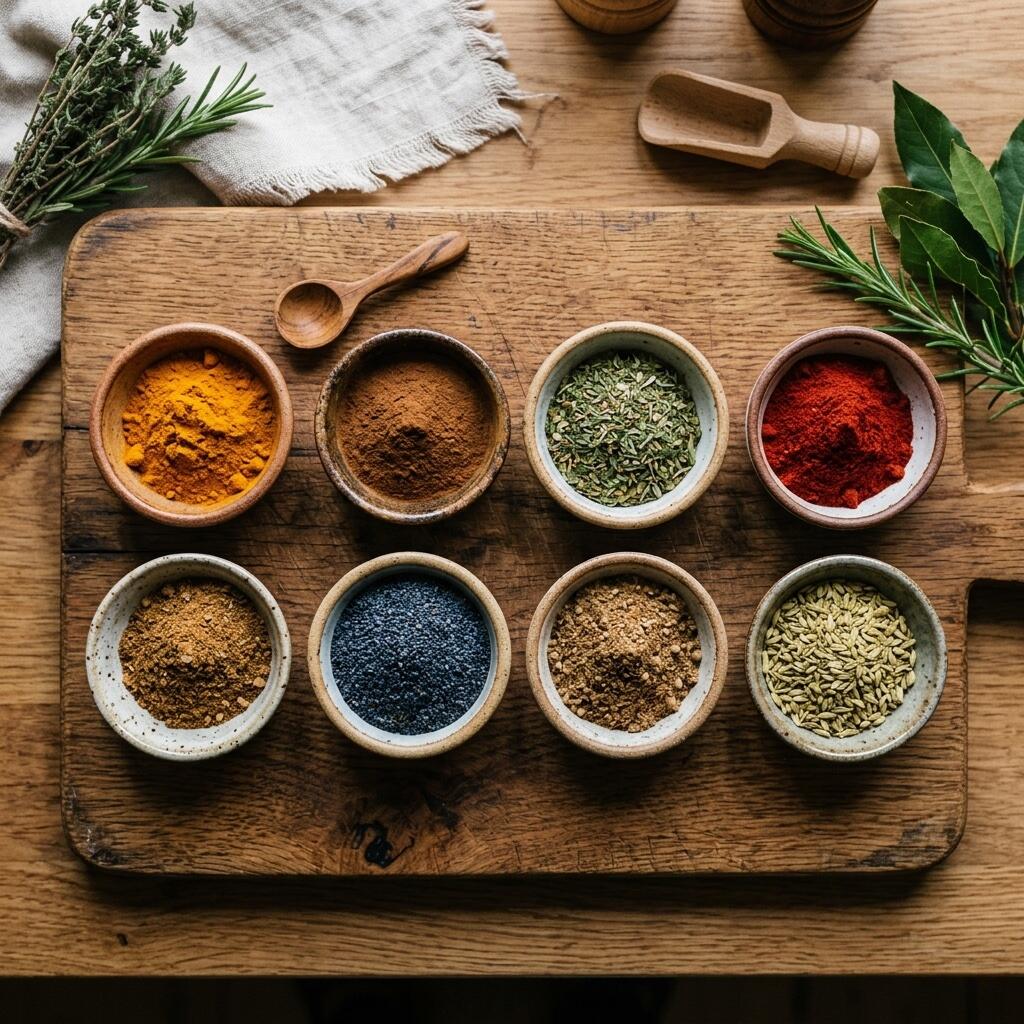
Spices and Herbs
Why cinnamon, garlic, and cumin belong in your baby's bowl
Baby food doesn't have to be beige and bland. In fact, introducing a variety of herbs and spices from the very start is one of the best things you can do for your baby's palate — and for your own mealtimes, because it means you can cook one meal for the whole family far sooner than you might think.
Why bland food isn't better
There's a widespread myth that babies need plain, unseasoned food — but this isn't supported by current nutritional guidance. Babies are actually in a prime window of flavour openness between 6 and 12 months. Exposing them to a wide range of herbs and spices now makes it far more likely they'll accept those flavours later in childhood and as adults. The only things to avoid adding are salt and sugar.
Safe spices and herbs to try
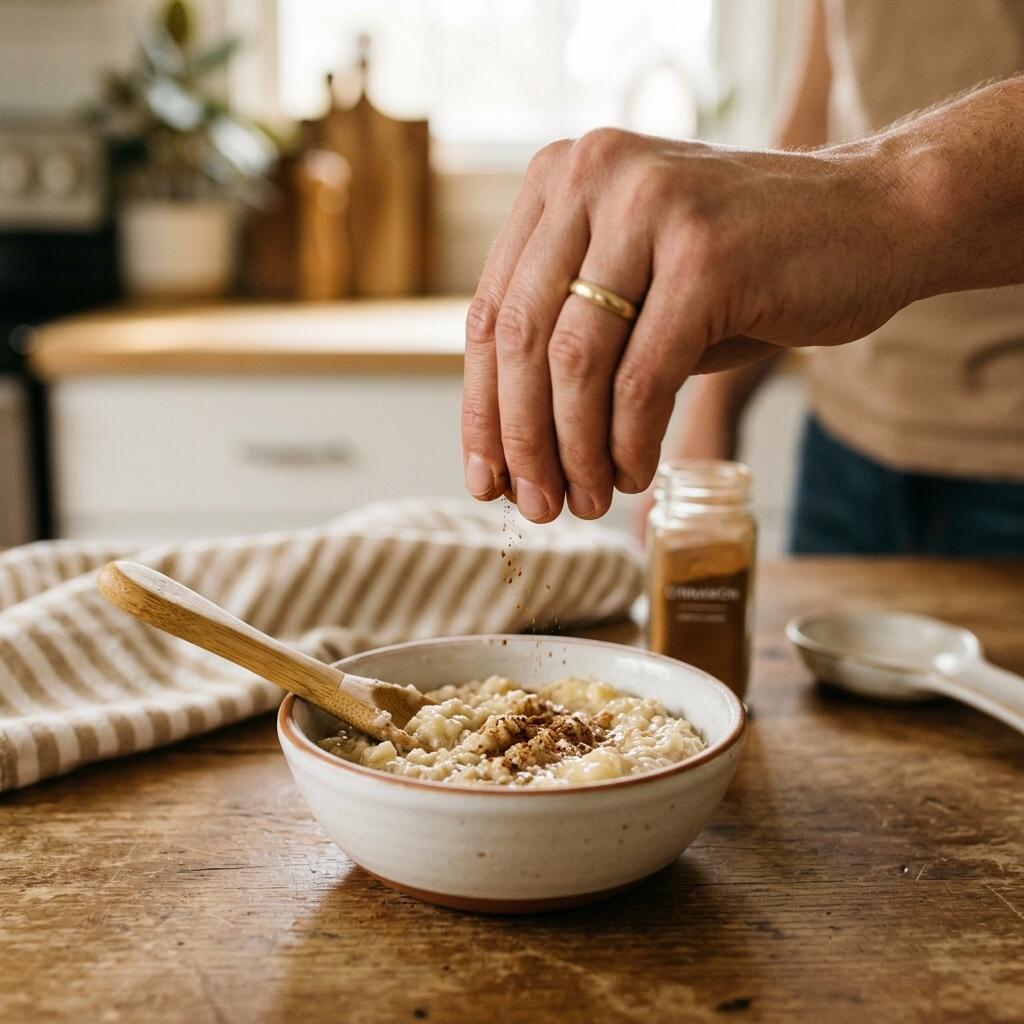
Ground cinnamon is a wonderful starting point — just a pinch stirred into porridge or mashed sweet potato adds warmth without heat. Ground cumin works brilliantly with lentils, chickpeas, and root vegetables. A small amount of mild garlic (cooked, not raw in large quantities) is fine in savoury dishes and introduces a flavour most family meals include. Mild ground turmeric adds colour and a gentle earthiness to vegetable dishes. Fresh or dried basil pairs naturally with pasta and tomato-based sauces. Ground ginger, used sparingly, adds a lovely note to fruit purees and roasted carrots.
How much is just right
When it comes to spices for babies, a pinch goes a long way. Start with around a quarter of a teaspoon of ground spice for a two-to-three portion batch, which works out to a tiny amount per serving. You can gradually increase if your baby seems to enjoy the flavour. There's no need to build up slowly from a safety perspective — these spices are not allergens — but starting small gives your baby's palate time to adjust.
Bringing your family's flavours in
If your family regularly cooks with a particular spice blend — whether that's garam masala, za'atar, berbere, or something else entirely — there's every reason to introduce your baby to those flavours too. Removing a small portion of a family dish before adding salt (and any very hot chilli) and serving it to your baby is a simple, practical approach. Babies who are brought up eating their family's cuisine tend to have a naturally broader palate and a stronger connection to the food culture they belong to.
What to leave out
Salt is the main ingredient to avoid — babies' kidneys can't process high sodium levels, and their daily limit is very low (less than 1g a day under 12 months). Hot chilli and very spicy preparations should be avoided or used extremely sparingly. Raw garlic in large amounts can cause digestive discomfort. Otherwise, the world of herbs and spices is open to you.
Key takeaways
Scientific sources
The guidance in this guide is based on these references.