
Gagging vs. Choking
How to tell the difference — and how to stay calm in both situations
Seeing your baby gag on food for the first time is one of the most alarming things about starting solids — but it's also one of the most misunderstood. Gagging and choking are very different things, and knowing the difference will help you stay calm, respond correctly, and feel confident at mealtimes.
Gagging is normal — here's why
Gagging is a protective reflex. When food moves too far back in the mouth, the gag reflex activates and pushes it forward — exactly as it should. You'll recognise it because it's noisy: baby will retch, their face may go red, and they may push the food out with their tongue. It can look distressing, but it's the body working perfectly. Babies who are new to solid textures gag frequently, and this typically decreases as they gain experience.
Choking is different
Choking occurs when food blocks the airway. Unlike gagging, choking is often silent — there's no crying, coughing, or retching because no air can pass. The baby may go quiet, turn blue or grey around the mouth, and be unable to cry or cough. This is the key distinction: if your baby is making noise, they are not choking. If they are silent and struggling, act immediately.
What to do in each situation
If your baby is gagging, stay calm, stay present, and resist the urge to put your fingers in their mouth — let the reflex do its job. If your baby is choking, call for help and begin back blows immediately: support baby face-down along your forearm, with their head lower than their chest, and give up to five firm back blows between the shoulder blades. If back blows don't clear the blockage, give up to five chest thrusts. All parents and caregivers are encouraged to take an infant first aid course before or shortly after starting solids.
Foods that pose the highest risk
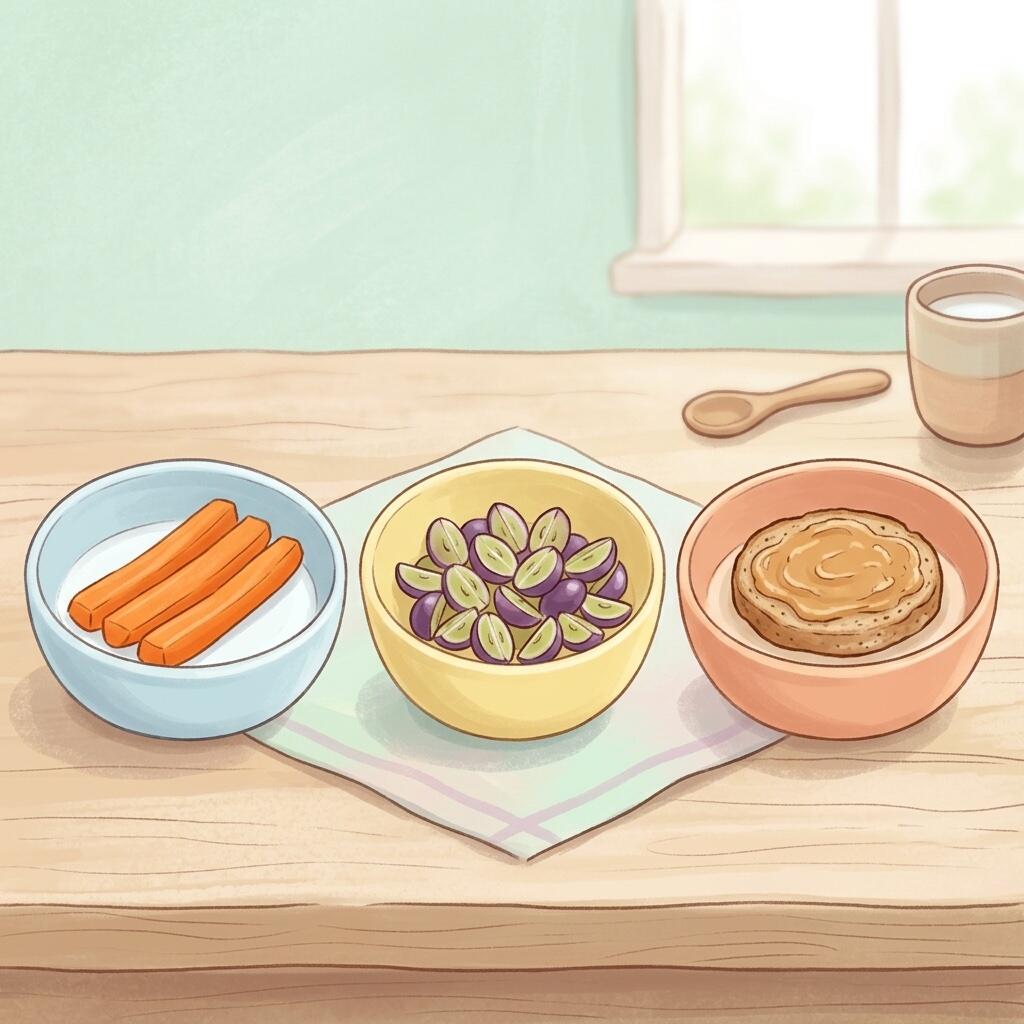
Whole round foods are the most dangerous: whole grapes, cherry tomatoes, blueberries, and whole olives can form a complete seal in a baby's airway. Raw hard vegetables and fruit — carrot sticks, apple slices, celery — are also high risk because they don't compress under pressure. Nuts (whole), large chunks of meat, and chewy sweets should be avoided entirely at this age. Always cut round foods into quarters, and cook hard vegetables until soft before serving.
Key takeaways
Scientific sources
The guidance in this guide is based on these references.