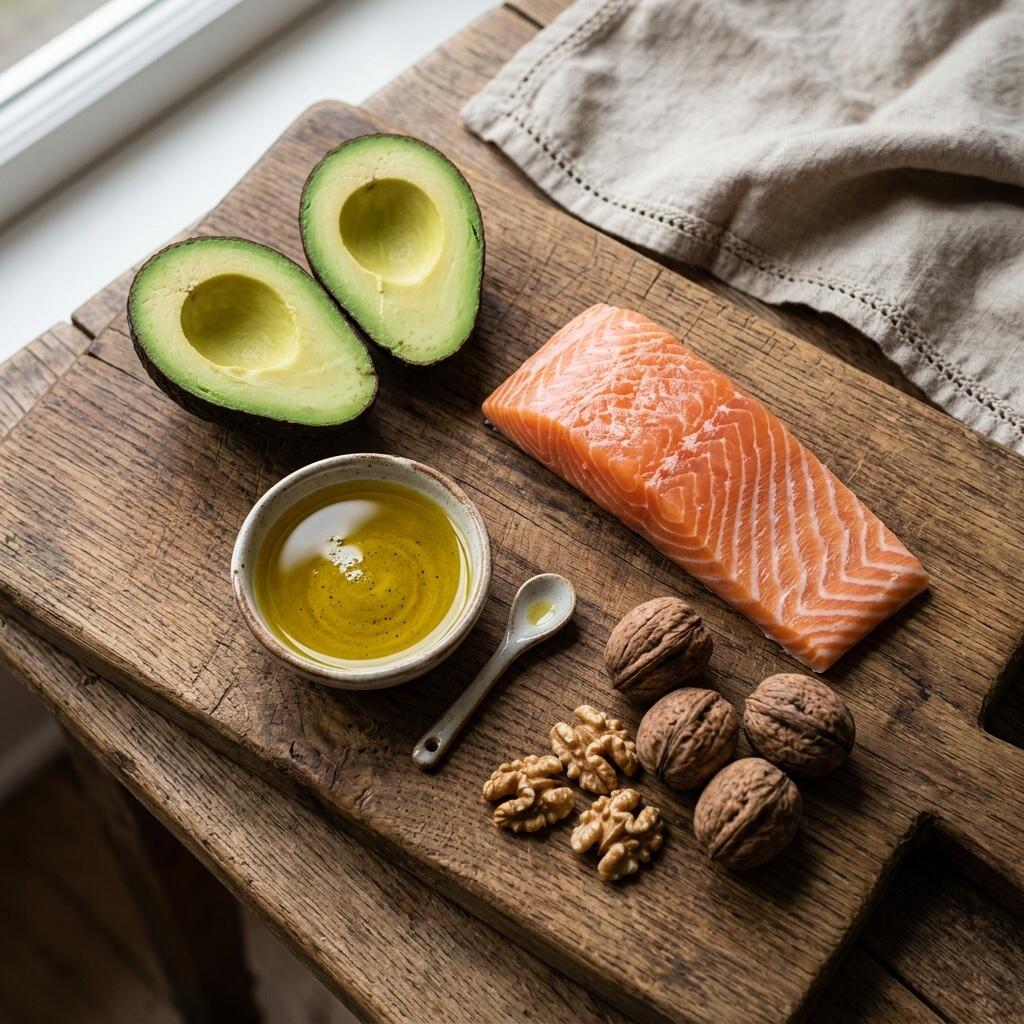
Healthy Fats
Why olive oil, avocado, and oily fish are your baby's best friends
Fat gets a bad reputation in adult diets, but for babies it's an absolute essential. Your baby's brain nearly doubles in size in the first year of life, and fat — particularly the right kinds — is the key building material that makes it happen. Here's what to serve and why it matters.
Why fat is brain food
Around 60% of the brain is made of fat, and the first three years of life see the most rapid brain growth a person will ever experience. Dietary fats — especially omega-3 fatty acids like DHA — are critical for building the structures that support memory, learning, and sensory development. Fat also carries fat-soluble vitamins A, D, E, and K, helps keep babies satiated, and provides dense calorie energy to support fast physical growth.
The best fat sources for babies
Avocado is one of the easiest and most nutritious fat sources — it's rich in oleic acid (omega-9), soft enough to mash or serve as finger food, and needs no cooking. Oily fish like salmon, mackerel, and sardines are excellent sources of DHA and EPA (omega-3 fatty acids); aim for one to two servings a week. Egg yolks deliver both fat and choline, which supports brain development. Full-fat plain yogurt and cheese contribute healthy saturated fats and calories. Nut butters (once individual nut allergens have been safely introduced) are a concentrated fat source that's easy to thin and stir into foods.
Easy ways to add fat to meals
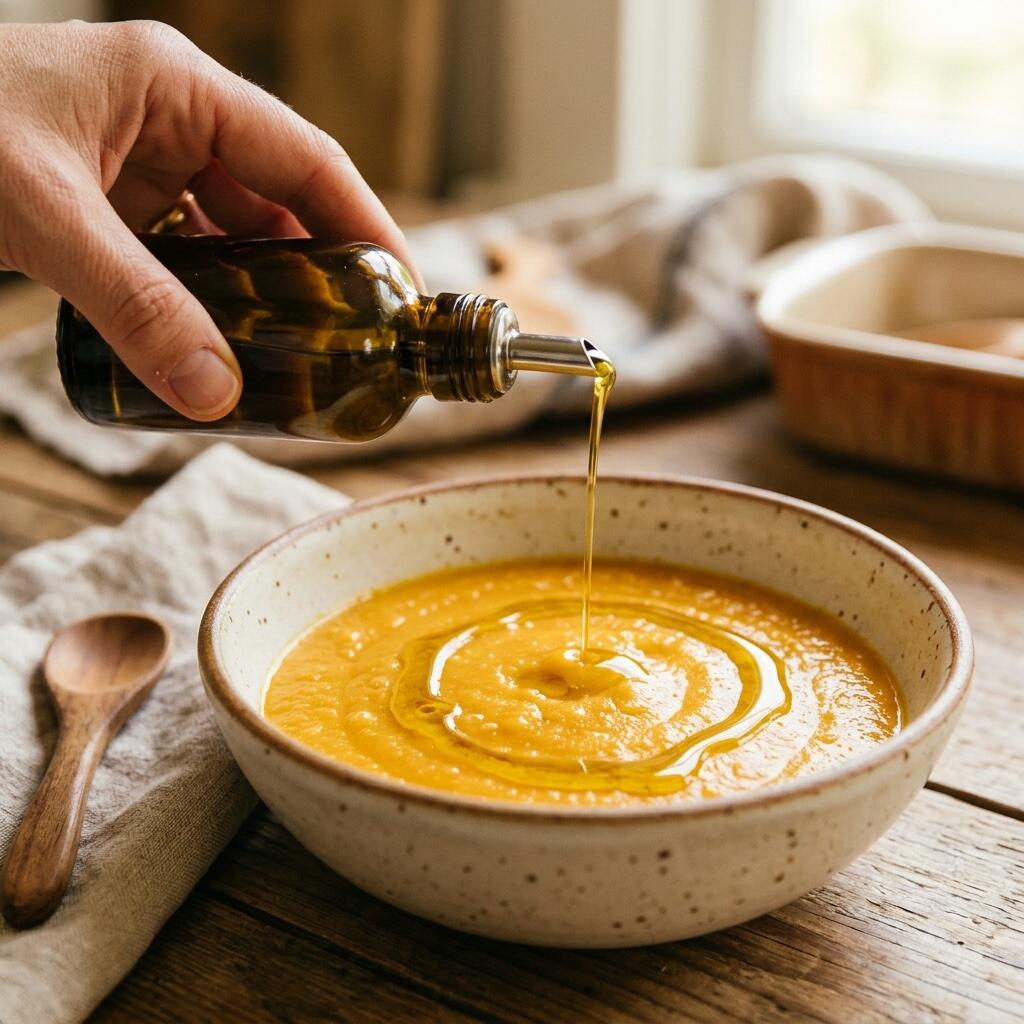
The simplest habit to build is a drizzle of olive oil over steamed vegetables, mixed into purees, or tossed through pasta — it adds calories, healthy monounsaturated fats, and actually helps the absorption of fat-soluble vitamins from the vegetables. Mash ripe avocado into any puree for a creamier texture and a fat boost. Flake a small amount of cooked salmon into rice or mashed potato. Stir a teaspoon of smooth nut butter into porridge or fruit puree. These are small changes that make a real nutritional difference.
What to avoid
The main thing to avoid is low-fat and reduced-fat dairy products — they're designed for adults managing calorie intake, not for rapidly growing infants who genuinely need the fat. Avoid feeding babies processed or fried foods with poor-quality trans fats (hydrogenated oils). Shark, swordfish, and marlin should be avoided due to high mercury content — stick to salmon, mackerel, sardines, and trout as your oily fish choices.
Belangrijkste punten
Wetenschappelijke bronnen
De adviezen in deze gids zijn gebaseerd op deze bronnen.