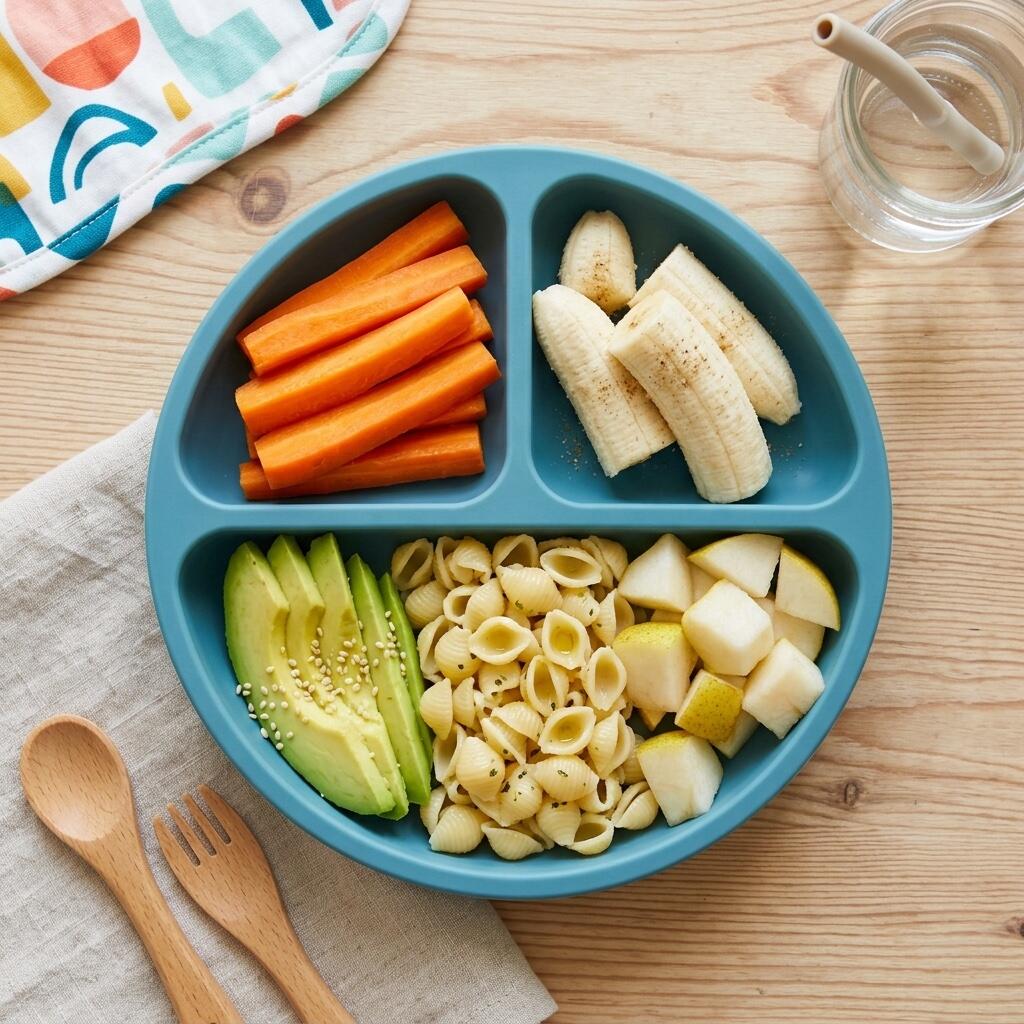
Perfect Finger Foods
Soft foods your baby can grab, smash, and (mostly) eat
Finger foods are one of the most fun parts of weaning — and also one of the messiest. From around 7–8 months, most babies are ready to start exploring food with their hands, and offering the right shapes and textures makes the whole experience safer and more enjoyable for both of you.
When is baby ready for finger foods?
Most babies show readiness for finger foods between 7 and 8 months, around the same time they begin developing the pincer grasp — the ability to pick up objects between thumb and forefinger. Before that, they use a whole-hand palmar grasp, which still works for larger pieces like strips and sticks. You don't need to wait for perfect coordination; messy attempts are exactly how they learn.
Safe shapes and sizes
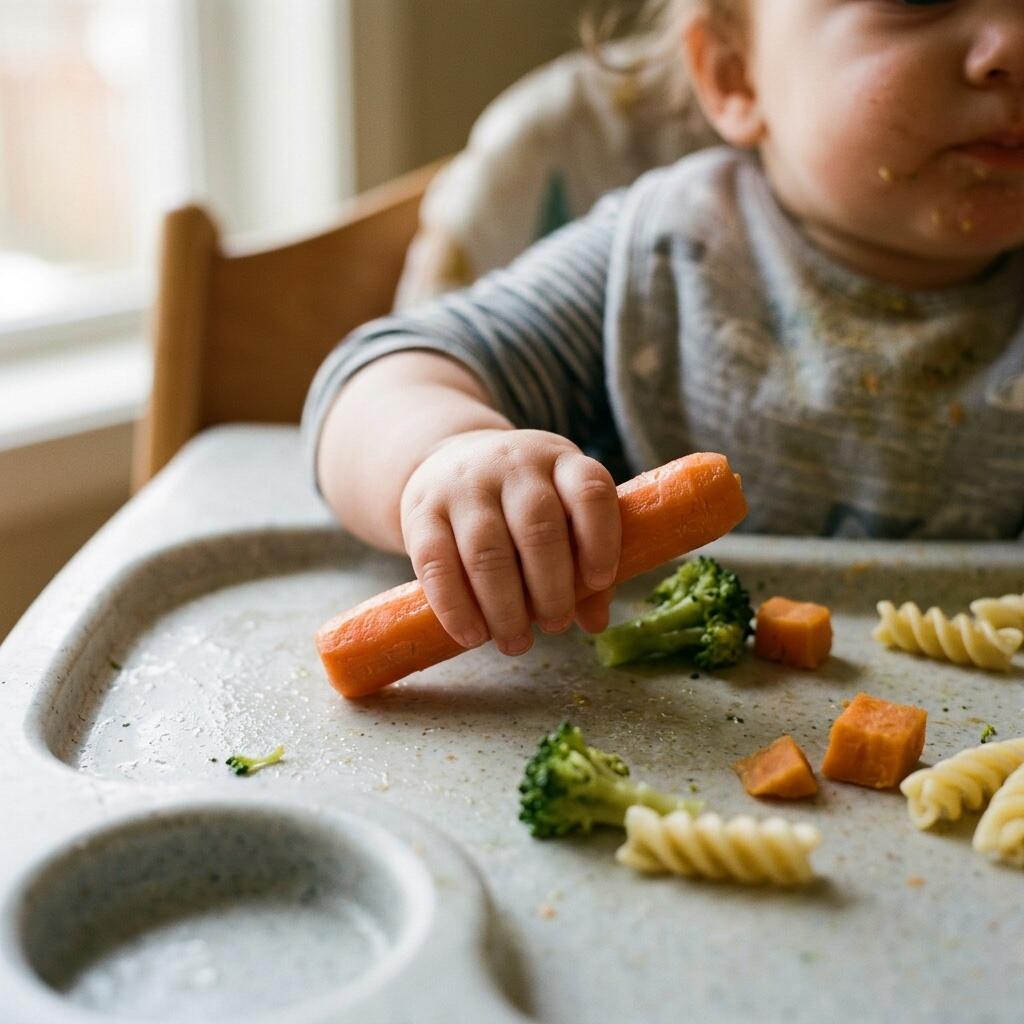
Shape matters more than size when it comes to safety. Offer food in strips or sticks rather than round coin shapes — a round slice can form a complete seal in a small airway, while a strip cannot. A good rule of thumb: cut food to roughly the size and shape of your index finger. Food should be soft enough to squash between your thumb and forefinger with light pressure — if you can't squash it, it's not ready for baby.
The best starter finger foods
Some of the safest and most manageable first finger foods include steamed broccoli florets (the stalk acts as a natural handle), ripe banana pieces, avocado strips, well-cooked pasta pieces, and strips of soft toast spread thinly with nut butter or avocado. Scrambled egg and soft flakes of well-cooked salmon are also brilliant early options that pack in nutrition at the same time.
Foods to avoid for now
Whole grapes, cherry tomatoes, blueberries, and olives should always be cut into quarters before offering — their round shape makes them a choking risk. Raw hard vegetables like carrot sticks and apple slices are also too firm for this age; steam or cook them until soft first. Avoid any food with added salt, including most crackers, crisps, and processed snack foods.
How much mess is normal?
All of it. A baby learning to self-feed will drop, smear, throw, and distribute food across a surprisingly wide radius. A splash mat under the highchair saves your sanity, and a short-sleeved bib keeps laundry manageable. Most importantly, try to relax — babies who are allowed to explore food freely at this stage tend to be more confident and adventurous eaters later.
Belangrijkste punten
Wetenschappelijke bronnen
De adviezen in deze gids zijn gebaseerd op deze bronnen.