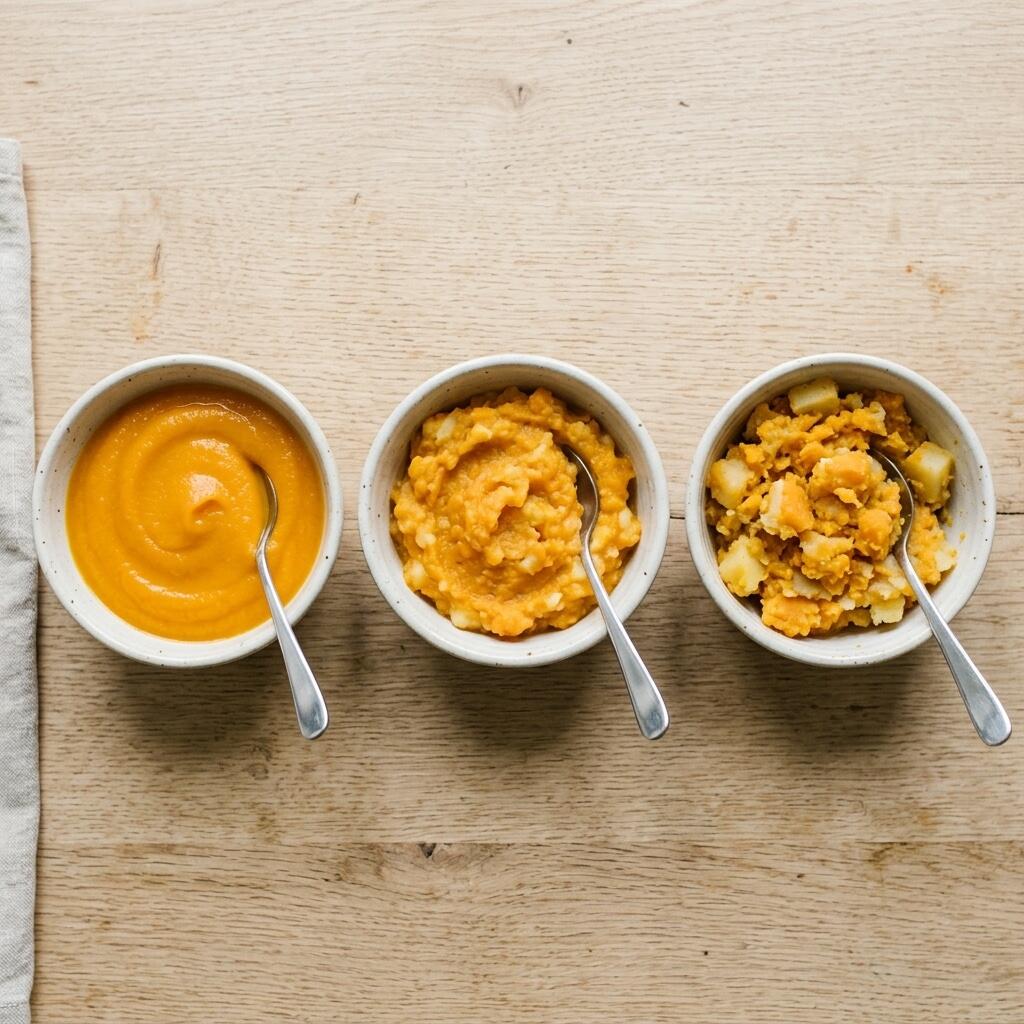
From Smooth to Lumpy
Your week-by-week guide to introducing mashed and textured foods
If your baby has been happily eating smooth purees, it's time to gently move things along — and that means introducing a little texture. This doesn't have to be a big leap. A few small lumps here and there can make a huge difference to how confidently your baby eats as they grow.
Why texture matters now
Babies who only eat smooth food for too long can develop what's called texture aversion — a strong reluctance to accept anything with lumps or bite. The 7–9 month window is a key time when babies are naturally more receptive to new textures, so it's worth introducing them gradually now. Moving through texture stages also supports the development of chewing muscles, which are important for speech as well as eating.
The texture stages explained
Think of texture as a ladder with four rungs: smooth purees, mashed foods, minced or finely chopped foods, and soft chunks. You don't need to rush through them — spending a week or two on each rung is completely fine. The goal is simply to keep moving forward rather than staying on smooth purees for months at a stretch.
A gentle week-by-week guide
In your first week of transitioning, try stirring a small soft lump or two into an otherwise smooth puree — think a tiny piece of well-cooked carrot mixed into smooth sweet potato. By week two, aim for food that's mostly mashed with a few soft pieces, like mashed banana with visible chunks. By week three, serve food that's mostly mashed or minced, with only a small smooth component. By week four or five, try soft fork-mashed foods without pureeing at all — things like mashed avocado, soft lentils, or well-cooked pasta.
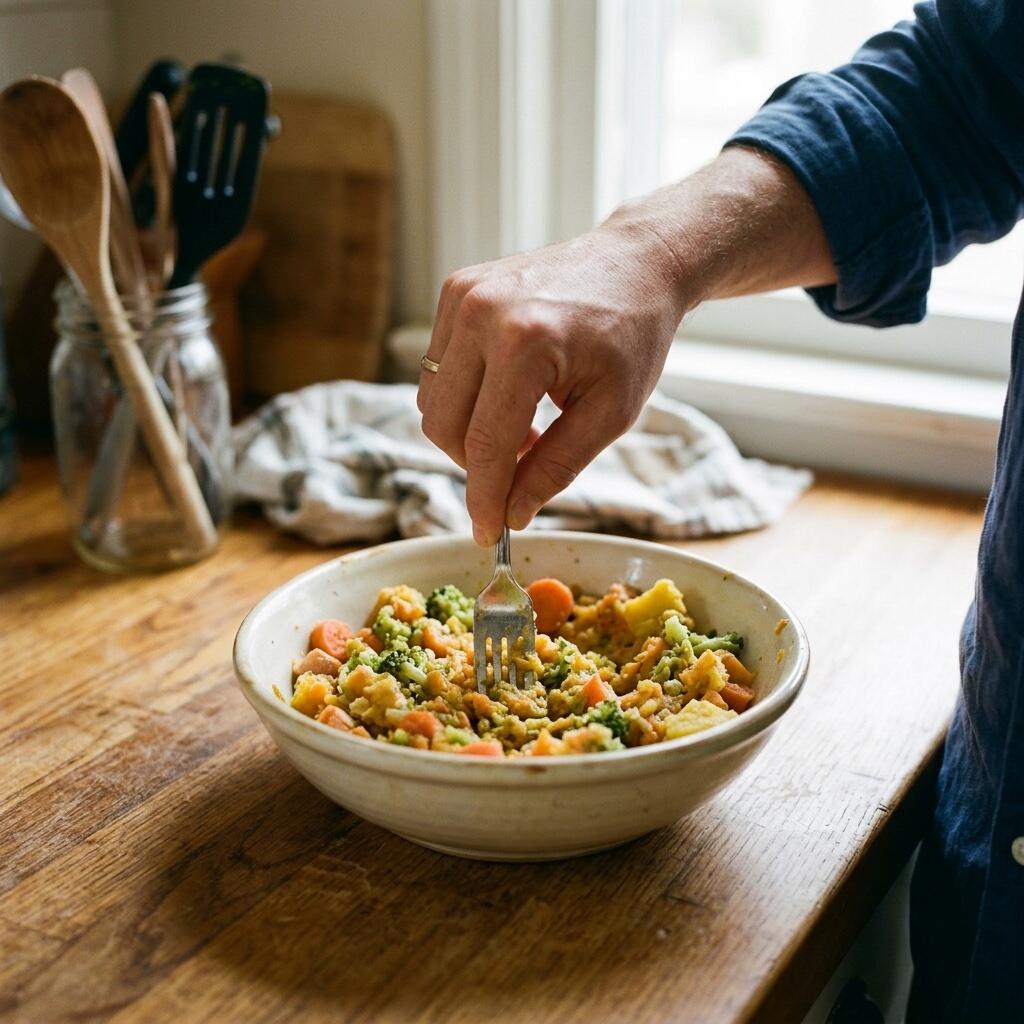
When baby pushes back on lumps
It's completely normal for babies to gag, make faces, or push food out of their mouth when they first encounter texture — this is their gag reflex doing its job. Stay calm and keep offering textured food alongside foods they already accept. If your baby consistently refuses lumps after several weeks of patient offering, a health visitor or feeding specialist can offer extra support.
Belangrijkste punten
Wetenschappelijke bronnen
De adviezen in deze gids zijn gebaseerd op deze bronnen.