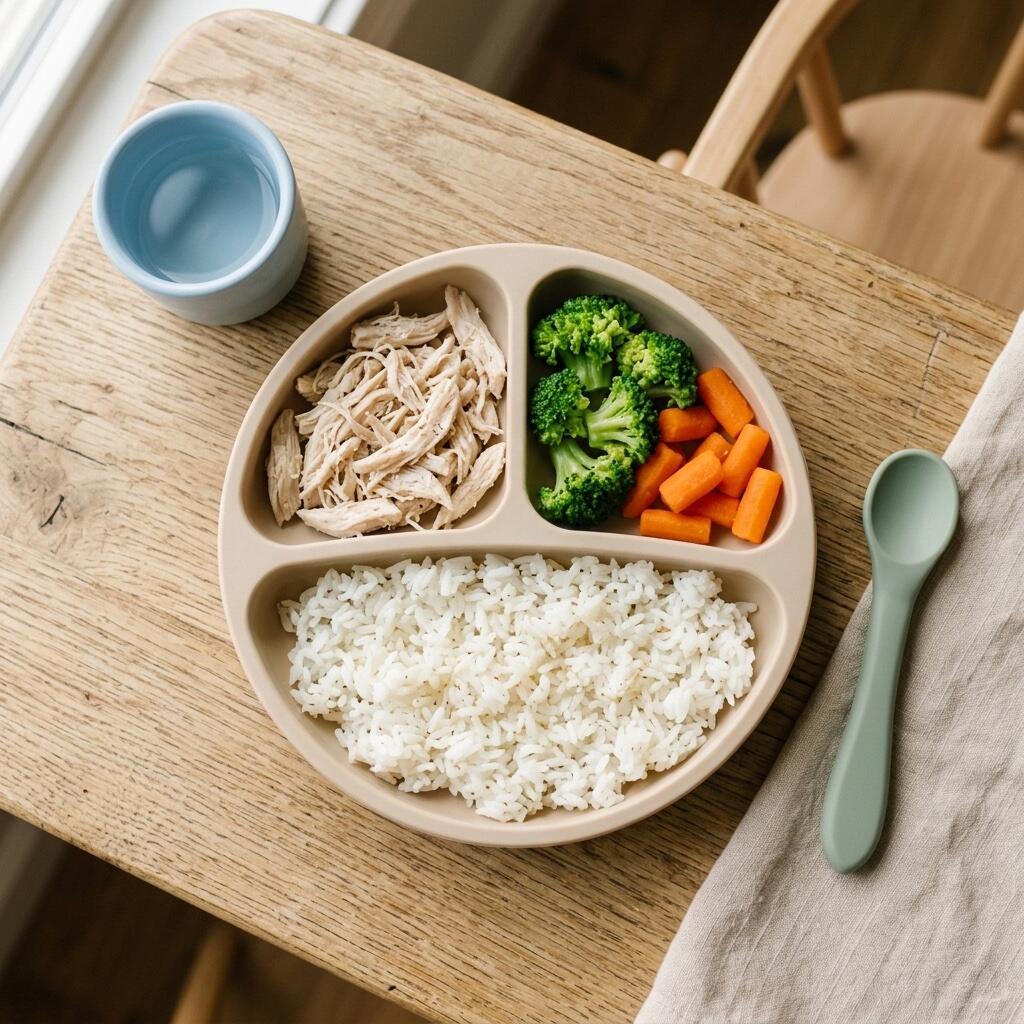
Building a Balanced Plate
A simple way to think about fats, carbs, and protein at 7–9 months
Nutrition for babies doesn't have to be complicated. At 7–9 months, the goal is simply to offer a variety of foods from a few different food groups across each day — not every single meal needs to be a masterpiece of balance. Here's a simple way to think about it.
Think in food groups, not calories
At this age, babies are still getting most of their calories and nutrition from breast milk or formula, so there's no need to count or measure. Instead, aim to include something from each of the three main food groups — protein, carbohydrates, and healthy fats — across the day. Some meals will naturally be simpler than others, and that's completely fine.
Protein: building blocks
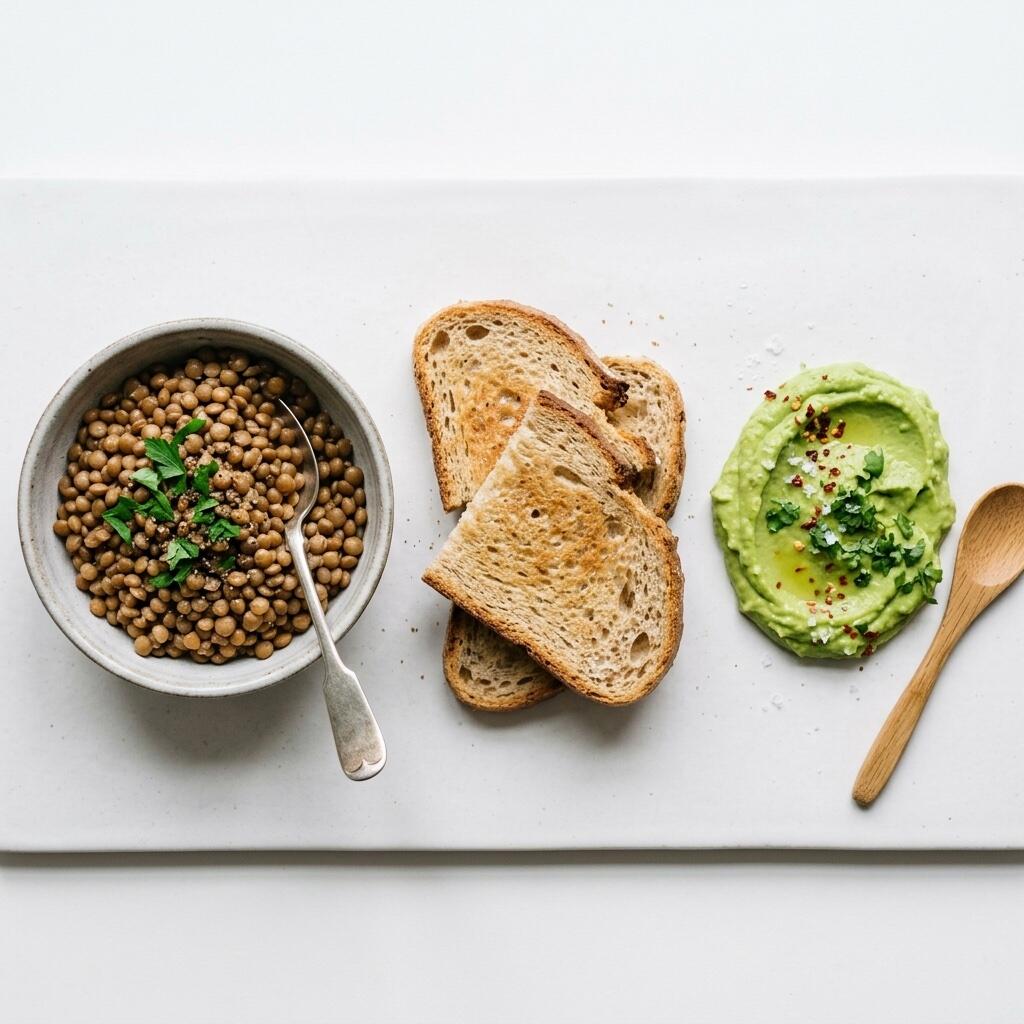
Protein supports your baby's rapid growth and muscle development. Great sources for this age include well-cooked minced meat or poultry, flaked fish (with all bones removed), mashed or pureed lentils and beans, well-cooked scrambled eggs, and full-fat plain yogurt. Aim to include a protein source at least once or twice a day — it doesn't need to be a large amount.
Carbs: energy for an active baby
Carbohydrates are your baby's main source of energy, and they come in lots of baby-friendly forms. Soft cooked pasta, well-mashed potato, rice, soft toast fingers, and oats are all brilliant options. Stick to lower-salt, minimally processed versions — a plain rice cake or soft toast is ideal, while heavily salted crackers or cereals are best avoided.
Fats: don't be afraid of them
Healthy fats are essential for brain development, calorie density, and the absorption of fat-soluble vitamins. The best sources for babies include avocado, full-fat plain yogurt, egg yolk, oily fish like salmon, and a drizzle of olive oil over vegetables. Always choose full-fat dairy products — babies genuinely need those extra calories, and low-fat versions don't support their growth in the same way.
What a balanced meal looks like in practice
A simple balanced meal might be: mashed sweet potato (carb) with flaked salmon stirred in (protein and fat) and a drizzle of olive oil (fat). Or scrambled egg (protein and fat) on a soft toast strip (carb) with sliced avocado on the side. You're not aiming for perfection — you're aiming for variety across the week.
Belangrijkste punten
Wetenschappelijke bronnen
De adviezen in deze gids zijn gebaseerd op deze bronnen.