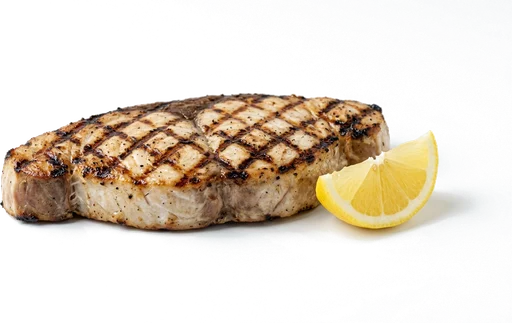
Swordfish
Fish & Seafood
Swordfish is a large, long-lived predatory fish with firm, steak-like flesh, usually grilled. Along with marlin and shark it tops the mercury list, and every major guideline advises avoiding it entirely in pregnancy.
Key nutrients
Safety
Big predatory fish accumulate methylmercury from everything they eat over a long life, and swordfish averages around 1 mg per kg — ten times the level in salmon or cod. Mercury crosses the placenta and can affect your baby's developing brain and nervous system, so the NHS, FDA and EFSA all tell pregnant women to avoid swordfish, marlin and shark completely, and to limit tuna. There is no portion small enough or cooking method that removes mercury, which is why this is an avoid rather than a caution. The good news is that the fish you can eat — salmon, trout, sardines, mackerel, cod, haddock — are better sources of omega-3 anyway.
Avoid swordfish, marlin and shark in pregnancy — their mercury levels are too high.Salmon, trout, cod and sardines give the same protein and omega-3 safely.The advice applies while trying to conceive and breastfeeding too.Skip swordfish steaks at restaurants and fishmongers, and check the species on mixed fish grills, kebabs and 'catch of the day' specials, which often feature swordfish or marlin in Mediterranean and Caribbean cooking. Shark may appear as 'flake' in Australian fish and chips or 'rock salmon' and 'huss' in the UK — these are dogfish, a small shark, and are better avoided too. Replace it with grilled salmon or a tuna steak (limit two a week) for the same meaty texture. After the birth, if you are not breastfeeding, an occasional portion is fine again.