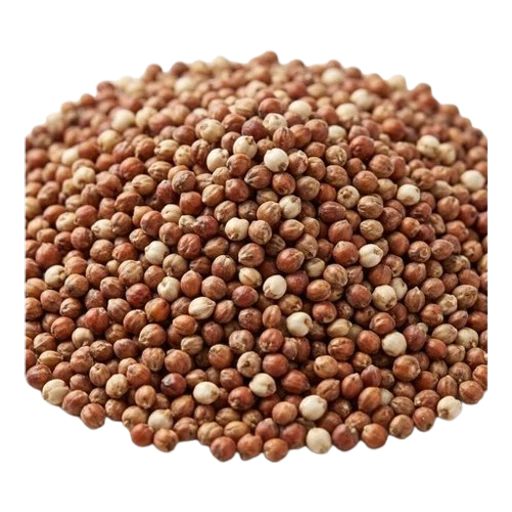
Sorghum is a gluten-free whole grain offering iron, protein, and fiber, making it a versatile choice for pregnancy-friendly meals. It can be cooked like rice or ground into flour for baking.
Why it's good in pregnancy
Sorghum provides iron to support your increased blood volume and protein for your baby's tissue growth. Its fiber content supports healthy digestion, while zinc and B vitamins contribute to immune health and energy metabolism during pregnancy.
Key nutrients
IronSupports increased blood volume and helps prevent pregnancy fatigue.
ProteinSupports your baby's tissue growth and development.
FiberSupports healthy digestion during pregnancy.
ZincSupports immune function and cell growth.
B VitaminsSupport energy metabolism and nervous system health.
Serving ideas
Cook sorghum as a rice substitute
Add cooked sorghum to salads for texture
Use sorghum flour in home-baked goods
Mix into soups and stews
Pop sorghum grains as a light snack, similar to popcorn
Safety
Store sorghum grains or flour in a cool, dry, airtight container to maintain freshness and prevent pests. Rinse whole sorghum grains before cooking and cook thoroughly until tender. If using sorghum flour in baking, ensure baked goods are fully cooked through before eating. Check packaging for freshness and proper storage recommendations.
Common questions
Is sorghum gluten-free?Yes, sorghum is naturally gluten-free, making it a good option if you have celiac disease or a gluten sensitivity.
How do I cook sorghum safely?Rinse the grains and simmer in water until tender, similar to cooking rice, to ensure it's fully cooked.
Is popped sorghum safe during pregnancy?Yes, popped sorghum can be a light, safe snack, though chew well given the small, firm texture.
Did you know?
Sorghum is one of the most drought-tolerant cereal crops grown worldwide.
It can be popped like popcorn, making a light, crunchy snack.
Scan any food. Know instantly.This page is one food — the Avo app has hundreds, plus a camera scanner.