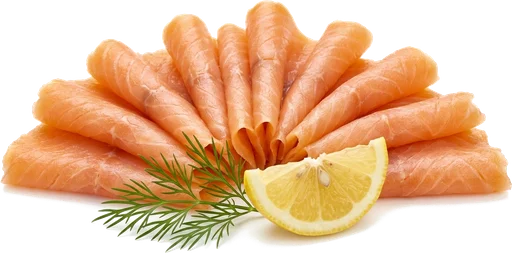
Smoked Salmon
Fish & Seafood
Smoked salmon is salmon cured with salt and then smoked, usually cold-smoked so it stays silky and raw in texture. Current UK and US advice is to eat it only once it has been cooked until steaming hot, or from a tin.
Why it's good in pregnancy
Salmon is one of the best sources of DHA, the omega-3 fat your baby's brain and eyes depend on, alongside protein and vitamin D. Folding smoked salmon into hot pasta, scrambled eggs or a baked dish keeps those nutrients while removing the listeria question.
Key nutrients
Serving ideas
Safety
Cold-smoked salmon is never cooked, so listeria that survives the curing can grow during its chilled shelf life; in 2024 the UK Food Standards Agency joined the FDA in advising pregnant women to avoid ready-to-eat cold-smoked and cured fish. Listeriosis is rare, but in pregnancy it can cause miscarriage, stillbirth or serious illness in a newborn, which is why the advice is cautious. Cooking fixes it: once smoked salmon is heated until steaming hot — in a pasta sauce, a fishcake, a quiche or under the grill — it is safe. Tinned smoked salmon and hot-smoked salmon in a sealed, shelf-stable pack are also fine because they are heat-treated.
Heat cold-smoked salmon until steaming hot before eating.Tinned or shelf-stable smoked salmon is fine straight from the tin.Keep it chilled and eat well within its use-by date.Buy smoked salmon in a sealed pack, keep it in the coldest part of the fridge and use it within its date; once opened, cook it within a day or two. Heat it until it flakes and is steaming right through — two to three minutes in a hot pan or sauce — rather than warming it gently on top of a bagel. If a pack is labelled hot-smoked, check whether it is a chilled ready-to-eat product (treat it like cold-smoked) or a sealed shelf-stable one (fine as is). It is salty, so balance it with plenty of vegetables rather than extra seasoning.