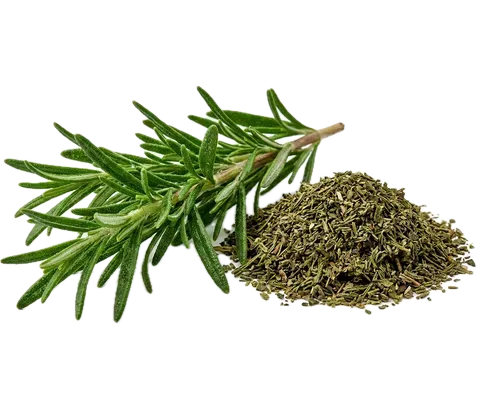
Rosemary
Herbs & Spices
Rosemary is an aromatic herb commonly used to season meats, vegetables, and breads. In the small amounts typical of cooking, it adds iron, calcium, and other nutrients along with its distinctive flavor. Concentrated forms, however, need more caution during pregnancy.
Why it's good in pregnancy
In culinary amounts, rosemary contributes small but meaningful amounts of iron, calcium, and vitamin A, which support blood health and bone development. Its B vitamins assist with energy metabolism as your body works harder during pregnancy. Rosemary is also valued for adding flavor without needing extra salt or sugar in a dish.
Key nutrients
Serving ideas
Safety
While rosemary used as a cooking seasoning is considered fine in normal amounts, concentrated forms like rosemary supplements, extracts, or essential oils are not recommended during pregnancy, as high doses have been associated with uterine stimulation in some studies. Stick to the small quantities typical of recipes and avoid rosemary supplements or medicinal-strength preparations. If you enjoy herbal teas, check that rosemary is only a minor ingredient rather than a concentrated dose.
Culinary amounts safe; avoid concentrated supplements.Use rosemary as a seasoning in normal cooking amounts, whether fresh or dried, and store it in a cool, dry place away from light to preserve flavor and freshness. Wash fresh rosemary sprigs before use to remove any dirt or residue. Avoid rosemary supplements, extracts, or essential oils during pregnancy unless specifically advised by your healthcare provider. When trying herbal teas, check ingredient concentrations and consult your provider if rosemary is a primary ingredient.