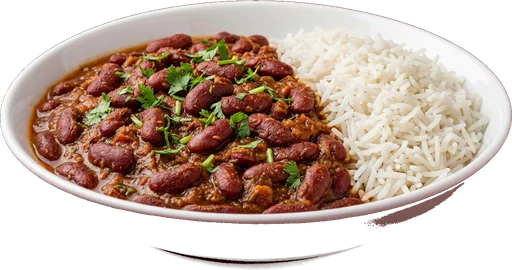
Rajma is a North Indian curry of red kidney beans simmered in a spiced onion, tomato and ginger gravy, usually served with rice as rajma chawal. It is safe throughout pregnancy and one of the most nourishing vegetarian meals you can eat.
Why it's good in pregnancy
Kidney beans are rich in plant protein, iron, folate and fibre, and the tomato gravy supplies the vitamin C that helps you absorb that iron. A bowl with rice makes a complete protein and keeps blood sugar steady, which is useful at every stage, from first-trimester folate needs to third-trimester iron and constipation.
Key nutrients
ProteinA serving of rajma with rice gives a complete protein, supporting your baby's tissue and organ growth.
FiberKidney beans are one of the highest-fibre foods, helping with the constipation that iron tablets and pregnancy hormones bring.
IronKidney beans supply non-haem iron, and the tomato in the gravy helps your body absorb it.
FolateA cup of cooked kidney beans provides around a third of the folate you need daily for your baby's neural tube.
PotassiumBeans and tomato together add potassium, which helps control blood pressure and fluid balance.
Serving ideas
Rajma chawal with steamed basmati rice
With wholewheat roti and a cucumber raita
A smaller bowl topped with pasteurised yoghurt and coriander
Rajma spooned over brown rice for extra fibre
Leftover rajma as a filling for a wrap
Safety
Safe; kidney beans must be fully cooked, which a long-simmered rajma always is.Soak dried beans overnight and boil hard for 10 minutes before simmering.Tinned kidney beans are already cooked and can go straight in.
Raw and undercooked kidney beans contain phytohaemagglutinin, a natural toxin that causes severe vomiting within hours, so dried beans must be soaked for at least 8 hours, drained, boiled hard for 10 minutes and then simmered until completely soft; a slow cooker on low does not get hot enough on its own. Tinned kidney beans are fully cooked and can be rinsed and added directly, which is the quickest safe route. A properly made rajma simmers for a long time and poses no risk. Cool leftovers within two hours, refrigerate for up to three days and reheat until steaming; if beans cause wind or bloating, start with smaller portions and build up.
Common questions
Can I eat rajma during pregnancy?Yes, rajma is safe and nourishing in pregnancy, providing protein, iron, folate and fibre, as long as the kidney beans are fully cooked.
Are undercooked kidney beans dangerous when pregnant?Undercooked kidney beans contain a toxin that causes severe vomiting for anyone, pregnant or not; boiling dried beans hard for 10 minutes and simmering until soft, or using tinned beans, removes it completely.
Does rajma cause gas in pregnancy?Beans can cause wind, and pregnancy slows digestion, so start with a smaller portion, rinse tinned beans well and add a pinch of asafoetida or cumin to the gravy, which many cooks find helps.
Did you know?
Just four or five raw kidney beans contain enough phytohaemagglutinin to cause food poisoning, which is why thorough cooking is non-negotiable.
Rajma chawal is the Sunday lunch of Punjab and Jammu, and the beans grown in the hills of Jammu are prized for how soft they cook.
Scan any food. Know instantly.This page is one food — the Avo app has hundreds, plus a camera scanner.