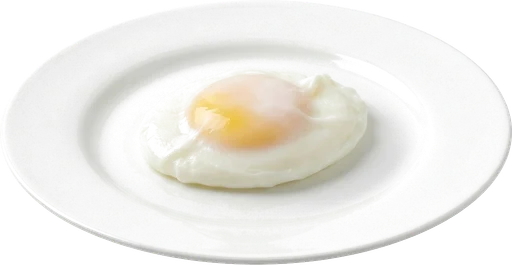
Poached Egg
Eggs
A poached egg is cooked out of its shell in simmering water and is usually served with a runny yolk. That runny centre is the catch in pregnancy; poached a little longer, or made with Lion-mark or pasteurised eggs, it is fine.
Why it's good in pregnancy
Poaching uses no fat at all, so you get the egg's 6 g of protein, its choline and vitamin D at their leanest. Cooked firm it is an easy topping for toast, greens or grains that adds real nutrition without much effort.
Key nutrients
Serving ideas
Safety
The concern is salmonella, which survives in a yolk that has not reached about 71°C (160°F); a standard 3-minute poached egg stays runny in the middle. Your immune system is slightly damped in pregnancy, so food poisoning tends to hit harder and can cause dehydration. The exception is eggs produced under the British Lion scheme or pasteurised eggs, which the NHS says can be eaten runny. For any other egg, poach for 5 to 6 minutes until the yolk is set, or choose a different cooking method.
Poach for 5 to 6 minutes so the yolk is set, not the usual 3.A runny yolk is only safe with UK Lion-mark or pasteurised eggs.Crack the egg into gently simmering water with a splash of vinegar and leave it for 5 to 6 minutes rather than 3; lift it out and press the yolk, which should feel firm. If you are using UK Lion-mark eggs or pasteurised eggs, a runny yolk is acceptable. At cafés, ask for the egg poached hard; many brunch dishes such as eggs Benedict come with both a runny egg and a raw-egg hollandaise, so check both. Eat poached eggs straight away rather than storing them.