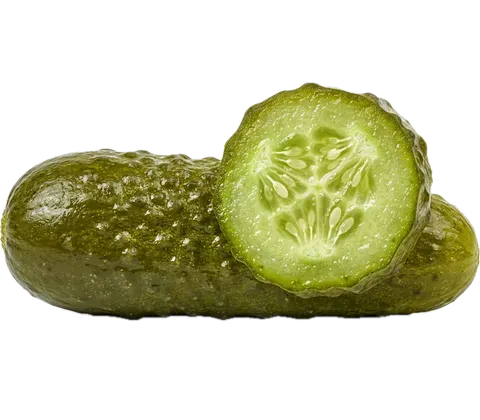
Pickle
Vegetable
Pickles are cucumbers preserved in a salty, often vinegar-based brine, giving them a tangy crunch. They contain some vitamin C and fiber from the original vegetable, but the pickling process adds significant sodium. They can be enjoyed occasionally as part of a varied pregnancy diet.
Why it's good in pregnancy
Pickles retain some of the vitamin C, vitamin A, and fiber found in fresh cucumbers, which support immune health and digestion. They can also be a satisfying way to address pregnancy cravings for salty or tangy foods. Enjoyed in moderation, they can fit into an otherwise balanced eating pattern.
Key nutrients
Serving ideas
Safety
Pickles are typically high in sodium due to the brining process, and excess sodium intake can contribute to fluid retention and elevated blood pressure during pregnancy. It's best to enjoy pickles in moderate amounts rather than as a daily staple. If you're managing blood pressure or swelling, discuss your sodium intake with your healthcare provider. Choosing lower-sodium varieties when available can also help.
High sodium — moderate.Store pickles in the refrigerator after opening and check that the liquid fully covers them to keep them fresh. Choose jars with intact seals and check expiration dates when shopping. Rinse pickles briefly if you want to reduce surface brine before eating. Because pickles are high in sodium, balance them with plenty of low-sodium foods throughout the day, and always use clean utensils when removing them from the jar to avoid contamination.