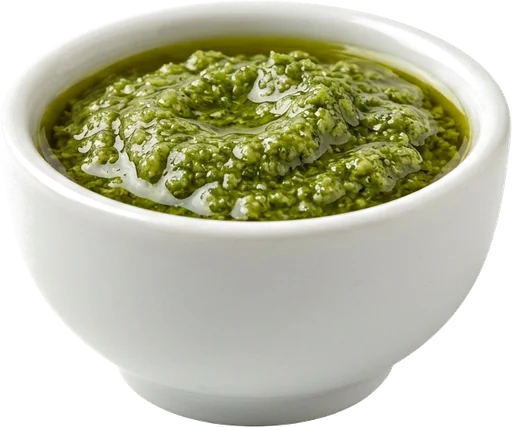
Pesto is a sauce of basil, pine nuts, garlic, Parmesan or Pecorino and olive oil, stirred through pasta or spread on bread. It is safe in pregnancy: the cheese in jarred pesto is pasteurised and the hard cheeses in fresh pesto are fine either way.
Why it's good in pregnancy
Pesto is mostly olive oil and pine nuts, so a spoonful brings monounsaturated fats, vitamin E and magnesium, with calcium from the cheese and a little folate and vitamin K from the basil. It is an easy way to make a plain pasta or grain bowl more satisfying and more nutritious.
Key nutrients
Healthy FatsOlive oil and pine nuts provide monounsaturated fats that support your baby's developing brain and help you absorb fat-soluble vitamins.
CalciumParmesan and Pecorino add calcium, around 50 mg in a two-tablespoon serving.
MagnesiumPine nuts are a rich source of magnesium, which supports muscle function and may help with leg cramps.
Serving ideas
Stirred into hot wholewheat pasta with peas
Spread on a chicken breast before roasting
Swirled into a bowl of minestrone
Dolloped on a mozzarella and tomato salad
Mixed into mashed potato or a grain bowl
Safety
Jarred and supermarket pesto is made with pasteurised cheese and is fine.Parmesan and Pecorino are hard cheeses, so traditional pesto is fine too.
Jarred pesto is shelf-stable until opened; once open, keep it in the fridge with a film of oil on top and use within a week. Fresh pesto from a chiller cabinet or deli counter should be kept cold and eaten within a couple of days of opening, and is safest stirred into hot pasta. Parmesan, Grana Padano and Pecorino are hard cheeses that the NHS considers safe even when unpasteurised, so you need not avoid traditional pesto; soft-cheese 'pesto' spreads are the only ones to check. Pesto is salty and rich, so a tablespoon or two per serving is plenty.
Common questions
Is pesto safe to eat during pregnancy?Yes — jarred pesto uses pasteurised cheese, and the Parmesan or Pecorino in traditional pesto are hard cheeses that are safe either way.
Does pesto contain unpasteurised cheese?Traditional pesto can use unpasteurised Parmesan or Pecorino, but these are hard cheeses the NHS considers safe in pregnancy.
Can I eat fresh pesto from the deli when pregnant?Yes, kept chilled and eaten within a couple of days; stirring it into hot pasta is the safest way to serve it.
Did you know?
Traditional pesto alla genovese uses Parmigiano-Reggiano and Pecorino, both hard cheeses aged well beyond the point where listeria can survive.
Two tablespoons of pesto provide around 25 mg of magnesium, roughly 7% of your daily need in pregnancy.
Scan any food. Know instantly.This page is one food — the Avo app has hundreds, plus a camera scanner.