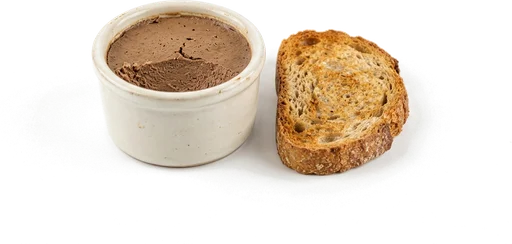
Pâté
Processed
Pâté is a smooth spread of cooked liver, meat, fish or vegetables, usually chilled and eaten cold. It sits firmly on the avoid list in pregnancy: chilled pâté carries listeria, and liver pâté carries too much vitamin A.
Key nutrients
Safety
Pâté is cooked, but it is then chilled and eaten without reheating, and its moist, low-acid texture lets listeria grow during a long fridge life — which is why the NHS advises avoiding every kind, including vegetable, mushroom and mackerel pâté. Liver and liver-based pâtés (chicken liver, Brussels, Ardennes) add a second problem: liver is so rich in preformed vitamin A that even a thin spread can push a day's intake past the level linked to birth defects. Heating a meat pâté until steaming would deal with listeria but not with the vitamin A, so there is no simple fix. Shelf-stable tinned meat spreads are fine on the listeria front, but still skip the liver-based ones.
Avoid all pâté in pregnancy, including vegetable and fish pâté.Liver pâté adds a vitamin A risk on top of listeria.Shelf-stable tinned spreads are fine for listeria, but still skip liver versions.Leave pâté off the menu for the whole pregnancy, including party platters, breakfast buffets and sandwich fillings where it can be easy to miss. Check labels for 'liver', 'parfait', 'rillettes' and 'terrine', which describe the same kind of chilled spread. If you want a savoury spread, hummus, cream cheese from pasteurised milk, mashed cooked beans or tinned tuna mayonnaise all work. After the birth, pâté is fine to bring back.