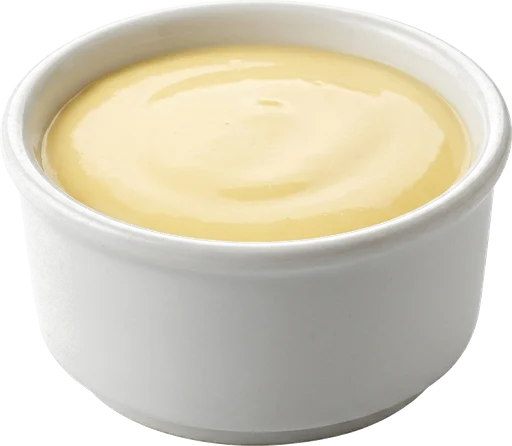
Hollandaise
Processed
Hollandaise is a rich sauce of egg yolks whisked with melted butter and lemon, the classic topping for eggs Benedict and asparagus. Because the yolks are only gently warmed, it is a caution food in pregnancy unless made with pasteurised eggs.
Why it's good in pregnancy
The yolks in hollandaise bring choline, which supports your baby's brain development, along with vitamin A and a little vitamin D. Made safely, a spoonful over asparagus or salmon turns a plain plate into a treat.
Key nutrients
Serving ideas
Safety
Hollandaise is cooked over gentle heat to around 60°C (140°F), enough to thicken the yolks but not to kill salmonella, so a sauce made with unpasteurised egg carries a small risk of food poisoning that is harder on you in pregnancy. In the UK, eggs with the Lion mark (or a laid-in-Britain equivalent) are considered safe in runny or lightly cooked form, so a home-made hollandaise from Lion-mark eggs is fine. In restaurants, ask: many chains and hotels use pasteurised liquid egg, which is safe, while an independent kitchen may use fresh eggs of unknown origin. Jarred or packet hollandaise sold at room temperature is pasteurised and fine; the sauce is also mostly butter, so a modest spoonful is plenty.
Hollandaise uses lightly cooked egg yolk — eat it only made with pasteurised egg.At home, use Lion-mark or pasteurised eggs, or heat the sauce to 71°C (160°F).Ask in restaurants; many chains and hotels now use pasteurised egg.Make hollandaise with Lion-mark eggs or pasteurised egg yolks from a carton, and serve it straight away — keeping it warm for an hour is how bacteria get a chance. Shop-bought jars and sachets are pasteurised and can be reheated safely. When ordering eggs Benedict, ask for the hollandaise to be made with pasteurised egg and for the poached eggs to be well set unless the eggs are Lion-mark. Béarnaise, the tarragon version, follows the same rules.