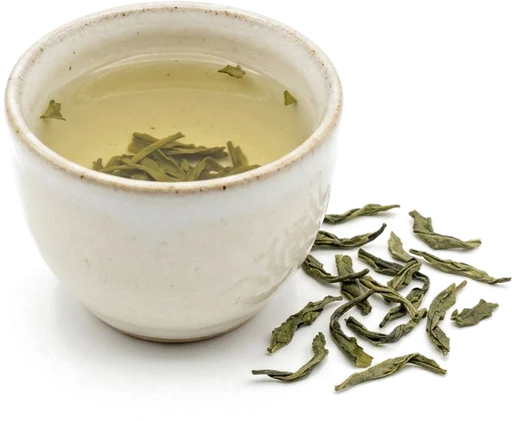
Green Tea
Processed
Green tea is made from unoxidised tea leaves, giving a grassy, lighter brew with less caffeine than black tea. It is fine in moderation during pregnancy — two or three cups a day — kept away from meals and supplements because it can interfere with folate absorption.
Why it's good in pregnancy
Green tea is rich in catechins, the antioxidants that give it its reputation, and a cup has about 30 mg of caffeine, under half that of coffee. For a warm drink that is lighter than black tea and keeps you hydrated, two or three cups a day is a reasonable habit.
Key nutrients
Serving ideas
Safety
Green tea's caffeine is modest, but its catechins (especially EGCG) can bind to folate and reduce how much you absorb from food and from your folic acid tablet — a concern in early pregnancy when folate protects against neural tube defects. The practical advice is to keep green tea to two or three cups, drink it an hour or more away from your supplement and iron-rich meals, and avoid concentrated green tea extracts and 'fat-burning' supplements altogether. Matcha is whole ground leaf, so a bowl can hold 60–70 mg of caffeine, more than double a brewed cup. All of it counts towards the 200 mg daily limit along with coffee, cola and chocolate.
Green tea has around 30 mg caffeine a cup; keep to two or three cups a day.Drink it away from meals and your folic acid, as it can reduce folate absorption.Skip green tea extracts and supplements.Brew with water just off the boil for one to two minutes; a shorter steep keeps both bitterness and caffeine down. Take your prenatal vitamin with water or orange juice, not green tea, and leave an hour between tea and an iron-rich meal. Treat matcha as a stronger drink and count it as two cups. Green tea bubble tea, iced green tea from a chain and green tea lattes all count too, and often add a lot of sugar.