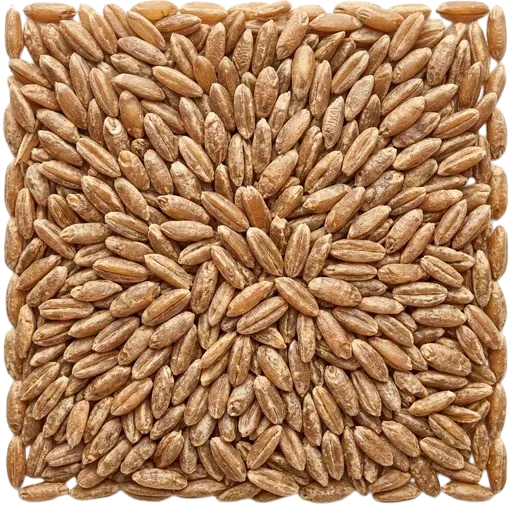
Farro is an ancient whole grain with a chewy texture and nutty flavor, offering folate, iron, protein, and fiber. It's a versatile base for salads, soups, and side dishes. As a whole grain, it's a nourishing choice to include regularly during pregnancy.
Why it's good in pregnancy
Farro's folate content supports healthy fetal development, particularly important in early pregnancy for neural tube formation. Its iron and protein help meet the increased demands of growing blood volume and tissue development, while fiber supports digestive comfort. The zinc in farro also contributes to immune health and cell growth throughout pregnancy.
Key nutrients
FolateSupports healthy neural tube development, especially important in early pregnancy.
IronHelps support the increased blood volume of pregnancy.
ProteinProvides building blocks for your baby's growing tissues.
FiberSupports healthy digestion and helps prevent constipation.
ZincSupports immune function and cell division during fetal growth.
Serving ideas
Farro salad with roasted vegetables and a light dressing
Farro added to soups for extra texture
Farro as a warm side dish with herbs
Farro bowl topped with cooked protein and greens
Farro mixed into stuffed vegetables
Safety
Store dry farro in an airtight container in a cool, dry place, where it keeps well for many months. Rinse it before cooking, then simmer in water or broth until tender but still slightly chewy. Cooked farro should be cooled and refrigerated within a couple of hours, and leftovers are best used within a few days. Because farro contains gluten, check that it's suitable for you if you have any wheat sensitivities.
Common questions
Is farro safe during pregnancy?Yes, farro is a nutritious whole grain that is safe to enjoy throughout pregnancy.
Does farro contain gluten?Yes, farro is a wheat-related grain and contains gluten, so it's not suitable if you need a gluten-free diet.
Can farro help with iron intake during pregnancy?Yes, it contributes iron, and pairing it with vitamin C-rich foods can help enhance absorption.
Did you know?
Farro is one of the earliest cultivated grains, with roots tracing back thousands of years in the Mediterranean region.
Unlike many refined grains, farro retains its bran, making it naturally higher in fiber.
Farro has a pleasantly chewy texture that holds up well in salads and soups.
Scan any food. Know instantly.This page is one food — the Avo app has hundreds, plus a camera scanner.