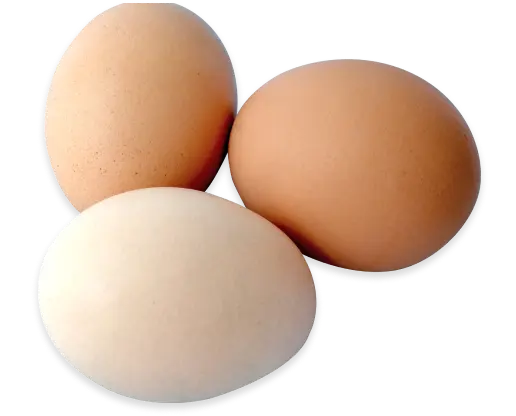
Eggs are a versatile, nutrient-dense food packed with high-quality protein and a wide range of vitamins and minerals. They fit easily into breakfast, lunch, or dinner and are a staple in many pregnancy-friendly diets. When cooked properly, eggs are a safe and excellent everyday choice.
Why it's good in pregnancy
Eggs provide choline, a nutrient that supports your baby's brain development and neural tube formation, along with high-quality protein for growing tissue. Iron and zinc from eggs help support increased blood volume and immune function during pregnancy. The vitamin D content also contributes to bone development.
Key nutrients
IronSupports the extra blood volume your body produces during pregnancy and helps prevent fatigue.
ProteinProvides the building blocks needed for your baby's growing tissues and organs.
CholineSupports your baby's brain and neural tube development.
Vitamin DHelps your body absorb calcium for your baby's developing bones and teeth.
ZincSupports immune function and healthy cell growth.
Serving ideas
Firm scrambled eggs with vegetables
Hard-boiled eggs as a snack
Well-cooked omelette with cheese and spinach
Baked frittata with mixed vegetables
Poached eggs cooked until fully set
Egg salad made with fully cooked, cooled eggs
Safety
Cook until white and yolk are firm.
Always cook eggs until both the white and yolk are completely firm to reduce the risk of foodborne illness. Store eggs in the refrigerator and check that shells are clean and uncracked before use. Avoid dishes made with raw or lightly cooked eggs, such as homemade mayonnaise, raw cookie dough, or soft meringues, unless a pasteurised egg product is used. Wash your hands and any surfaces that come into contact with raw eggs. When eating out, ask how egg-based dishes are prepared if you are unsure.
Common questions
Can I eat eggs every day during pregnancy?Yes, most people can enjoy eggs daily as part of a balanced diet as long as they are fully cooked.
Is it safe to eat runny eggs while pregnant?It is best to avoid runny yolks or whites; cook eggs until both are firm to lower the risk of bacterial contamination.
What about egg-based sauces like hollandaise?These are usually made with lightly cooked or raw eggs, so it is safer to choose versions made with pasteurised eggs or avoid them.
Did you know?
Egg yolks are one of the few natural food sources of choline, a nutrient many people don't get enough of.
A single egg contains a small amount of nearly every vitamin and mineral except vitamin C.
Scan any food. Know instantly.This page is one food — the Avo app has hundreds, plus a camera scanner.