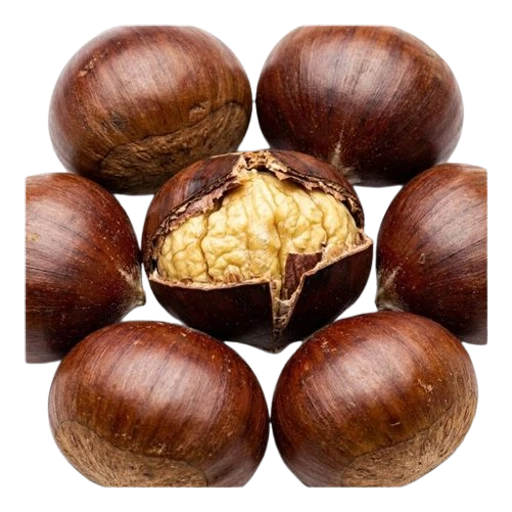
Chestnuts are a starchy tree nut with a mild, sweet flavor, offering vitamin C, fiber, and B vitamins. Unlike most nuts, they are lower in fat and higher in carbohydrates.
Why it's good in pregnancy
Chestnuts provide vitamin C, which supports your immune system and helps with iron absorption from other foods. Their fiber content supports digestion, while B vitamins contribute to energy metabolism during pregnancy.
Key nutrients
Vitamin CSupports immune health and helps improve iron absorption.
FiberSupports healthy digestion during pregnancy.
B VitaminsSupport energy metabolism and nervous system health.
Serving ideas
Roast chestnuts as a warm snack
Add cooked, peeled chestnuts to stuffing
Blend into a creamy chestnut soup
Mix into roasted vegetable dishes
Purée cooked chestnuts into a side dish
Safety
Store fresh chestnuts in the refrigerator, where they keep for a few weeks, or freeze them for longer storage. Always cook chestnuts before eating, either by roasting or boiling, since raw chestnuts are hard and unpalatable. Score the shell before roasting to prevent them from bursting, and let them cool slightly before peeling. Discard any chestnuts that appear moldy or have an off smell.
Common questions
Can I eat chestnuts raw during pregnancy?No, chestnuts should always be cooked before eating, as raw chestnuts are hard, difficult to digest, and unpleasant to eat.
Are chestnuts different from other nuts nutritionally?Yes, chestnuts are lower in fat and higher in carbohydrates than most tree nuts, making them more similar to a starchy food.
Are chestnuts a common allergen?Chestnuts can cause allergic reactions in some people, so introduce them cautiously if you haven't eaten them before.
Did you know?
Chestnuts are unique among tree nuts for being low in fat and high in starch.
Roasted chestnuts are a popular seasonal treat in many cultures.
Scan any food. Know instantly.This page is one food — the Avo app has hundreds, plus a camera scanner.