Camembert
Dairy
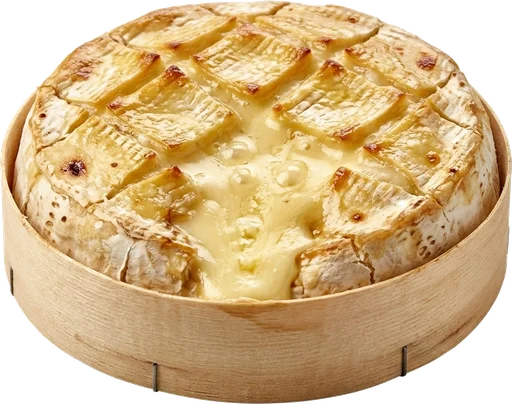
Camembert is a soft, mould-ripened cheese with a white bloomy rind and a creamy centre, a close cousin of brie. In pregnancy it is avoided cold, pasteurised or not, but it becomes safe once baked or cooked until steaming hot.
Key nutrients
Serving ideas
Safety
Mould-ripened soft cheeses have a high moisture content and become less acidic as they ripen from the rind inwards, which creates ideal conditions for listeria to grow — the NHS lists camembert, brie and chèvre with a rind among foods to avoid in pregnancy, whether or not the milk was pasteurised. Listeriosis is uncommon but serious for a baby, and cold cheese on a board, in a sandwich or on a burger carries the risk. Cooking removes it: a whole camembert baked for 15–20 minutes until the centre is molten and steaming, or slices melted onto a hot tart or burger under the grill, are safe. Let it cool just enough to eat and have it straight away.
Avoid camembert unless cooked until steaming hot all the way through.Baked camembert, hot and runny to the centre, is safe.Pasteurised does not make it safe cold — the soft, ripened texture is the issue.Keep camembert sealed and chilled, and only bring it out when you are going to bake it. Score the top, bake at 180°C (350°F) until it is bubbling and runny right to the middle — test with a knife — rather than just soft at the edges. Eat it hot with bread, roasted vegetables or crudités, and do not save the leftovers to eat cold later. Cold camembert in a baguette, on a cheese board or breaded and only briefly fried is where the risk sits, so skip those for now.