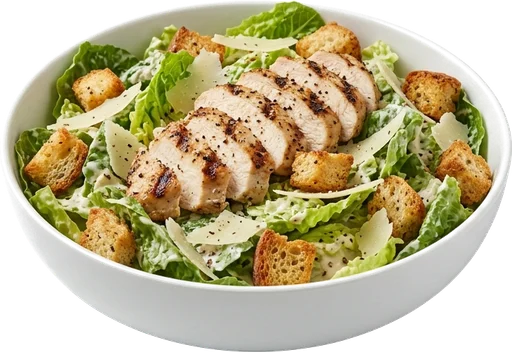
Caesar Salad
Processed
A Caesar salad is crisp romaine lettuce tossed in a creamy dressing of egg yolk, Parmesan, anchovy, garlic and oil, topped with croutons and often grilled chicken. In pregnancy the question is the dressing: traditional versions use raw egg, bottled and chain versions are pasteurised.
Why it's good in pregnancy
Romaine brings folate and vitamin A, the Parmesan calcium, the anchovies a little omega-3, and chicken makes it a filling, protein-rich meal. With a pasteurised dressing it is one of the easier restaurant salads to say yes to.
Key nutrients
Serving ideas
Safety
Classic Caesar dressing is an emulsion of raw egg yolk, which carries a small salmonella risk — low in the UK if Lion-mark eggs are used, but you cannot check that in a restaurant. Bottled Caesar dressings and those at large chains are made with pasteurised egg, so a shop-bought or chain Caesar is fine; at an independent restaurant, ask whether the dressing is made in-house with raw egg and, if so, swap it for oil and lemon. Parmesan is a hard cheese and is safe even when unpasteurised, and anchovies are cured and low in mercury. If chicken is added, make sure it is cooked through and either hot or freshly chilled, and wash the leaves if you are making it at home.
Traditional Caesar dressing uses raw egg yolk — choose pasteurised or bottled dressing.Parmesan is a hard cheese, so it is fine; the dressing is the thing to ask about.Shop-bought and chain-restaurant Caesars are usually pasteurised; ask at independents.At home, make the dressing with pasteurised egg (cartons of liquid egg), Lion-mark eggs, or a yolk-free version blended from Greek yogurt, Parmesan, anchovy, lemon and garlic. Wash romaine well, even bagged, and dry it before dressing. Keep the salad cold and eat it within a few hours if it contains dressing or chicken. Bottled dressings are safe in pregnancy; keep them refrigerated after opening and use within the date.