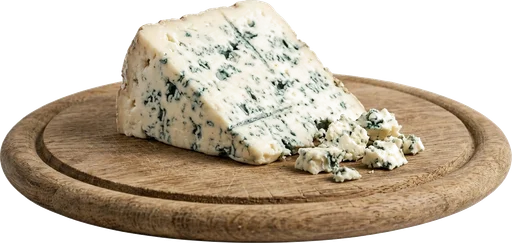
Blue Cheese
Dairy
Blue cheese is ripened with Penicillium mould to give its blue veins and sharp flavour; the familiar kinds — Gorgonzola, Roquefort, Danish Blue, Dolcelatte — are soft. Soft blue cheeses are avoided in pregnancy unless cooked until steaming hot.
Key nutrients
Serving ideas
Safety
Soft blue cheeses are moist and less acidic than hard cheeses, which lets listeria grow, and the mould-ripening process does not stop it; Roquefort is also made from unpasteurised sheep's milk. Listeriosis is rare but can cause miscarriage, stillbirth or severe illness in a newborn, so the NHS and FDA advise avoiding soft blue cheeses cold, whether pasteurised or not. Heat is the fix: Gorgonzola melted into a steaming pasta sauce, blue cheese grilled on a steak or baked into a tart is safe once it is hot all the way through. Hard blue cheeses such as Stilton have too little moisture for listeria to thrive, and the NHS lists them with the hard cheeses that are fine to eat.
Avoid soft blue cheeses unless cooked until steaming hot.Baked, grilled or melted into a bubbling sauce, it is safe.Hard blue cheeses such as Stilton are listed as fine by the NHS.Treat all crumbled, sliced or spread blue cheese as off-limits, including on salads, burgers and cheese boards, and in dressings and dips that are not cooked. When you cook with it, heat until it is bubbling and steaming, not just softened — a sauce simmered for a few minutes or a tart baked through counts. Keep cheese chilled and eat cooked dishes straight away rather than reheating leftovers. If you miss the flavour, a mature cheddar or hard Stilton gives a similar tang safely.