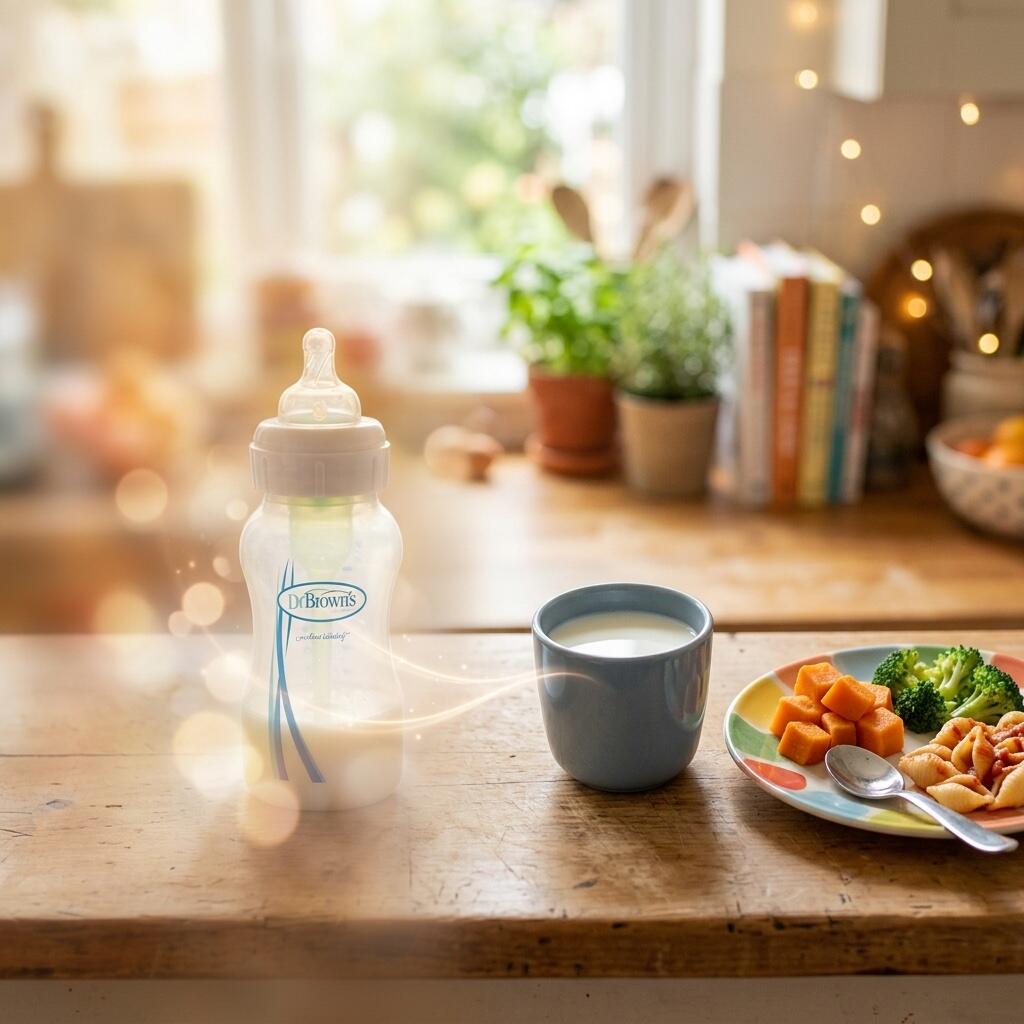
What Changes at 12 Months
Cow's milk, open cups, and chewable food — your guide to the 12-month shift
The 12-month mark comes with a few real, practical changes to how and what your baby eats. It's not a dramatic overnight transformation — most of the groundwork is already laid by what you've been doing in the months before — but knowing what shifts and why helps you make the transition with confidence rather than confusion.
The three big changes at 12 months
Three things change at 12 months that are genuinely significant: whole cow's milk can now replace formula as the main drink (breastfeeding can and should continue if you choose); bottles should begin phasing out in favour of cups; and your baby can now eat most of what the family eats without major adaptations. These aren't arbitrary rules — each one reflects a real developmental milestone in your baby's digestive and oral readiness.
Switching to cow's milk
From 12 months, whole full-fat cow's milk can become your baby's main drink if you are formula feeding. Semi-skimmed milk is not suitable as a main drink until age 2, as babies need the calories and fat-soluble vitamins in whole milk. The recommended amount is around 300–400ml per day — enough to meet calcium needs without displacing food. If you're breastfeeding, there's no need to introduce cow's milk as a drink; continue feeding as long as works for both of you.
Phasing out the bottle
The AAP recommends weaning off bottles by 18 months, and many families begin the process at 12 months. Starting the milk feeds in a cup from the moment cow's milk is introduced means the bottle habit never gets re-established with the new drink. The bedtime bottle is usually the last to go — swap it for a cup of milk and a cuddle, and the transition is usually smoother than parents expect. If you've already been offering water in a cup through mealtimes, your baby is already comfortable with cup drinking.

Eating more like the family
At 12 months, the remaining food restrictions lift: honey can now be safely introduced (it carries a risk of infant botulism before 12 months), whole cow's milk can be used in cooking and as a drink, and soft whole nuts as ground or as nut butters are safe. The texture goal is soft family-table food that the rest of the household eats, with salt added to adult portions at the table rather than during cooking.
The transition is gradual
Nothing needs to happen overnight on the day your baby turns 12 months. These changes happen over days and weeks — introducing cow's milk gradually, offering the cup at each meal, and slowly phasing out any remaining formula. Keep offering variety, continue regular allergen exposure, and stay patient through any resistance. The months of diverse eating you've built up to this point are your biggest asset.
Belangrijkste punten
Wetenschappelijke bronnen
De adviezen in deze gids zijn gebaseerd op deze bronnen.