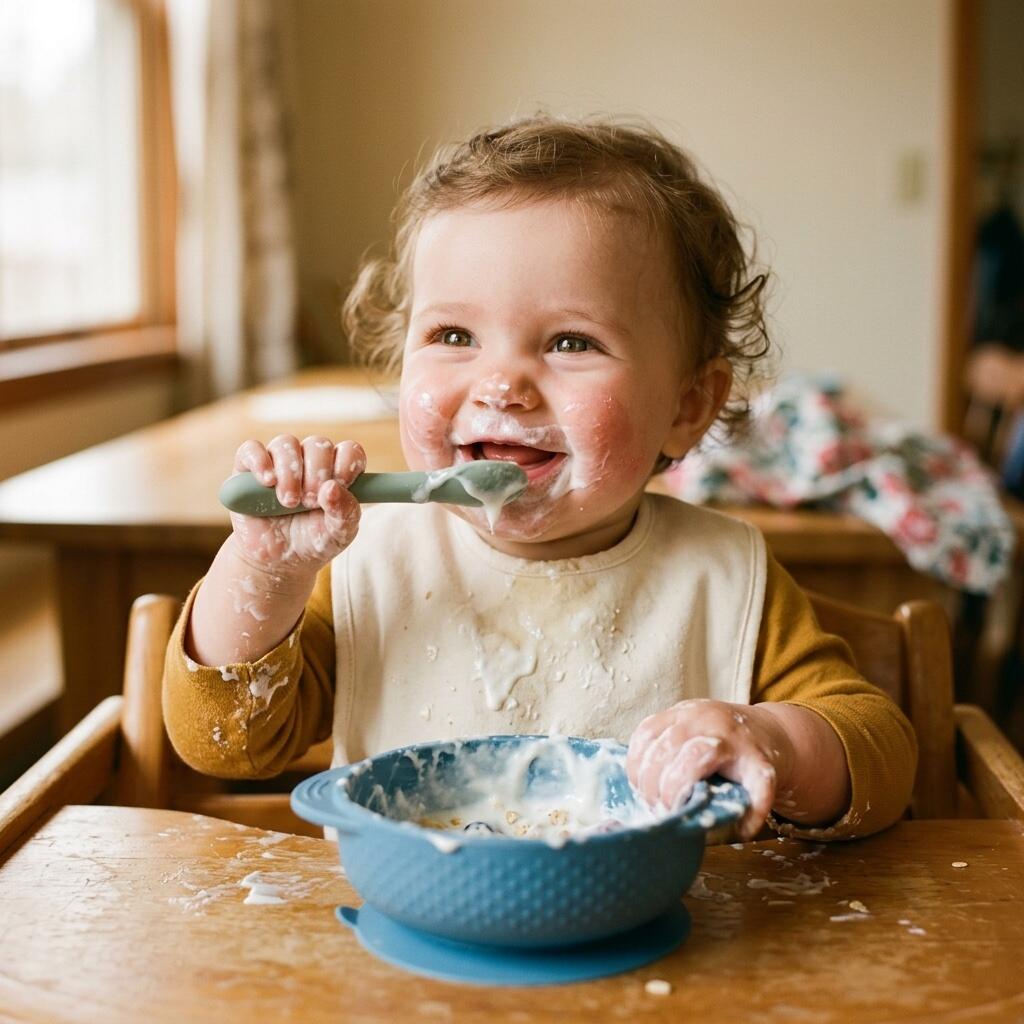
Mastering the Spoon
How to help your baby learn to self-feed — and survive the mess
Somewhere around 10 months, you'll notice your baby reaching for your spoon with increasing determination. That's not defiance — it's developmental readiness. Learning to self-feed is a major milestone that builds fine motor skills, independence, and a healthy sense of control over eating. Yes, it gets messy. It's also completely worth it.
Why self-feeding matters
When babies feed themselves, they learn to regulate how much they eat, which helps prevent overeating later in life. They also build hand-eye coordination, grip strength, and the kind of food confidence that makes mealtimes easier for years to come. Letting your baby have some control at the table — even when it's chaotic — is one of the most positive things you can do for their relationship with food.
Starting with a preloaded spoon
The easiest entry point is the preloaded spoon method: you load the spoon with food and hand it to baby, who takes it to their own mouth. This gives them the experience of spoon-feeding without the frustration of trying to scoop from a bowl. Some parents use a hand-over-hand approach — guiding baby's hand gently through the motion — but most babies do well simply being handed a loaded spoon and allowed to take it from there. Around 10–11 months is a great time to start.
The best foods for spoon practice
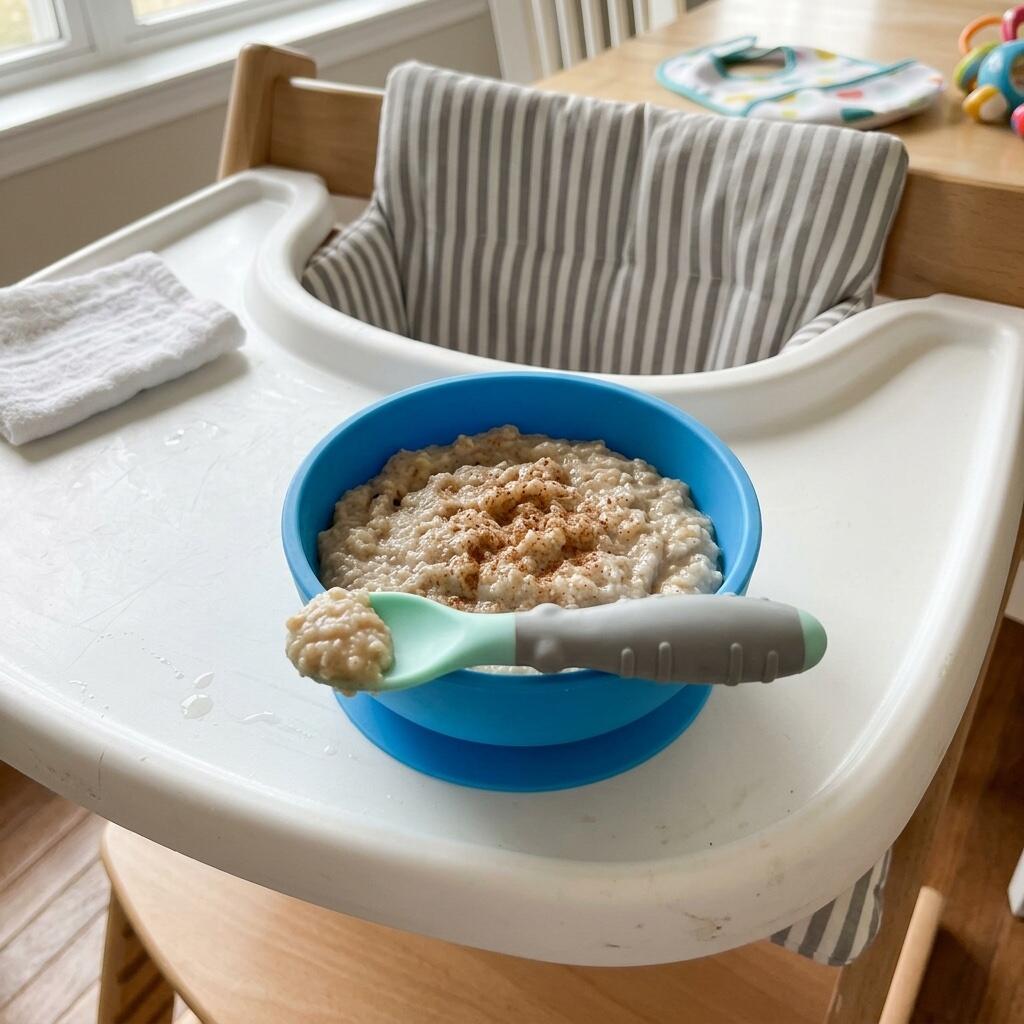
Not all foods are equal when it comes to spoon learning. You want something thick enough to stay on the spoon without sliding off immediately — think thick yogurt, mashed potato, porridge, or soft-mashed avocado. Runny foods will frustrate both of you at this stage. A useful trick is the two-spoon method: give baby one spoon to practise with while you use a second one to keep the actual feeding moving. Baby feels involved; you both get somewhere.
Embracing the mess (it won't last forever)
Here's the truth: self-feeding is messy, and it's supposed to be. Food on faces, hands, highchair trays, and floors is all part of how babies explore texture, temperature, and taste — it's sensory learning as much as eating. A splat mat under the highchair, a long-sleeved bib, and lowered expectations about the floor will save your sanity. Resist the urge to wipe baby's face mid-meal too often — it can put them off and interrupt their focus.
Keeping it positive
Celebrate attempts, not accuracy. If baby gets the spoon near their mouth, that's a win. If they decide the spoon is more interesting as a percussion instrument today, that's fine too — offer a loaded one again in a moment. Progress on the spoon takes weeks, not days. Stay relaxed, model the motion yourself, and let mealtimes stay a positive experience above all else.
Belangrijkste punten
Wetenschappelijke bronnen
De adviezen in deze gids zijn gebaseerd op deze bronnen.