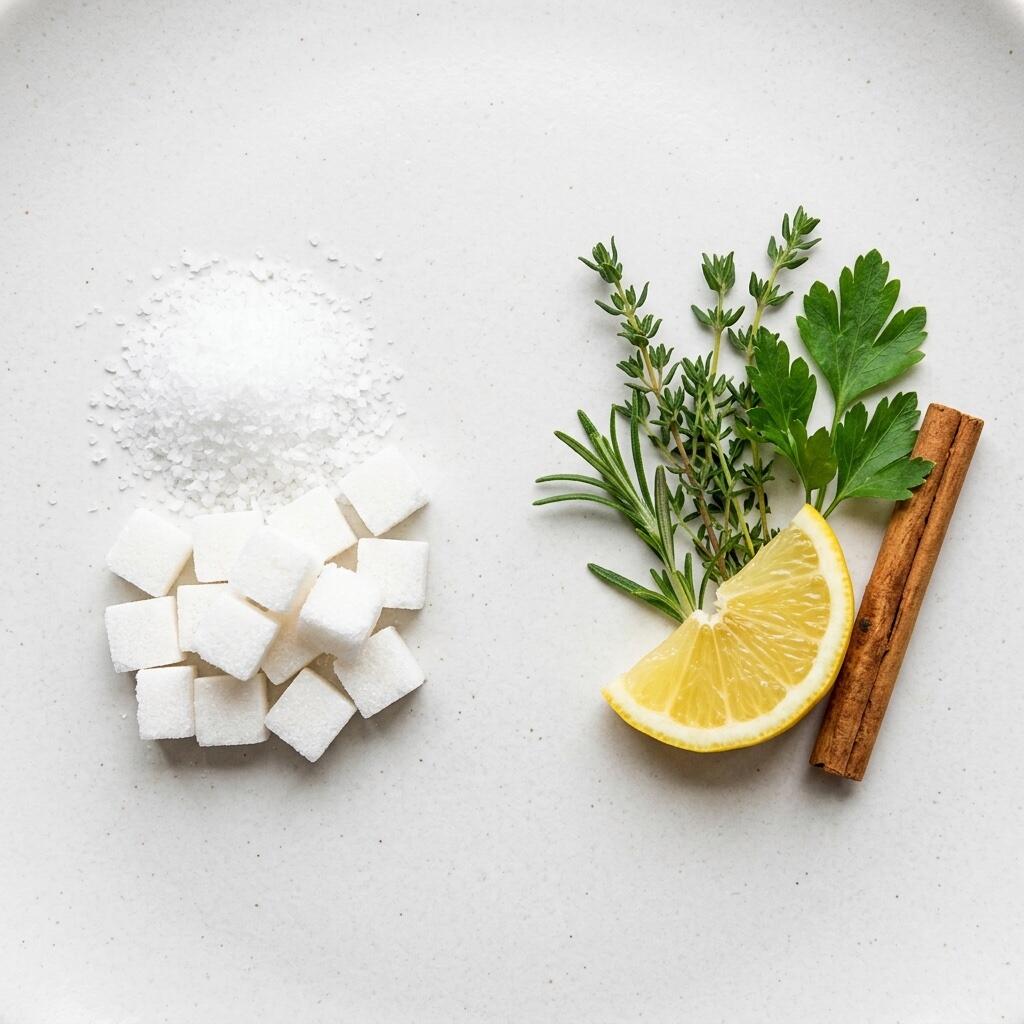
Salt and Sugar
Why avoiding them is still important at 10–12 months
Now that your baby is eating a much wider range of foods, salt and sugar are worth revisiting. The limits that applied at 6 months still very much apply now — and in some ways it's more important to stay aware because baby is eating more variety and more volume. The good news is that avoiding salt and sugar doesn't mean boring food at all.
Why salt is a real concern for babies
A baby's kidneys are still maturing and simply cannot process the amounts of salt that adults handle without difficulty. The NHS advises that babies under 12 months should have less than 1g of salt per day — that's far less than the average adult consumes. Too much sodium puts strain on developing kidneys and can also begin establishing a preference for salty flavours early, making a healthy diet harder to maintain as your child grows.
Hidden salt in everyday foods
The tricky part is that salt hides in many foods parents wouldn't immediately flag as salty. Bread is one of the biggest contributors — a single slice of adult bread can contain up to 0.5g of salt. Cheese, especially processed varieties, is high in sodium. Stock cubes and gravy granules are extremely salty — always use homemade low-salt stock or look for specific baby/low-salt versions. Baked beans in tomato sauce, deli meats, and many breakfast cereals also contain more salt than you'd expect. Always check labels.
What about sugar?
Added sugar is not recommended before 12 months, and there's no nutritional reason for it — it can harm emerging teeth, drive a preference for sweet flavours, and displace more nutrient-dense foods. Natural sugar in whole fruit is fine; it comes packaged with fibre, vitamins, and water that slow absorption. The misleading area is products labelled 'no added sugar' — this doesn't mean low sugar, as these products often rely on concentrated fruit juice (which behaves nutritionally like sugar) to sweeten. Always check the ingredients list rather than just the front of the pack.
Seasoning adult food after serving baby
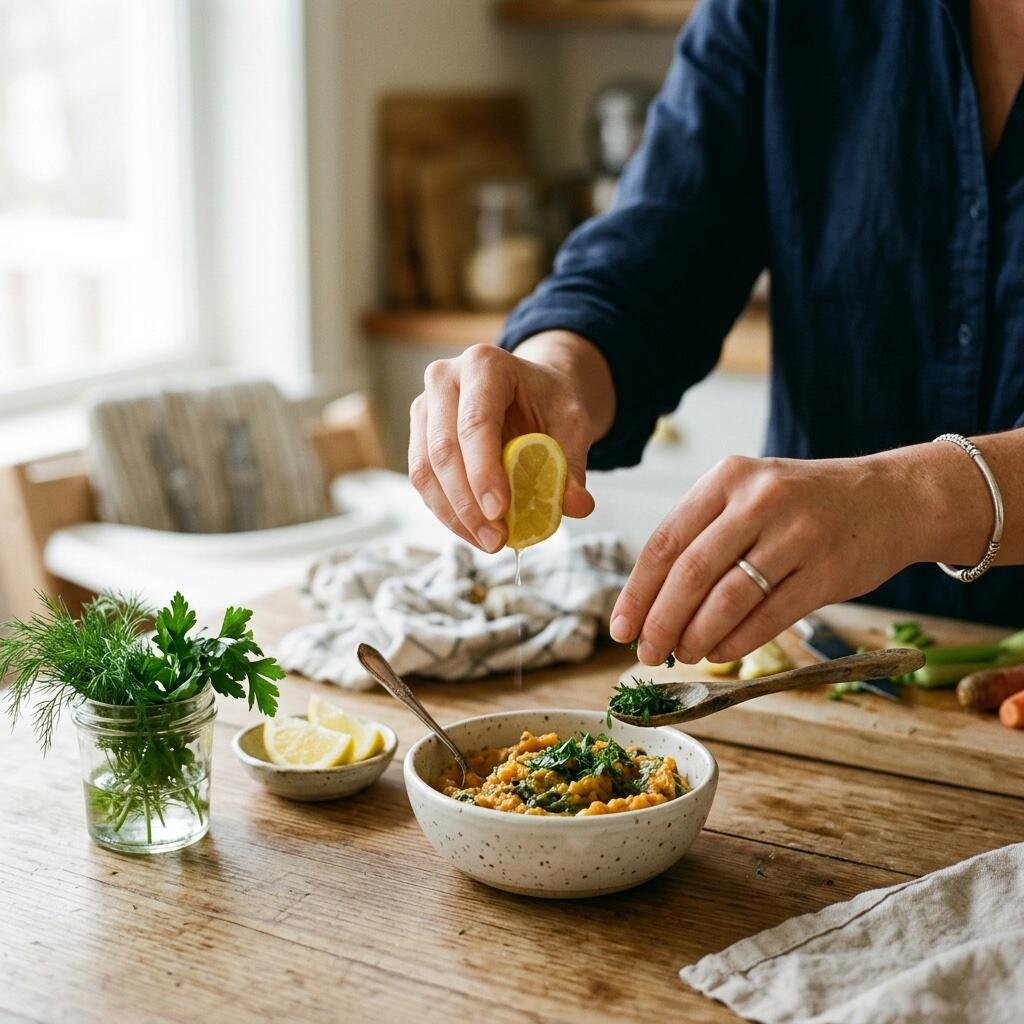
The simplest practical strategy is to get into the habit of serving baby's portion first, then seasoning the rest. Cook the family meal without salt, set aside baby's plate, and then add salt, soy sauce, stock, or seasoning to the adults' portions at the table. It takes seconds and means you don't have to cook two separate meals. Stock cubes and sauces used during cooking are the most common way salt accidentally ends up in baby's food, so removing that step makes the biggest difference.
Flavour without salt or sugar
Baby food doesn't have to be bland — it just needs different flavouring tools. A squeeze of lemon or lime brightens flavours beautifully. Fresh herbs like basil, coriander, and parsley add complexity without any downsides. Mild spices — cumin, coriander, cinnamon, mild curry powder — are safe and wonderful from early weaning. Garlic, ginger, and onion cooked into sauces give real depth. Babies exposed to a wide range of flavours early are generally more adventurous eaters later.
Belangrijkste punten
Wetenschappelijke bronnen
De adviezen in deze gids zijn gebaseerd op deze bronnen.