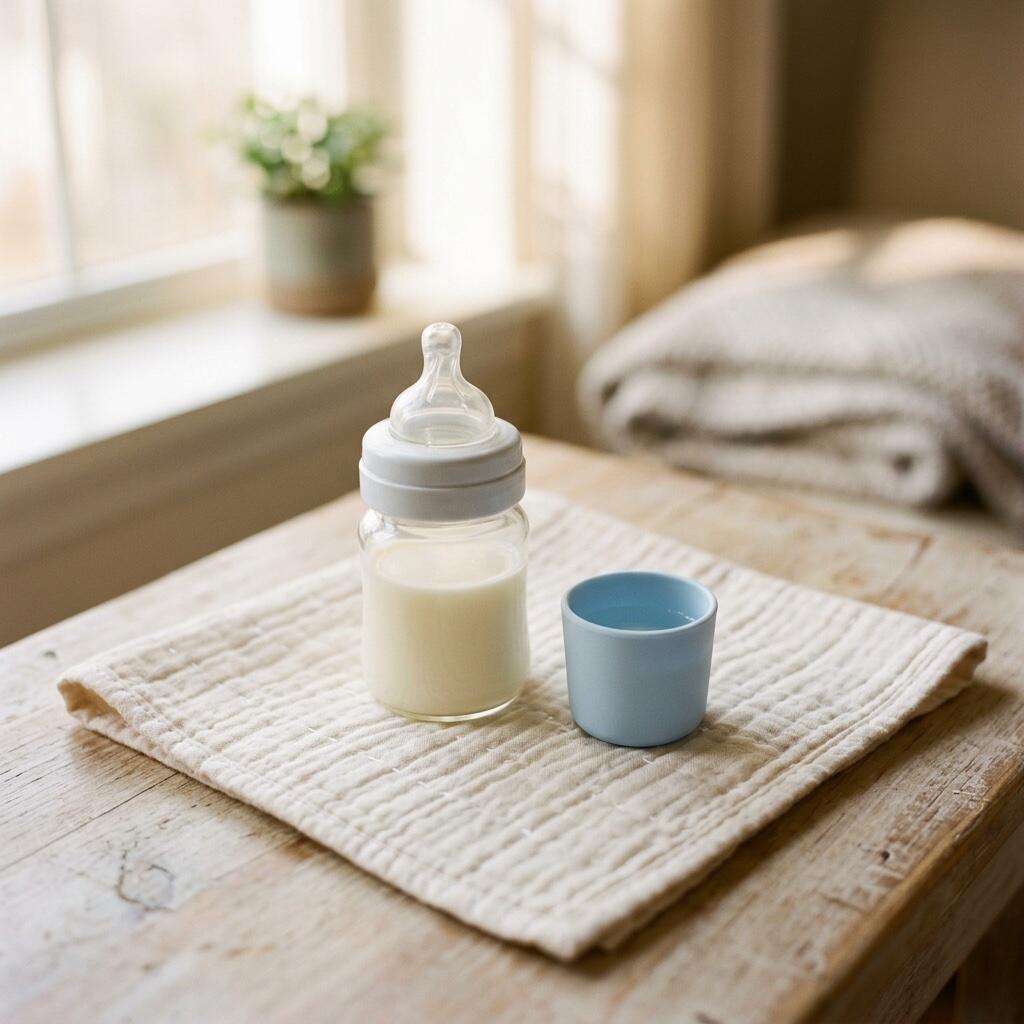
Milk First, Sips Later
What you need to know about water and drinks before 12 months
One of the most common questions parents have when starting solids is whether to offer water with meals. The answer is yes — but only in small amounts, only from around 6 months, and never as a replacement for milk. Here's what the guidance actually says, and why it matters.
Milk is still the main event
Breast milk or infant formula remains your baby's primary source of nutrition until they are 12 months old — solids complement it, they don't replace it. For the first few months of weaning, food amounts are tiny and the caloric and nutritional contribution from solids is minimal. Don't be tempted to reduce milk feeds significantly before 9–12 months. Your baby will naturally begin to drink slightly less milk as solid intake increases, but this should happen at their own pace.
When can water start?
Small sips of water can be introduced from around 6 months, offered with meals rather than between them. Before 6 months, plain water is not recommended because babies' kidneys are immature and cannot handle excess fluid — even a small amount of water can dilute sodium levels and, in extreme cases, cause a condition called hyponatraemia (water intoxication). Stick to breast milk or formula as the sole liquid until your baby is ready to start solids.
How much water is safe?
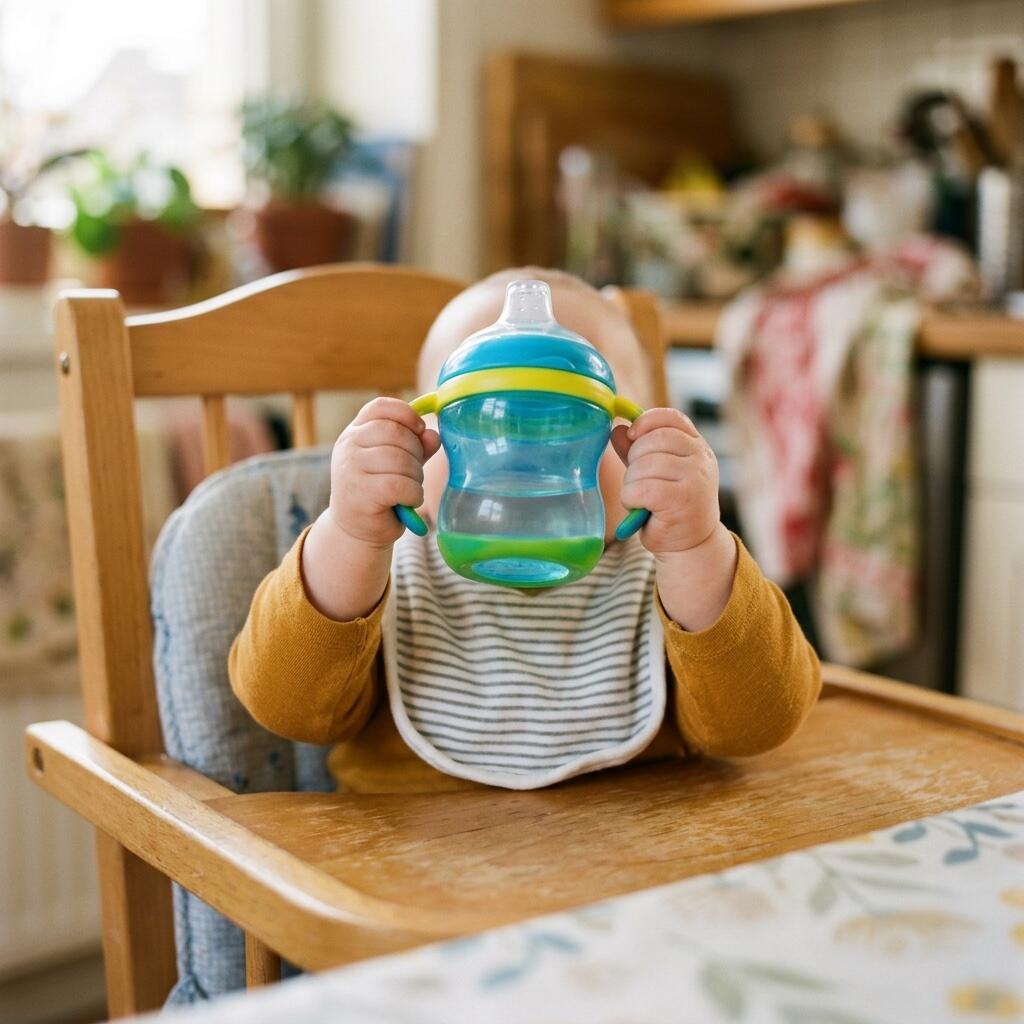
From 6 months, the AAP recommends no more than 4–8 ounces (120–240ml) of water per day, and only offered with solid meals — not as a standalone drink throughout the day. A small open cup or a free-flow sippy cup (not a valve-sealed cup) is the recommended vessel, as these help babies learn to sip rather than suck. There's no need to push water — if your baby accepts a few sips with each meal, that's plenty.
What about juice and other drinks?
Fruit juice is not recommended for babies under 12 months, regardless of whether it is 100% pure juice. Juice provides sugar without the fibre of whole fruit and can contribute to tooth decay and a preference for sweet drinks. Fizzy drinks, squash, and flavoured drinks are also completely unsuitable for babies. Cow's milk can be used in cooking and mixed into foods from 6 months, but should not be given as a drink until your baby is 12 months old.
Keeping milk feeds going
As a rough guide, babies 6–9 months typically still need around 500–600ml of breast milk or formula per day alongside growing amounts of solids. From 9–12 months this may reduce slightly but remains important. Offering a milk feed before solid meals (rather than after) in the early weeks helps ensure your baby's main nutritional needs are being met even if they don't eat much solid food at first.
Belangrijkste punten
Wetenschappelijke bronnen
De adviezen in deze gids zijn gebaseerd op deze bronnen.