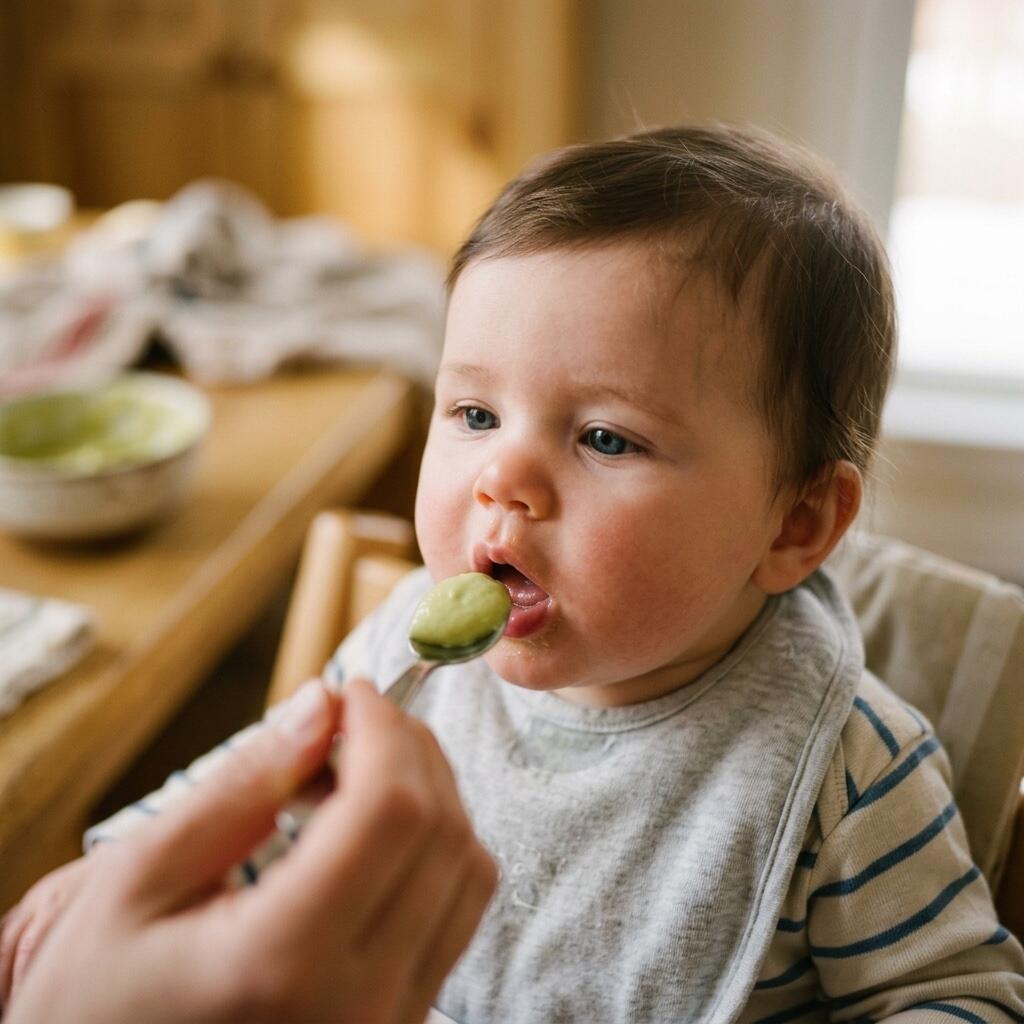
The First Spoonful
Choosing between rice cereal, avocado, or banana — and what to do next
The first time you offer your baby something other than milk is a big deal — for both of you. It doesn't have to be complicated, and there's no single 'right' first food. What matters most is starting simple, staying calm, and keeping expectations low. Here's everything you need to make that first spoonful a good one.
Why start simple
Single-ingredient foods are the gold standard for starting solids because they let you pinpoint exactly what your baby is eating if a reaction occurs. They also give your baby a chance to experience individual flavours and textures clearly, building a palate from the ground up. Start with just one new food at a time for a few days before adding another.
Rice cereal, avocado, banana — what's the difference?
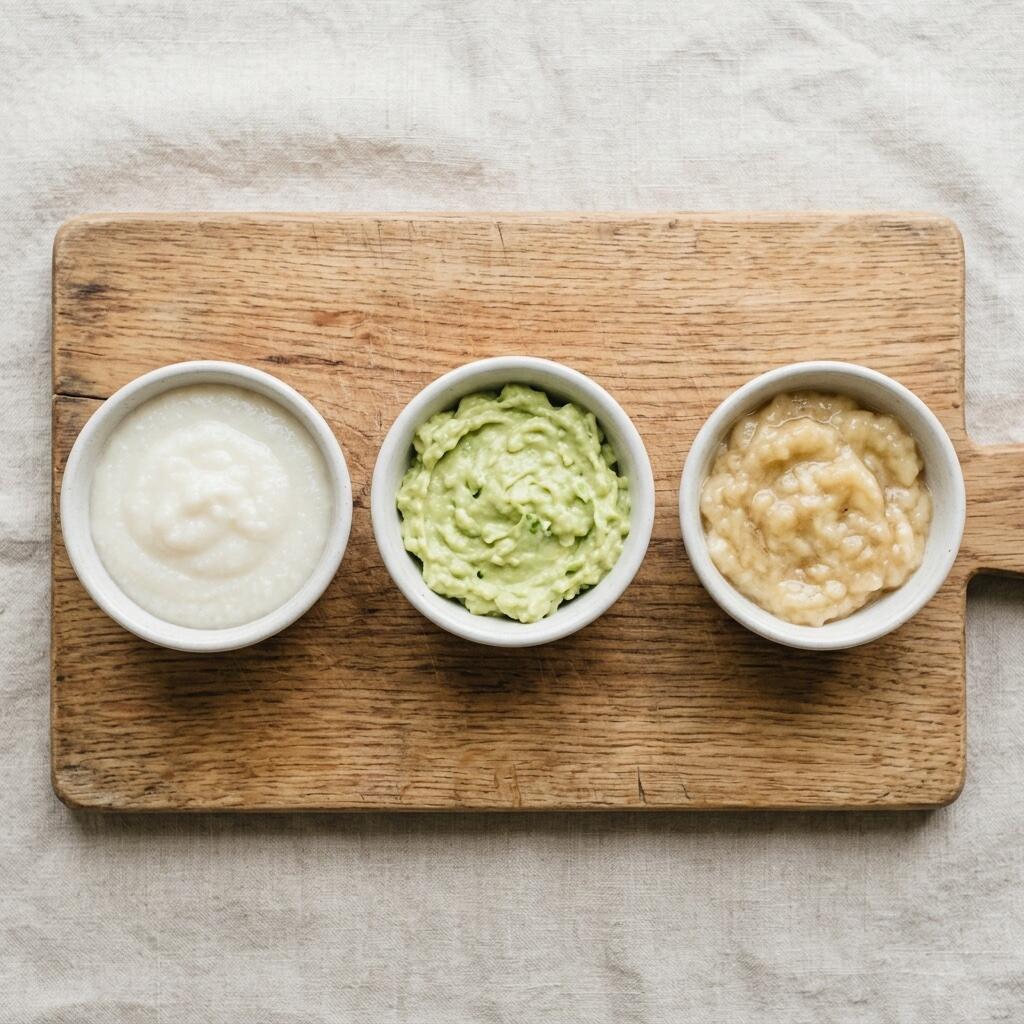
Iron-fortified rice cereal has long been the traditional first food and is a reasonable option because it's easy to thin to a very smooth consistency and provides some iron. Avocado is nutrient-dense, rich in healthy fats that support brain development, and has a naturally creamy texture — it just needs mashing and thinning with a little breast milk or formula. Ripe banana is naturally sweet, easy to mash, and convenient, though it's low in iron and higher in sugar than vegetables. All three are low-allergen, easy to prepare, and gentle on a new digestive system.
How to prepare each one
For rice cereal, mix one teaspoon of dry cereal with four to five teaspoons of breast milk or formula until it's a very thin, almost runny consistency. For avocado, scoop out a quarter of a ripe avocado, mash it thoroughly, and thin with breast milk or formula until smooth. For banana, mash a small piece of very ripe banana with a fork, then thin with liquid until completely lump-free. At this stage, texture should be completely smooth — your baby's gut is not yet ready for lumps.
Step-by-step: your first feeding session
Pick a time when your baby is alert and happy — not too hungry and not too full, ideally about an hour after a milk feed. Sit them upright in a highchair or on your lap with good head support. Load just a tiny amount — no more than half a teaspoon — onto a soft-tipped baby spoon and bring it to their lips rather than pushing it in. Let them explore, taste, and decide whether to accept it. If they turn their head away or make a face, take the spoon away and try again tomorrow.
What's normal in the first few sessions
Most of that first spoonful will end up on your baby's chin, bib, or somewhere unexpected. That is completely normal. Babies are learning a brand-new motor skill — moving food to the back of the mouth and swallowing — and it takes time. A small amount of gagging (not choking) is also common as they adjust to a new texture. Aim for one to two teaspoons of food per session in the first week, and don't worry if they eat less or seem uninterested some days.
Belangrijkste punten
Wetenschappelijke bronnen
De adviezen in deze gids zijn gebaseerd op deze bronnen.