Iron-Rich Starts
Why iron is the most important nutrient when starting solids
Most parents focus on textures and flavours when starting solids, which makes sense — but iron is the nutrient that nutritionists think about most at this stage. Understanding why iron matters, and which foods deliver it, will help you make smarter choices right from the start.
Why iron matters at 6 months
Babies are born with iron stores built up during pregnancy, but these begin to deplete around 4–6 months of age. Breast milk is rich in many nutrients but provides only small amounts of iron — enough for a very young infant, but not enough to meet growing needs as the stores run down. Formula is iron-fortified to compensate, but even formula-fed babies benefit from iron-rich solids from 6 months. Iron is critical for brain development, immune function, and red blood cell production.
Haem iron vs. non-haem iron
Iron from food comes in two forms. Haem iron, found in meat and poultry, is absorbed much more efficiently by the body — typically 15–35% of what's eaten. Non-haem iron, found in plant foods like lentils, leafy greens, tofu, and iron-fortified cereals, is absorbed at a lower rate (around 2–20%) but is still a valuable source, especially for vegetarian and vegan families. If your family is plant-based, it's particularly important to prioritise iron-rich plant foods at every meal.
Iron-rich first food ideas
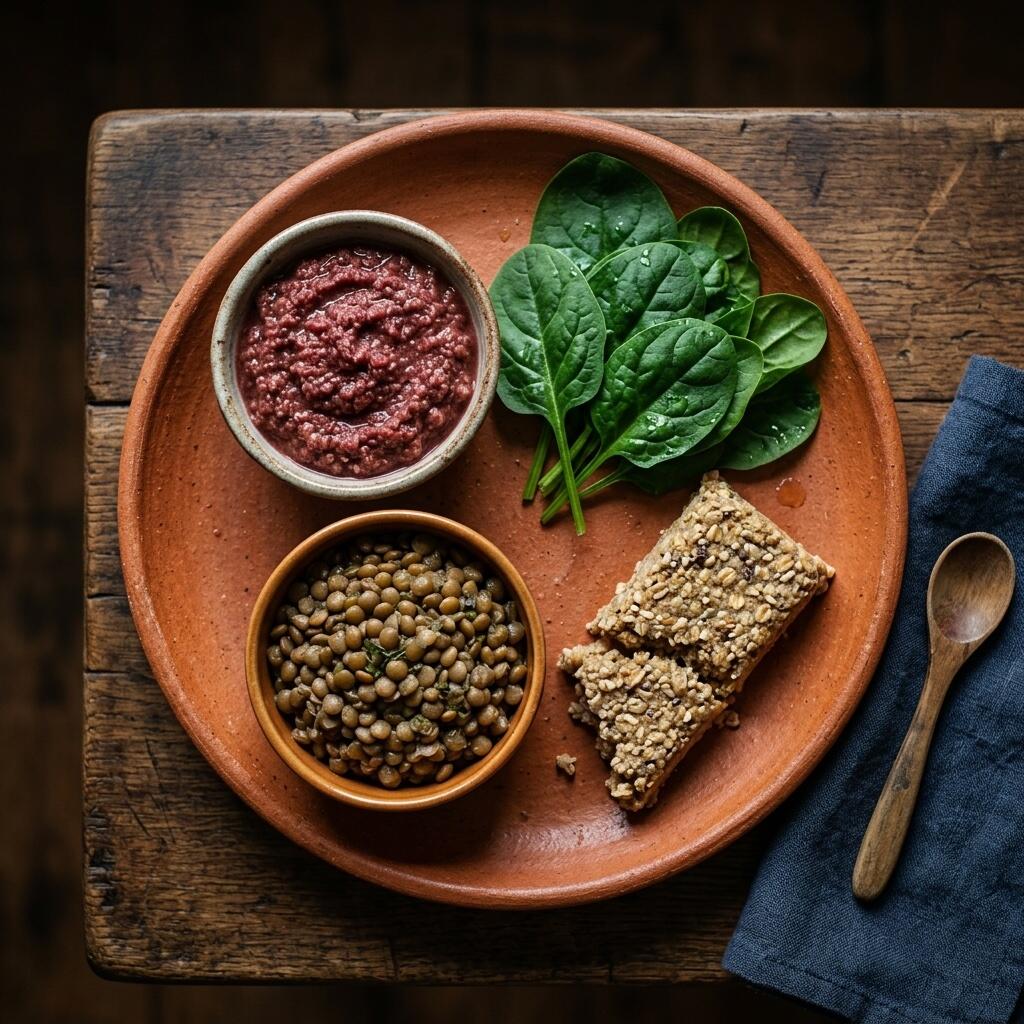
For meat-eaters, well-cooked and blended chicken, beef, lamb, or turkey are excellent early iron sources — blend with vegetable puree and your baby's usual milk to achieve a smooth consistency. Iron-fortified infant cereals mixed thinly are a popular option and widely available. For plant-based families, well-cooked and pureed red lentils are one of the best sources — mild in flavour and easy to blend with carrot or sweet potato. Mashed, well-cooked spinach, pureed tofu, and cooked and pureed chickpeas are also good options.
Boosting absorption with vitamin C
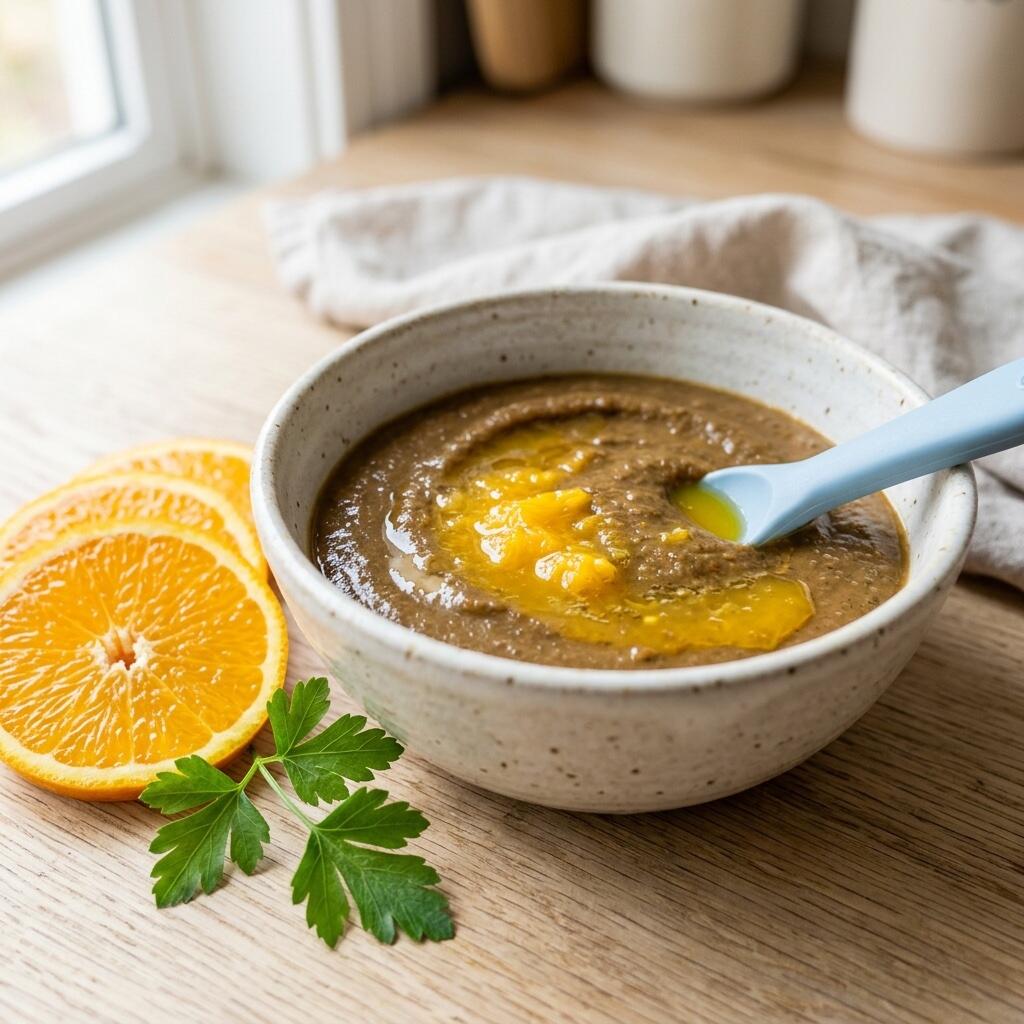
Vitamin C significantly enhances the absorption of non-haem iron when both are eaten at the same meal. In practical terms, this means pairing lentil puree with a small amount of tomato, mashing a little kiwi or orange into your baby's iron-rich cereal, or blending spinach with a tiny squeeze of orange juice. This pairing doesn't need to be precise or complicated — even a small amount of vitamin C-rich food alongside an iron-rich one makes a meaningful difference.
Signs to watch for
Iron deficiency anaemia in babies is rare when diet is managed well but is worth knowing about. Signs can include unusual tiredness or lethargy, pale skin, reduced appetite, and slower than expected weight gain. These signs are non-specific and can have many causes, so don't try to diagnose at home — if you're concerned, a simple blood test from your GP will confirm or rule it out. Most babies who are offered a variety of iron-rich foods from 6 months onwards will not develop deficiency.
Belangrijkste punten
Wetenschappelijke bronnen
De adviezen in deze gids zijn gebaseerd op deze bronnen.